Description
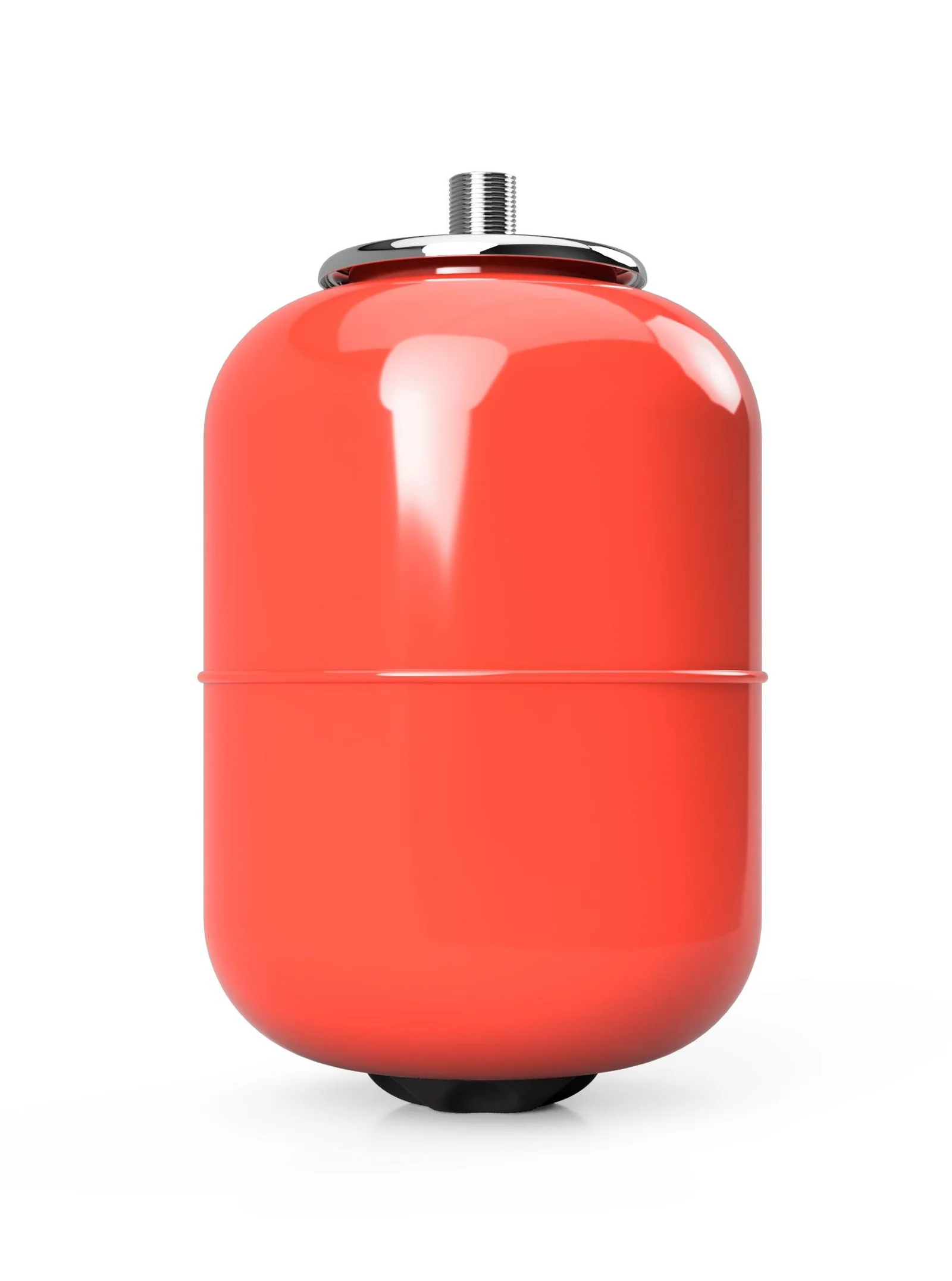
These vessels are simple, heavy‑duty expansion tanks for sealed domestic hot‑water and central‑heating systems. They provide a buffer between the water in a closed system and its fixed air cushion so that, as water heats and expands, system pressure stays within safe limits rather than spiking and dumping through a relief valve. The line is sold under the Tower (TFC Group) portfolio and comes in four capacities suited to typical small to medium domestic systems.
Internally each unit uses a dual‑chamber arrangement (an air side and a water side separated by a membrane) and is supplied pre‑charged with nitrogen. That means the vessel absorbs the expansion volume and acts as a shock absorber for pressure transients, helping reduce pump wear and limiting nuisance discharges from temperature & pressure relief devices.
Key specifications
- Capacities: 8 L (EV8), 12 L (EV12), 19 L (EV19), 24 L (EV24)
- Material: steel
- Connection: 1‑inch
- Maximum working pressure: 10 bar
- Temperature range: -10°C to 99°C
- Pre‑charged with nitrogen; dual‑chamber (air + water) design
- Mounting brackets: EVBR8 (for EV8) and EVBR12‑24 (for EV12, EV19, EV24)
How these vessels work in practice
The Tower vessels are straightforward in function. When the system is cold there is an air cushion behind the membrane; as the boiler or cylinder heats the system water, that water expands and flows into the vessel, compressing the cushion and preventing a sudden pressure rise. The membrane keeps the water and gas separate, and the manufacturer’s packaging states the units are nitrogen pre‑charged to maintain pressure over time. In daily use they reduce pump cycling and prevent frequent operation of safety devices caused by thermal expansion.
Sizes, dimensions and what they suit
The range covers the most commonly specified domestic sizes. The 8 L (EV8) is a compact 200 mm diameter by 340 mm high vessel and is useful where space is limited or for very small sealed systems. The 12 L, 19 L and 24 L vessels share a 270 mm diameter and step up in height as capacity increases: EV12 is 340 mm high, EV19 is 410 mm and EV24 is 460 mm. Choosing the right capacity depends on the total system water volume, expected temperature rise and the system working pressure — the larger vessels give more margin against pressure spikes and are less likely to require topping up or adjustment in systems with greater water content.
Installation, compatibility and practical notes
Physically these are steel vessels with a 1‑inch connection. That connection size is relatively large compared with some radiator and cylinder valves, so you may need an adapter or the dedicated bracket and pipework arrangement used by installers. The manufacturer supplies brackets (EVBR8 for the 8 L model and EVBR12‑24 to fit the larger three sizes) to make wall‑mounting straightforward.
Two practical points stand out: first, correct sizing and setting of the vessel is important. The manufacturer’s literature highlights that an incorrectly sized or incorrectly charged vessel can contribute to pump problems and other faults — so sizing calculations and commissioning should be done or checked by a qualified heating engineer. Second, although the brochure states the vessels are nitrogen pre‑charged, it does not publish a single numeric pre‑charge value for each size; the correct pre‑charge depends on the system’s static pressure and must be confirmed at installation.
Advantages and limitations
- Advantages: robust steel construction, simple proven design, pre‑charged for convenience, and four commonly used capacities make the range flexible for domestic jobs.
- Limitations: the manufacturer literature does not include a published pre‑charge figure for each model or an explicit potable (WRAS) certification for these particular vessels; thread type details for the 1‑inch connection are not expanded in the brochure — confirm when ordering if you need a specific thread form or potable certification.
If you are replacing an existing expansion vessel, match capacity and physical connections and have the system depressurised and cooled before removing the old unit. For new or significantly altered systems, follow a sizing calculation (or ask a heating engineer to perform one) to ensure the vessel’s expansion capacity suits the system volume, target operating pressure and expected temperature rise. The manufacturer explicitly recommends professional advice when selecting and installing these vessels to avoid premature pump failures or pressure‑related faults.
Overall, Tower’s EV8–EV24 range is a conventional, no‑frills family of hot‑water expansion vessels aimed at domestic sealed systems where straightforward, dependable pressure management is required. They make sense where installers want a steel, pre‑charged vessel supplied with mounting brackets and a common maximum working pressure of 10 bar.