
Description
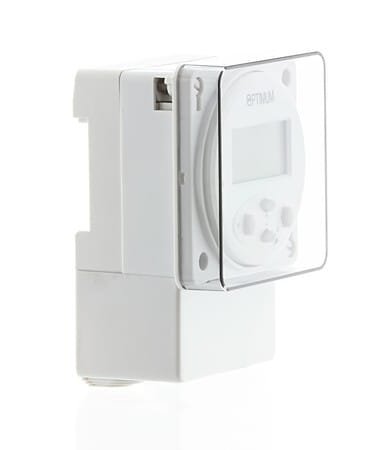
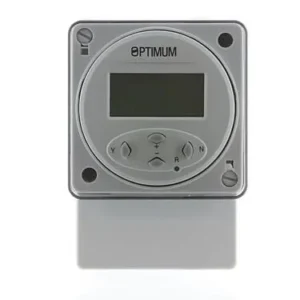
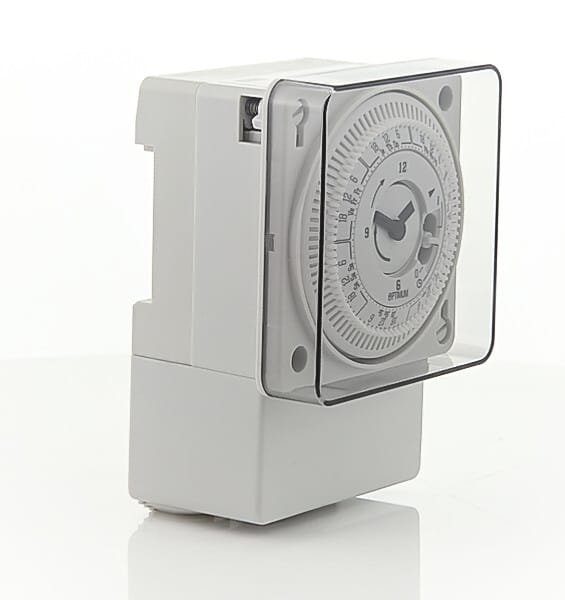
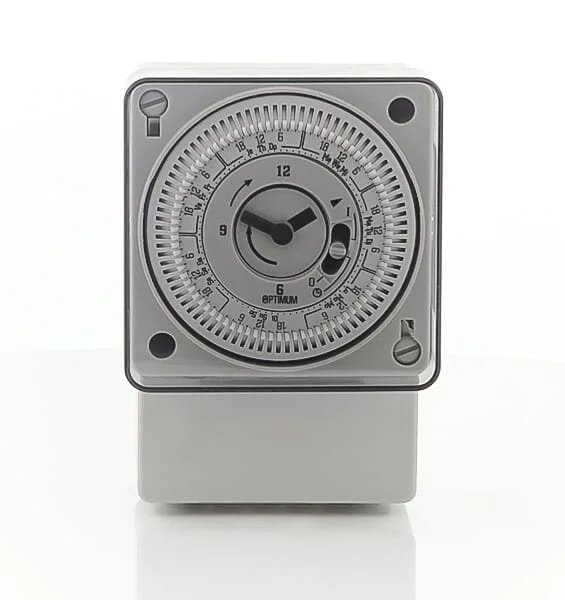
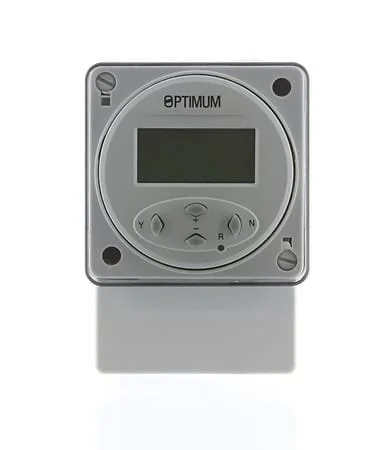
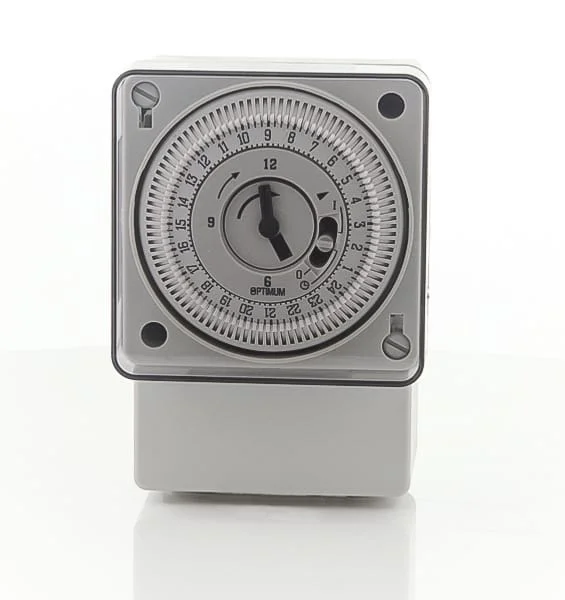
The OP‑TS211.1 is a compact, single‑channel 24‑hour quartz timeswitch intended for simple daily scheduling of lighting, heating and other switched loads where a reliable on/off timetable is required. It uses captive tappets on a 24‑hour dial with 15‑minute resolution, and a three‑position manual lever for permanent on, automatic or permanent off. The unit is aimed at installers and building maintainers who want a straightforward mechanical/quartz hybrid timer with a battery-backed running reserve so settings and the clock are retained during power interruptions.
Key specifications
- Single channel, 24‑hour quartz dial — 15‑minute tappet intervals
- Volt‑free SPDT (changeover) contacts
- Switch rating: 16 A resistive, 8 A inductive
- Mounting: surface, flush (panel) or DIN‑rail
How it works in practice
The OP‑TS211.1 is driven by a quartz timing mechanism so you set the current time on the 24‑hour dial and push the captive tappets outwards for any period you want the output to be ON. Each tappet represents a 15‑minute slot, so routine daily schedules (for example morning and evening lighting periods or boiler interlock times) are easy to lay out. The built‑in manual selector gives quick local control without changing the programme: I = on, AUTO = follow tappets, 0 = off.
Installation and wiring
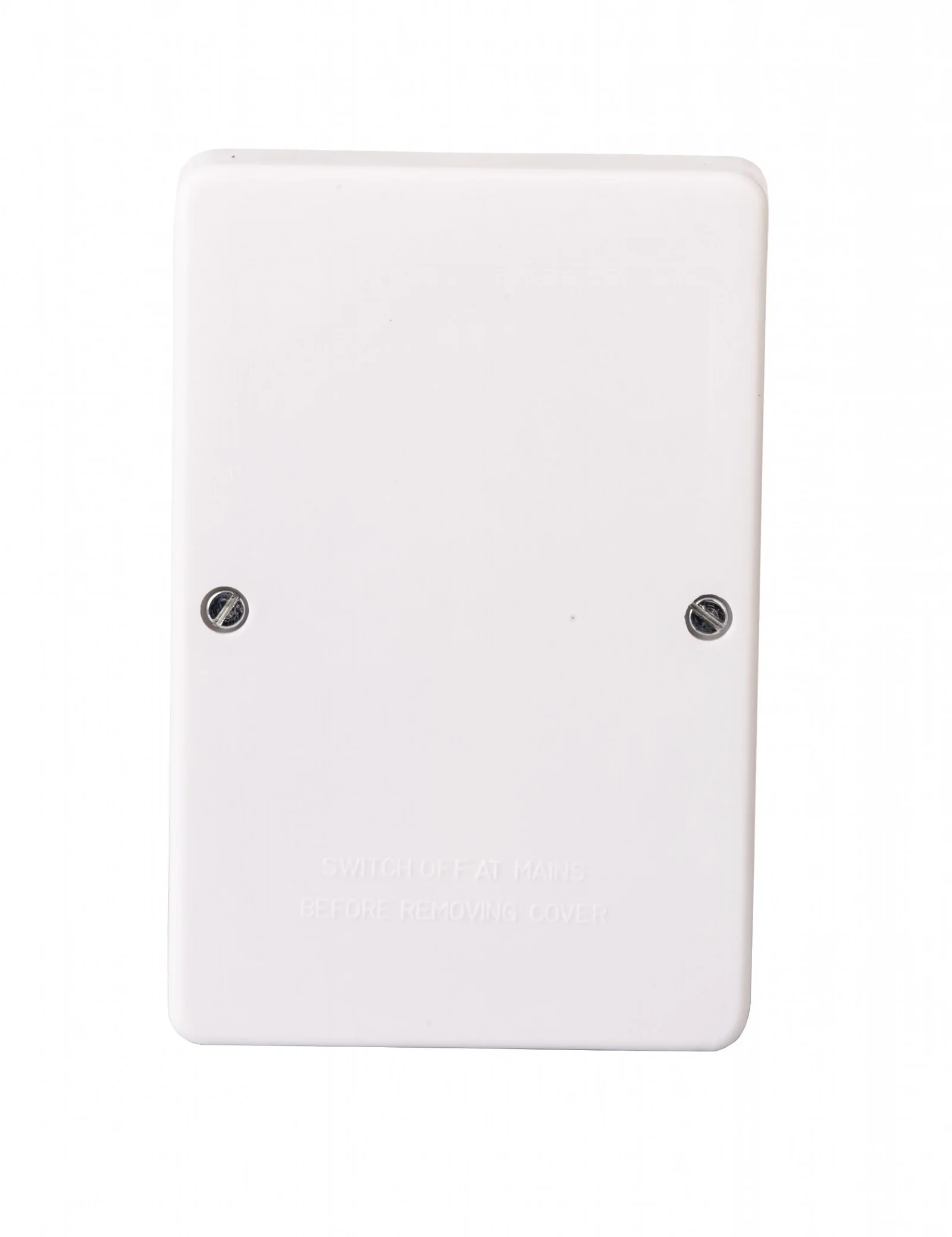
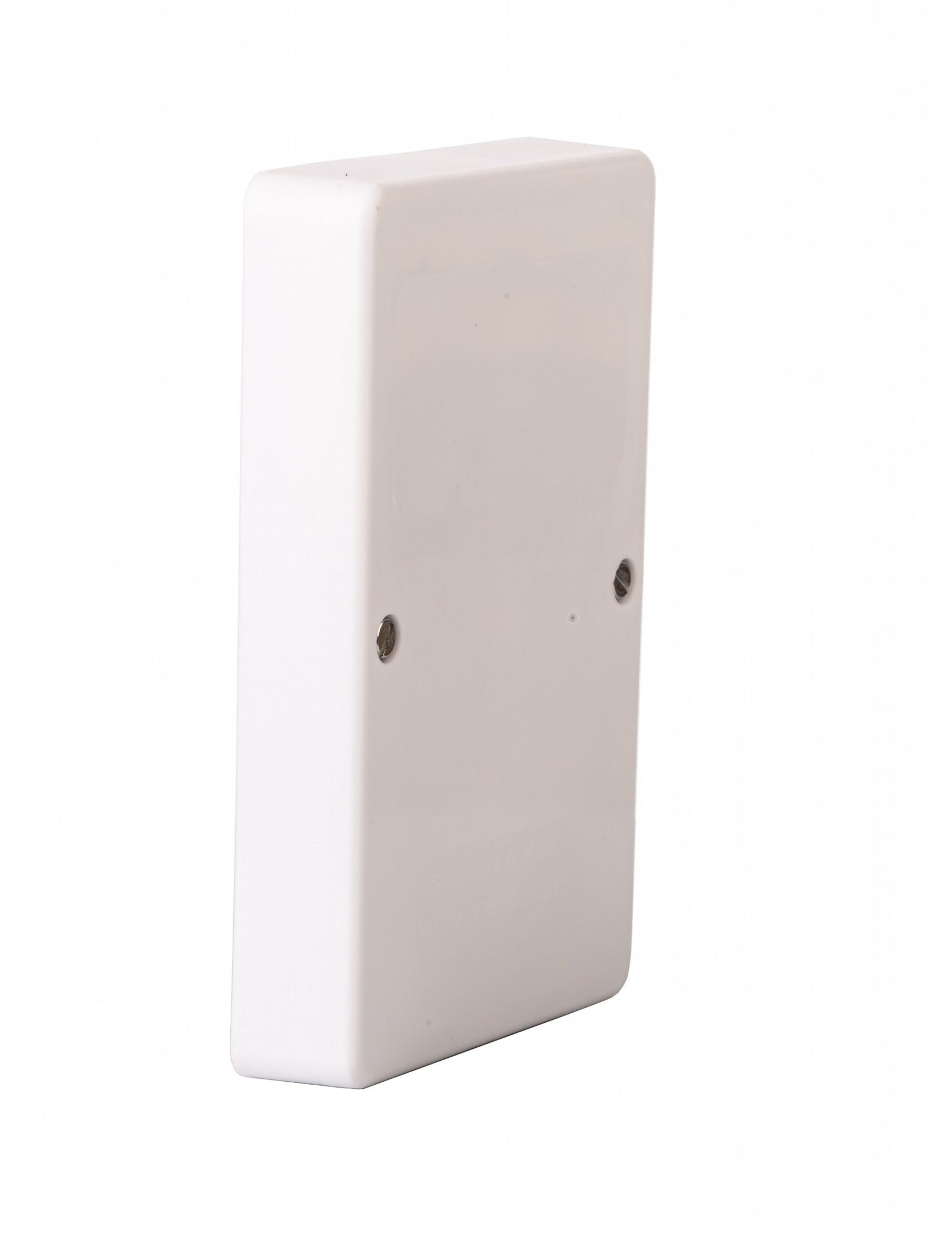
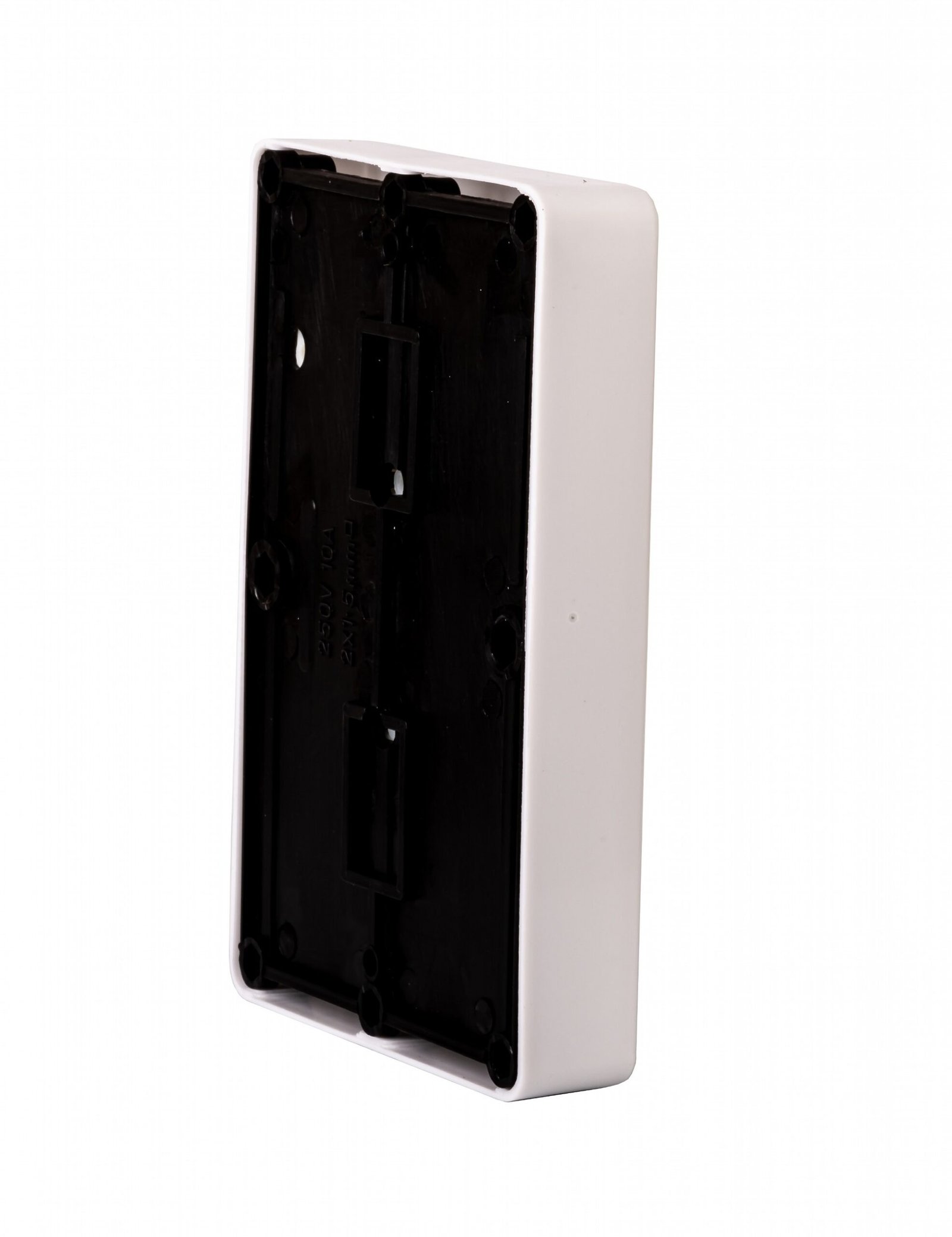
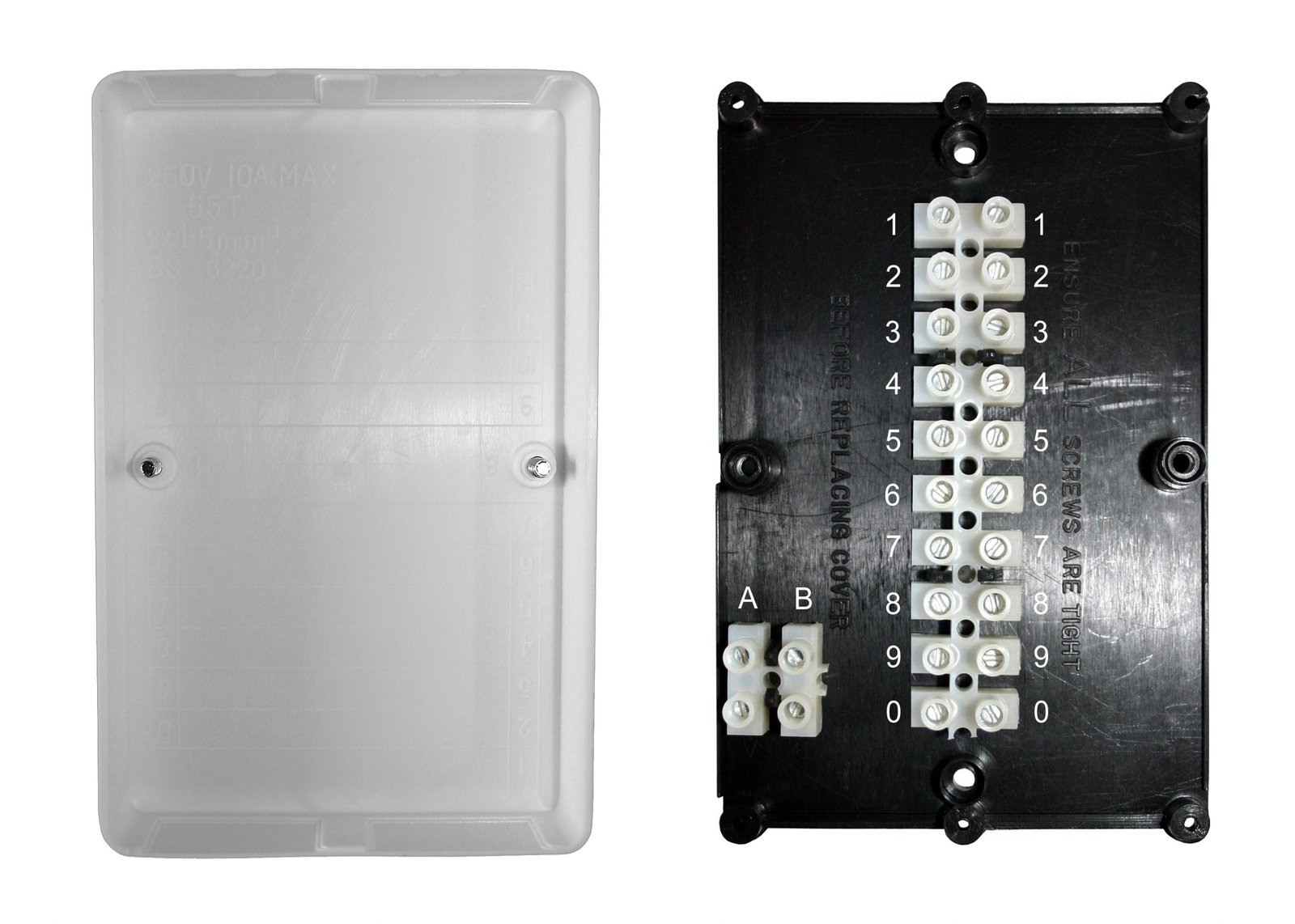
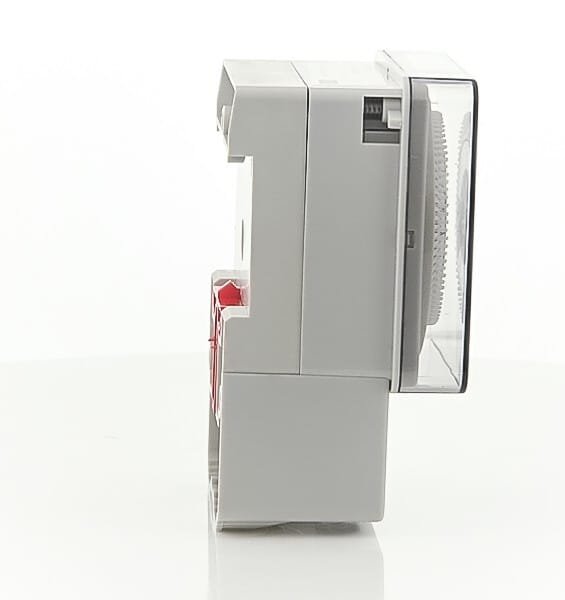
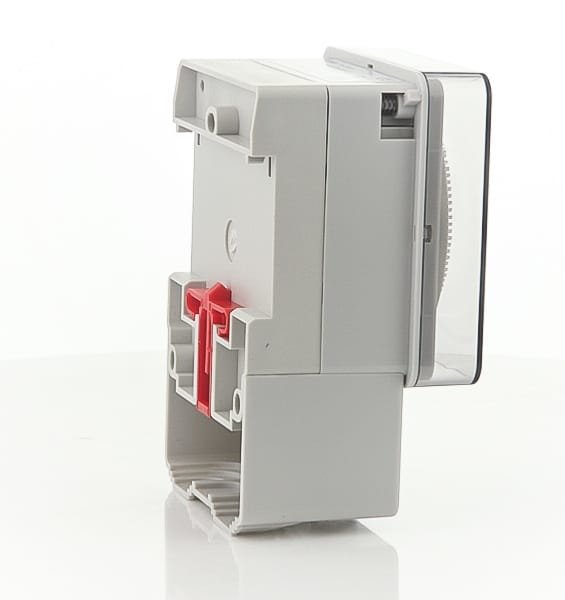
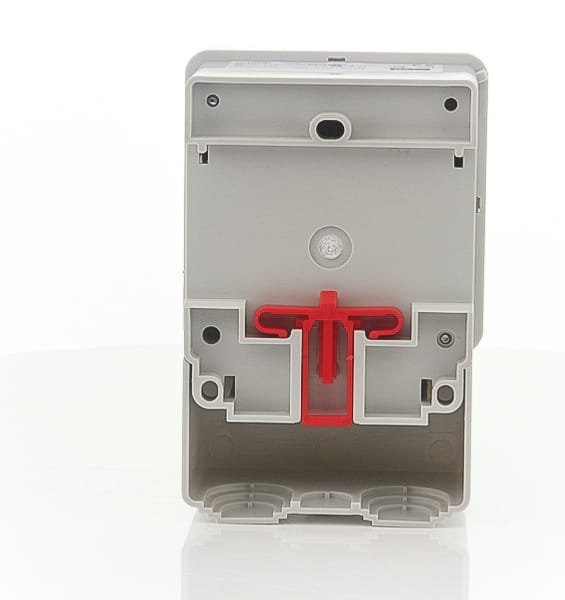
Installation is flexible: the backplate supports surface mounting, the housing can be panel secured with its lugs, and there is a clip for DIN‑rail fitting. Terminals are screw type. The common wiring arrangement used by installers is to connect the supply Live and Neutral to the unit’s supply terminals and then wire the switched live from the timer’s normally‑open contact to the load. The unit provides volt‑free common / normally open / normally closed terminals so it can sit in either switching or control roles (for example switching a contactor or supplying a boiler interlock).
The instructions supplied with the product remind installers that the device is double‑insulated (Class II) and that installation must follow current wiring regulations; for mains switching of discharge or high inrush lamps a contactor or suitable relay must be used rather than direct switching by the timer.
What it suits — and what it doesn’t
Because it provides 15‑minute resolution and a simple mechanical dial, the OP‑TS211.1 is a good fit for daily lighting schedules, simple heating or circulation pump control, and other duties where repeated identical daily programmes are needed. The 16 A resistive/8 A inductive rating gives reasonable headroom for domestic and light commercial loads; the product page indicates an incandescent lamp rating around 1,300 W and suitability for LED lighting below 100 W.
It is not intended as a direct switch for fluorescent, HID, discharge or some LED loads where inrush or electronic driver behaviour can damage the timer contacts. Where those lamp types or higher currents are present, the correct approach is to switch a contactor or relay from the timer’s volt‑free contacts.
Practical notes for specifiers
- The timer’s captive tappet arrangement makes rapid daily schedules easy to set, but it is not a multi‑day or astronomical controller — it repeats the same 24‑hour programme every day.
- Manual override is mechanical and latches in position until changed — handy for temporary service work or override periods.
- Mounting flexibility (surface, flush, DIN‑rail) makes the unit easy to integrate into consumer units or plant enclosures, but the installer should check the final clearance and terminal access when planning panel fitment.
Overall, the OP‑TS211.1 is a practical, no‑nonsense quartz timeswitch for straightforward daily control tasks where a battery‑backed memory is desirable. It is geared towards installers who value a familiar dial‑and‑tappet interface, dependable SPDT changeover contacts and a compact footprint for panel or DIN‑rail installation. Bear in mind the limitations on direct switching of modern lamp types and the need to fit appropriate contactors or relays for inductive or discharge loads.