
Description
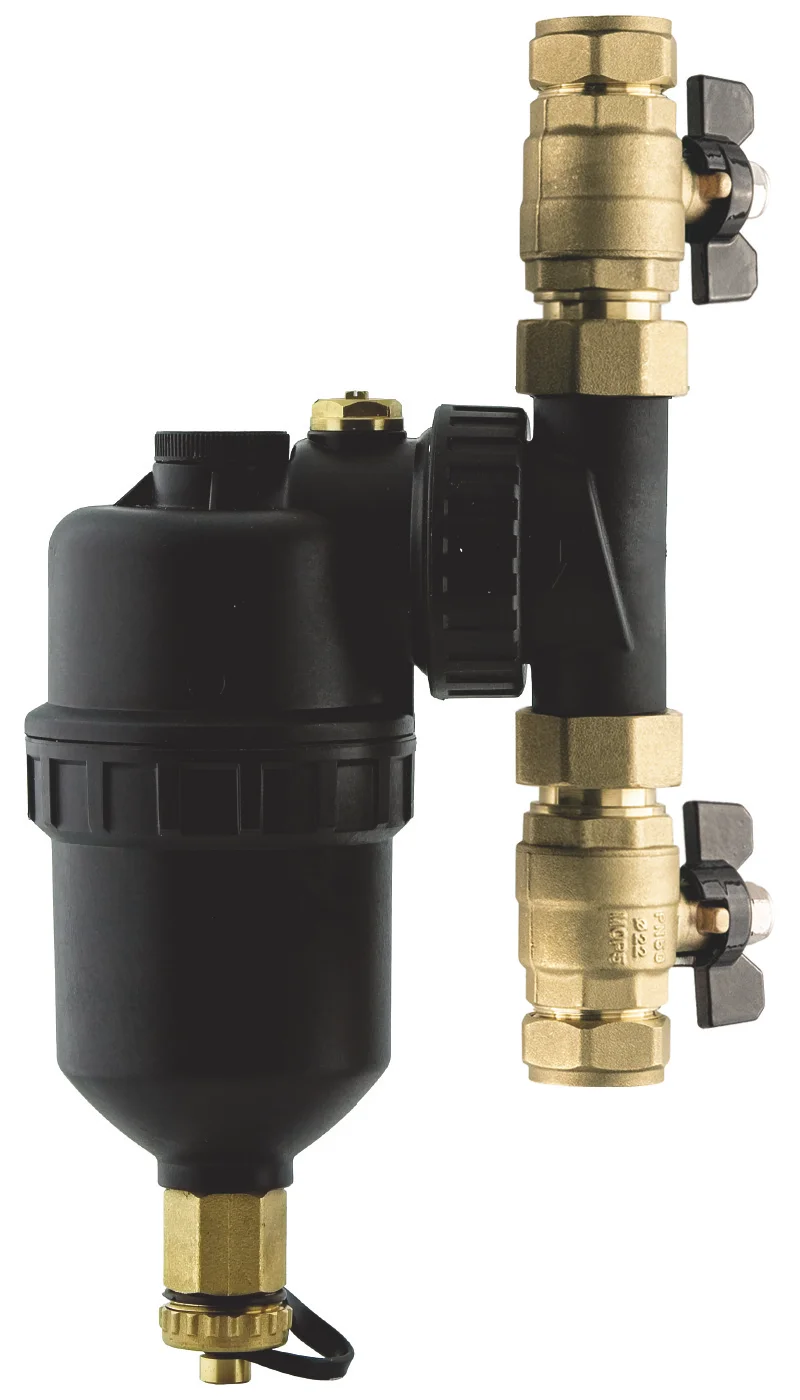
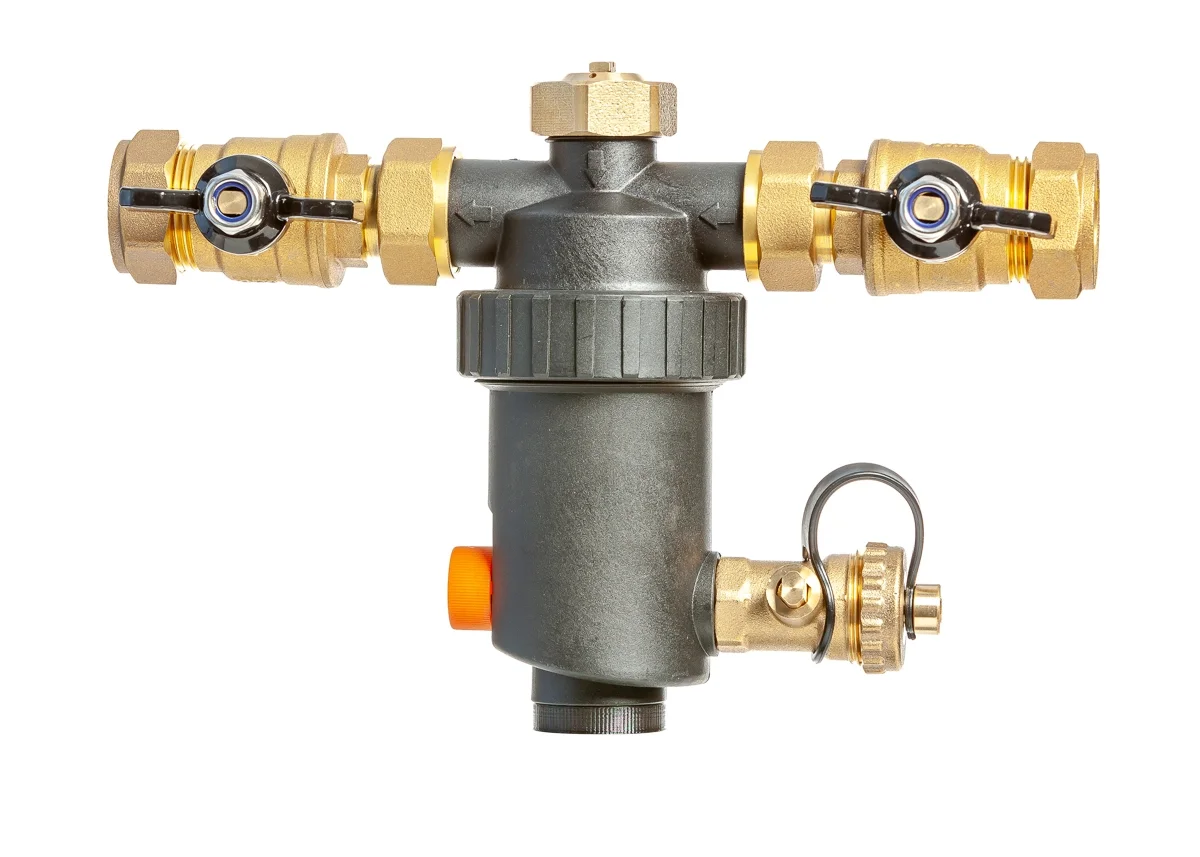
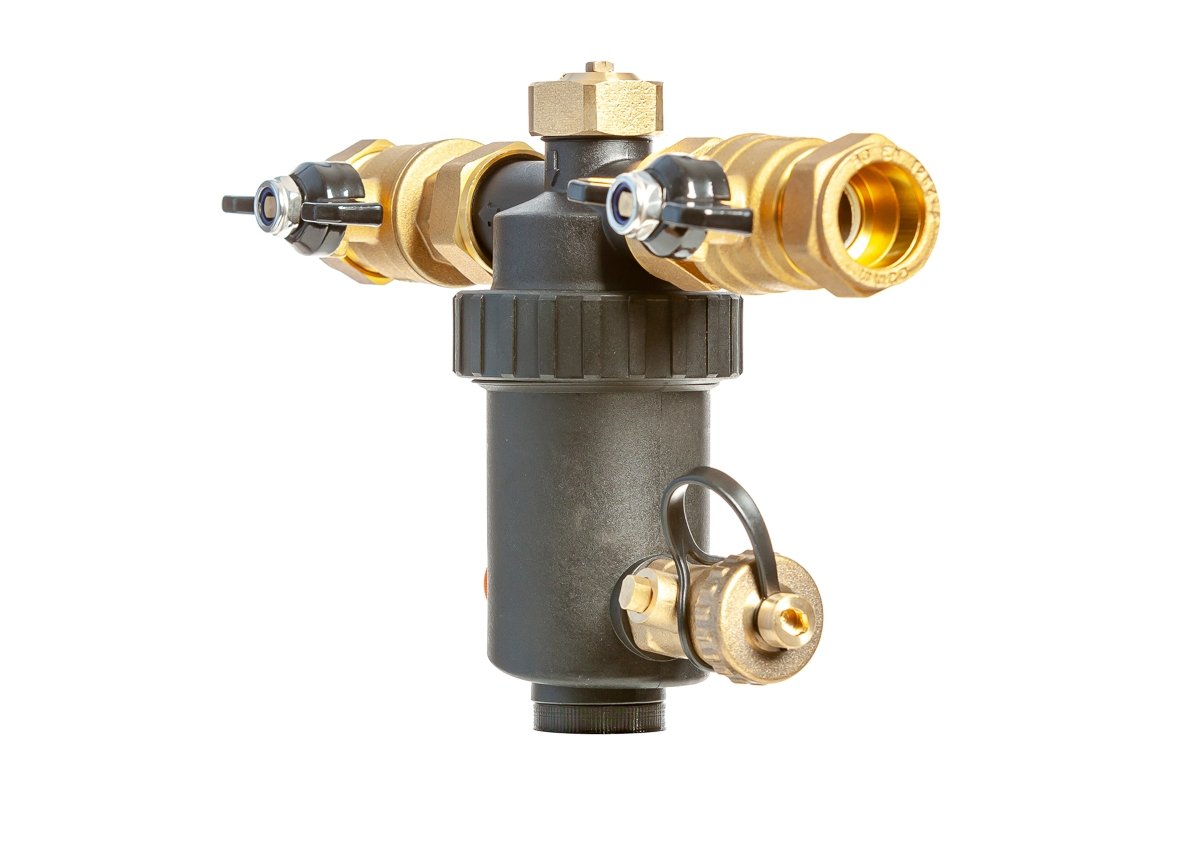
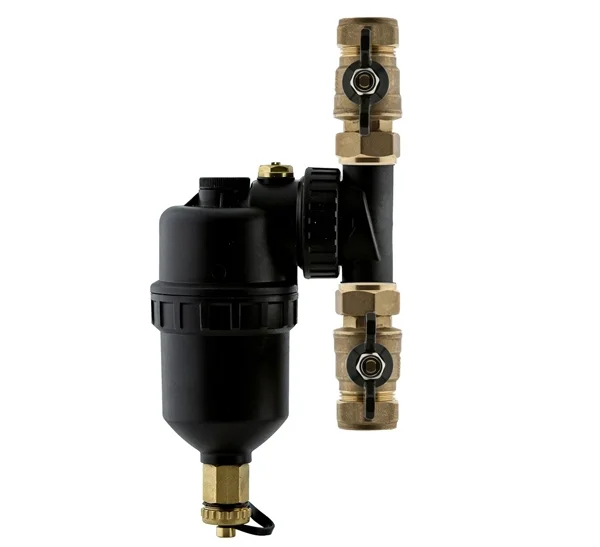
This is a compact magnetic sediment filter aimed at domestic central‑heating return pipes: a plastic-bodied dirt trap with a strong removable magnet inside to capture ferrous wear particles before they reach the boiler, pump and other components. It’s supplied in the two common trade sizes for UK systems (22 mm and 28 mm compression) and is sold under the TRADE03 listing with product codes TC‑Filter (22 mm) and TC‑Filter28 (28 mm).
At its core the unit combines a 12,000‑gauss neodymium magnetic rod with a 530 ml capture chamber. Water carrying iron, nickel and cobalt fragments passes through the device; the magnet attracts ferrous particles and the bowl gives non‑magnetic debris somewhere to settle so it can be drained away. The result — in theory and in typical installations — is less sludge reaching heat exchangers and circulating parts, which reduces the risk of blockages and premature wear.
Key specifications
- Pipe sizes: 22 mm or 28 mm (separate market variants, product codes TC‑Filter and TC‑Filter28)
- Filter volume: 530 ml
- Magnetic rod: rated 12,000 gauss (neodymium)
- Body material: PA66 with 30% glass fibre reinforcement
- Fittings: supplied with two ball valves and Ø22 or Ø28 compression fittings
- Maximum operating temperature: 120°C
- Maximum working pressure: 12 bar
How it works and what to expect day to day
Installed on the return line, the device creates a low‑velocity chamber where debris can drop out and where the magnetic rod holds ferrous particles tightly to its surface. In normal running you won’t interact with it frequently — occasional inspection and periodic draining/cleaning of the magnetic rod are the main tasks. The included ball valves make isolation for service straightforward: shut the valves, open the drain or remove the magnet, clean, then reassemble.
The 12,000‑gauss magnet rating is higher than many simple ‘in‑line’ magnets and will capture fine iron fragments down to the scale of millimetres and sub‑millimetre fines that would otherwise circulate. The 530 ml bowl provides capacity for non‑magnetic sludge and helps avoid having to clean the unit too often on typical domestic systems; how often you need to service it depends on the system condition and whether the circuit has been recently power‑flushed or treated.
Compatibility and installation notes
Choose the 22 mm or 28 mm version to match the compression pipework on the return run (the product is sold as separate size variants). It is intended for sealed central‑heating systems; the materials and pressure/temperature ratings (up to 120°C and 12 bar) are in line with modern sealed systems, but installers should still verify that the physical dimensions, orientation and connection type suit the available space and pipe layout. The filter can normally be installed vertically or horizontally, but check clearance for the magnetic rod to be removed and for the drain to be accessed.
Practical points for the installer: fit the unit on the return (after radiators, before boiler), ensure the ball valves are accessible, and leave enough working clearance to unscrew and withdraw the magnet during maintenance. Because the unit uses compression fittings, a competent installer should be able to fit it without specialist adapters; always depressurise and drain the local section before removing the magnet or opening the housing.
Maintenance and service life
Maintenance is straightforward: isolate with the ball valves, open the drain and remove the magnetic rod to wipe off captured debris. For heavily contaminated systems you may need to clean it more frequently until the system is cleared. The reinforced polyamide body is corrosion‑resistant and the magnet is permanent; there’s no ongoing electrical or consumable cost beyond occasional manual cleaning. Spare parts and replacement magnets for similar OEM units are commonly available, but the supplier listing should be checked for availability of spares and any stated warranty.
Advantages and limitations
- Advantages: strong magnet for efficient capture of ferrous debris, decent bowl capacity for non‑magnetic sediment, straightforward isolation via supplied ball valves, robust PA66 glass‑filled body.
- Limitations: the product appears to be an OEM/generic design sold under multiple names — this means documentation, warranty terms and spare‑part support depend on the seller; flow‑rate data and detailed dimensional drawings are not supplied in the basic listing, so confirm clearances before buying.
Overall, this TRADE03 listing (TC‑Filter / TC‑Filter28) is a practical, value‑orientated magnetic filter for household heating systems where the priority is to reduce circulating ferrous debris and protect the boiler and pump. It suits retrofit and new installations provided you select the correct pipe size and ensure the installer confirms compatibility with the particular boiler and system layout.