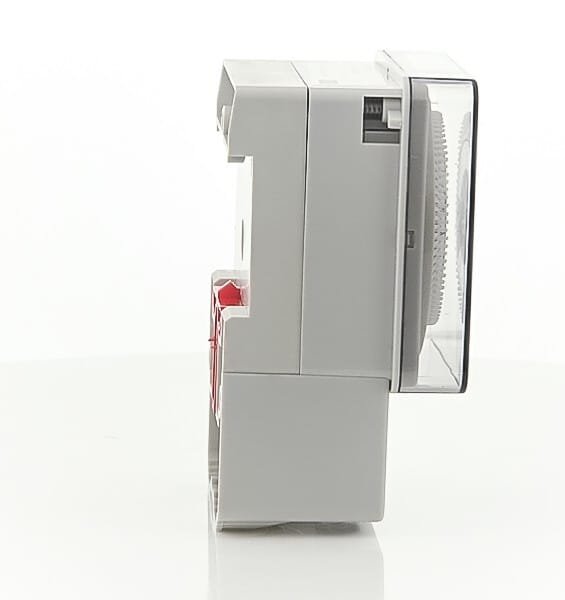

Description
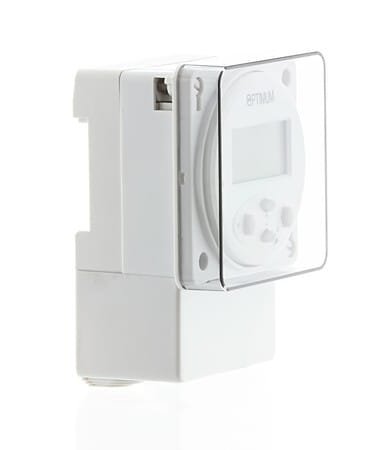
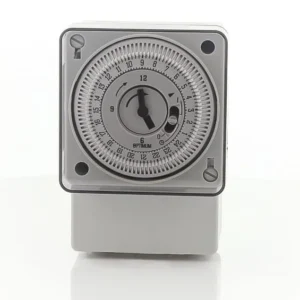
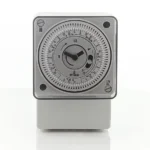
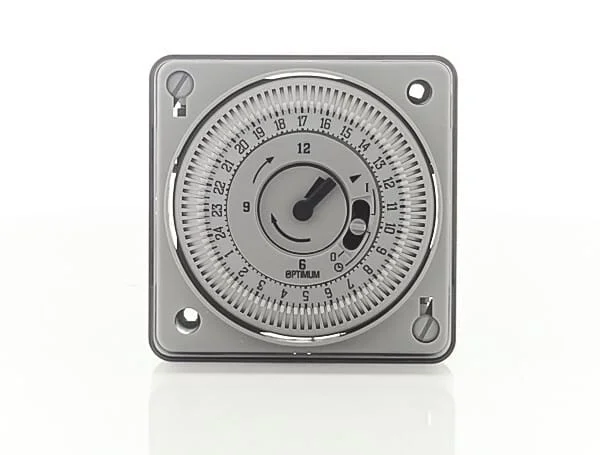
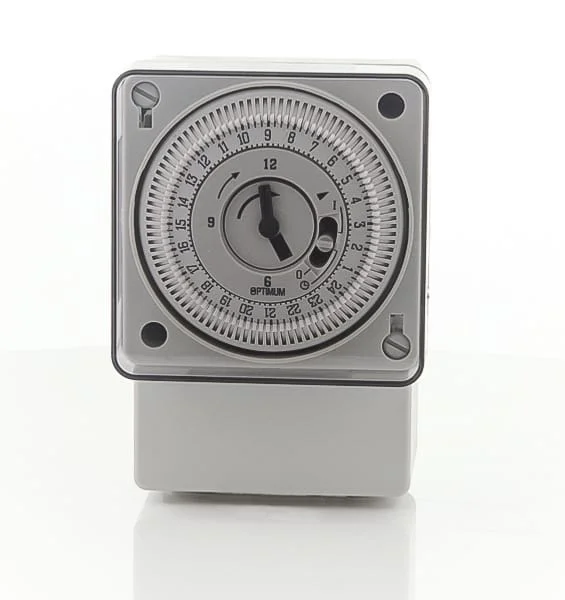
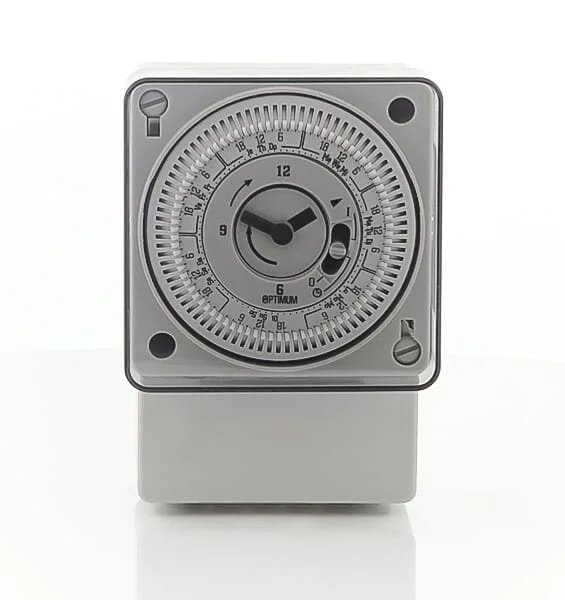
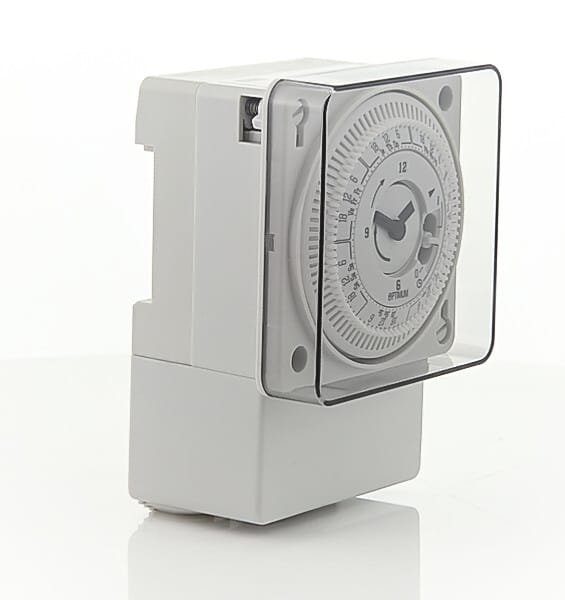
This is a straightforward, mechanical weekly timeswitch built around a synchronous motor and captive tappets. It gives one on/off channel across a seven‑day dial, with fixed 2‑hour tappet intervals for setting a simple weekly programme. The unit is intended where dependable, low‑complexity scheduling is needed — for example basic lighting schedules, boiler or pump control in small installations, or any application where a single circuit needs the same regular pattern repeated through the week.
How it works and what to expect
The OP‑TS171.1 uses a mains‑synchronised motor to turn an outer dial representing the week. You set on/off times by moving captive tappets in and out of the dial; each tappet represents a two‑hour block, so programming is rapid but coarse compared with digital timers that offer minutes or 15‑minute steps. The switching output is a volt‑free SPDT contact, so the timer itself provides isolated switching contacts and can be used to control devices directly within its rated current limits or to operate a contactor for larger or non‑resistive loads.
Suitability and load considerations
Electrically this is a robust general‑purpose switch: rated at 16 A resistive (8 A inductive) and listed for incandescent lamp loads to roughly 1,300 W and LED lighting to 100 W. That means it will handle straight resistive heating elements, many lighting circuits and small motors within those limits. Bear in mind modern LED loads and some electronic control gear can present very different switching characteristics to incandescent lamps, so where the equipment has an electronic driver (for example low‑wattage LED fittings, electronic ballasts or switching power supplies) it is good practice to switch via a suitably sized contactor or to confirm suitability with the equipment supplier.
Installation and mounting
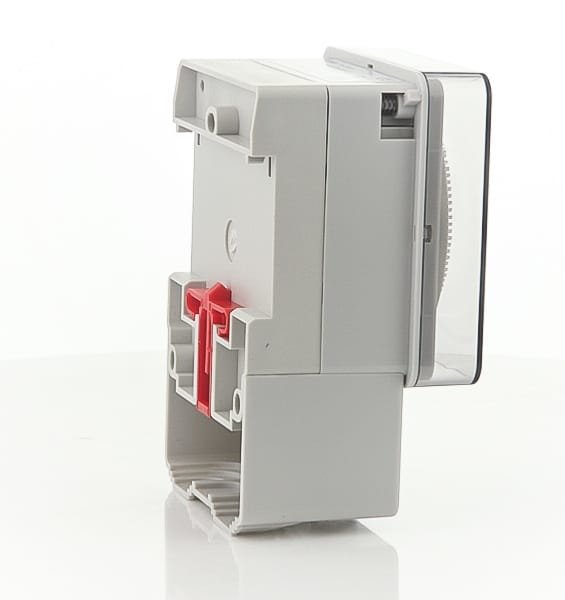
The OP‑TS171.1 is supplied for 220–240 V AC (50 Hz) and is offered with multiple practical mounting options to suit trade and retrofit use: panel, surface or DIN‑rail style installations are possible depending on the exact accessory or mounting bracket used. The product is compact (72 × 103 × 52 mm) and light (around 0.18 kg), so it fits into small control panels and enclosure spaces. Wiring is to the volt‑free SPDT terminals — standard installation practice is to isolate power, make permanent supply and switched circuits tidy and secure, and if switching inductive or motor loads use an appropriately sized contactor to protect the timer contacts.
What it’s good at — and where it isn’t ideal
- Good where a simple weekly repeat schedule is sufficient — halls, store rooms, basic heating circuits and exterior lighting with an unchanging weekly pattern.
- Mechanically simple: captive tappets are quick to set and less likely to be lost or mispositioned than plug‑in pins.
- Built to trade‑friendly electrical ratings for a small device — 16 A resistive and 8 A inductive rating gives genuine utility for many small installations.
Limitations are mainly the programming granularity and the mechanical, mains‑synchronised drive. The two‑hour tappet step makes fine‑tuned scheduling impossible: if you need half‑hour or 15‑minute control you should choose a quartz or digital timer. Also, because the motor is synchronous and this variant does not include a time reserve, a mains interruption will stop the dial and the programme will need checking and resetting when supply is restored.
Practical points for buyers and installers
Fitters will appreciate the compact footprint and conventional terminal layout; the volt‑free SPDT contact is convenient for both direct switching and for feeding a control coil on a contactor. Check device compatibility where you plan to switch LED fittings, variable‑speed pumps or any equipment with an electronic driver — the manufacturer notes that discharge (and similar electronic) loads should not be switched directly without a contactor. If you need holiday overrides, boost functions, random start or countdown modes, a basic mechanical weekly timer like this won’t provide them — consider a digital or programmable alternative in those cases.
Key specifications
- Programme: 7‑day weekly dial, 2‑hour tappet intervals
- Channel: Single on/off (one volt‑free SPDT contact)
- Supply: 220–240 V AC, 50 Hz
- Load rating: 16 A resistive; 8 A inductive
- Incandescent load quoted to 1,300 W; LED compatibility quoted to 100 W
- Mounting: panel, surface or DIN‑rail style options (depending on accessory/bracket)
- Dimensions (approx): 72 × 103 × 52 mm; weight approx 0.18 kg
If your requirement is a low‑cost, reliable weekly scheduler for a single circuit and you can live with two‑hour resolution, this model is a pragmatic choice. For modern low‑wattage LED lighting systems, electronic controls or where repeat precision and outage resilience matter, evaluate a quartz‑based or digital timeswitch that offers shorter intervals, battery reserve and specific electronic load ratings.