
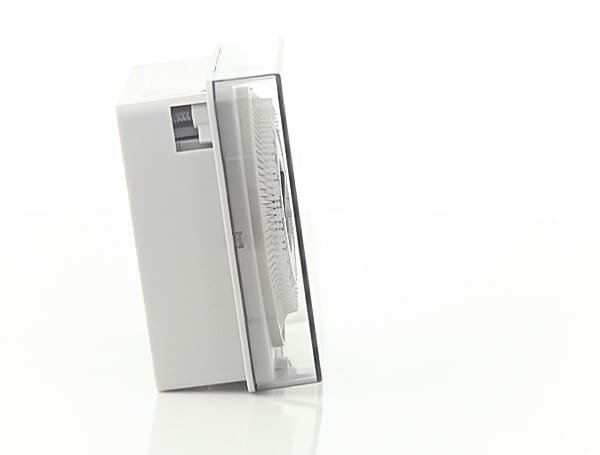
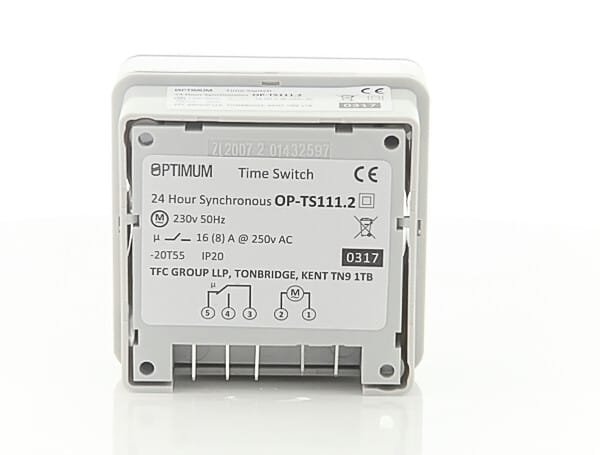
Description
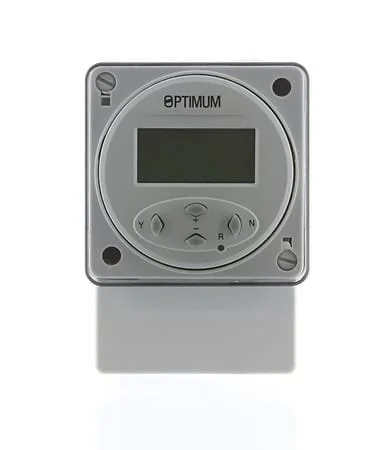
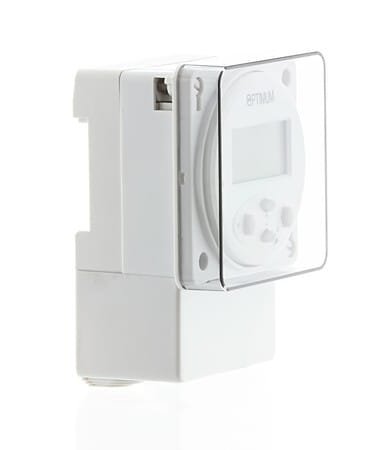
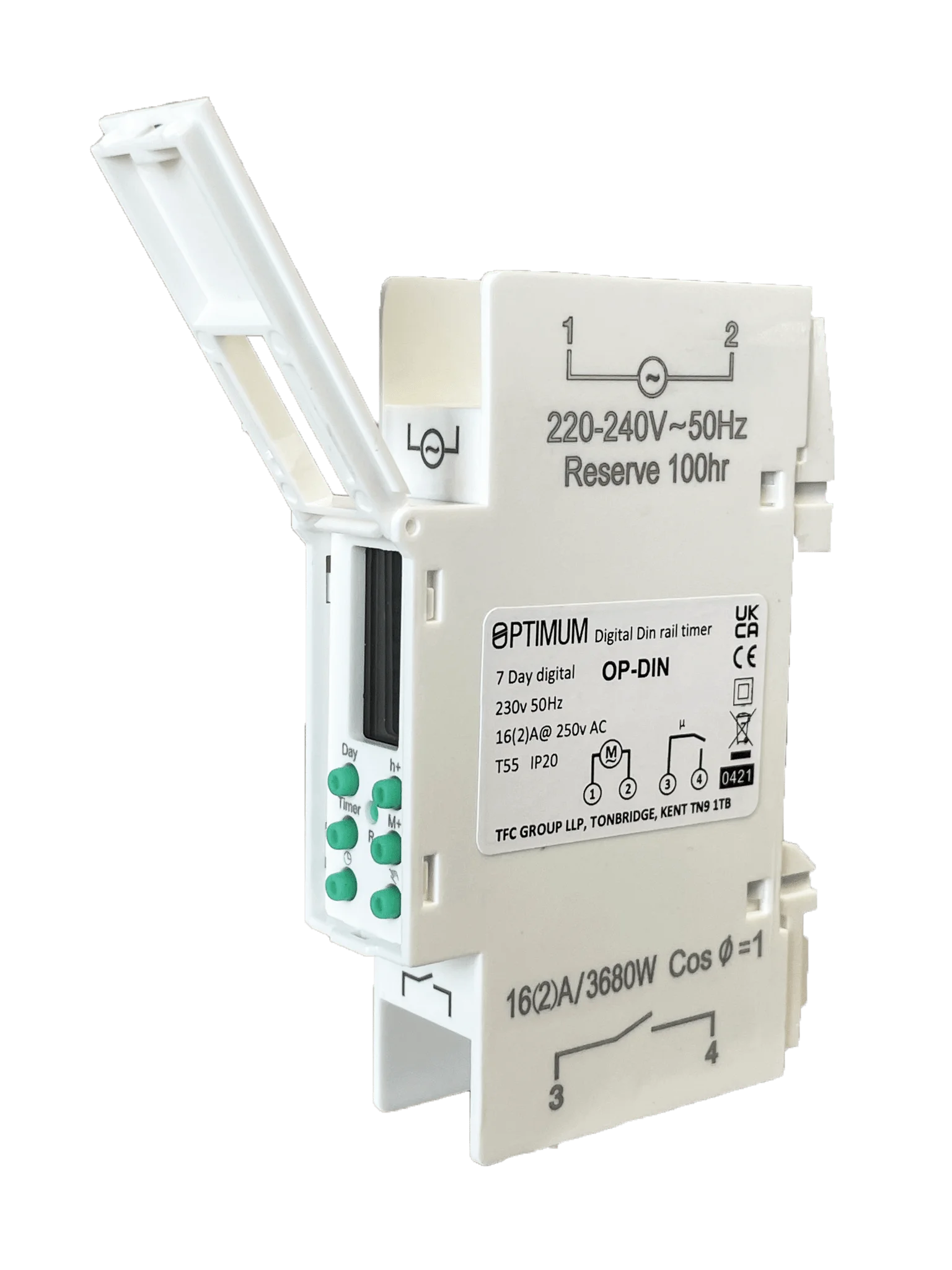
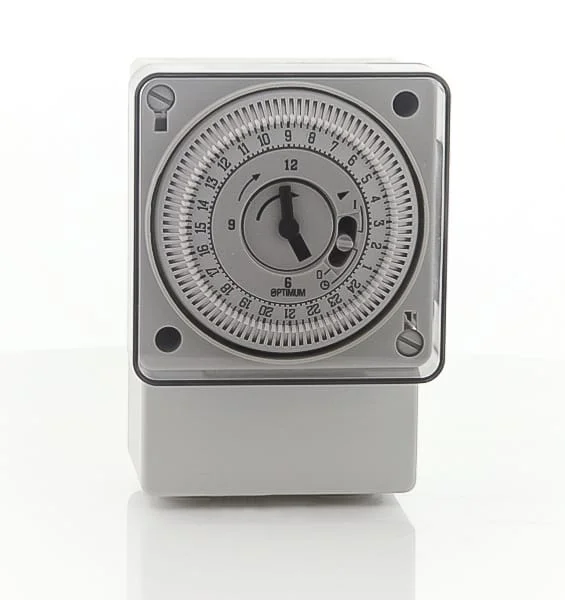
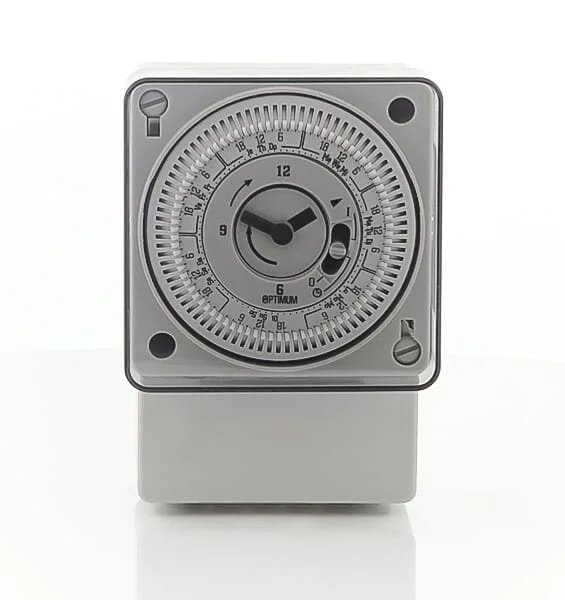
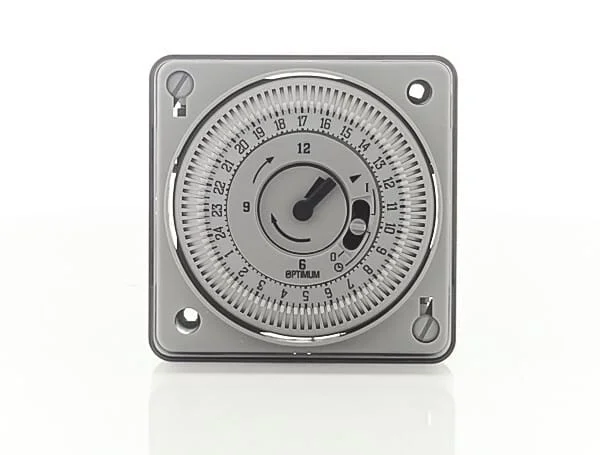
This is a straightforward, electromechanical 24‑hour timeswitch intended for panel installation where a simple, repeatable daily schedule is required. It uses a synchronous motor and captive tappets to give 15‑minute on/off steps, drives a volt‑free changeover contact and is aimed at installers who need a compact, high‑current timer for lighting, heating and general‑purpose switching inside a control panel.
Because it’s an analogue mechanical timer it’s reliable, easy to understand and quick to set up: rotate the dial to the current time, push the tappets out where you want the circuit to be on, and leave the three‑position manual selector in AUTO for normal operation. The push‑out/push‑in tappets are captive so they won’t fall out during installation, and there’s a positive manual override to force ON or OFF when required.
Key specifications
- Model / reference: Optimum OP-TS111.2 (TFC Group)
- 24‑hour synchronous motor, 15‑minute captive tappets
- Volt‑free SPDT changeover switch — 16 A resistive, 8 A inductive
- Supply: 220–240 V AC, 50 Hz; typical power consumption 1 VA at 230 V
- Panel mounting — nominal housing size 72 × 72 × 37.5 mm; panel cut‑out 68 × 68 mm
How it works and what to expect day to day
The OP‑TS111.2 is an analog daily timer. The outer dial shows 24 hours; each tappet represents 15 minutes, so you can build up to several on/off periods across the day. Once set, the synchronous motor turns the dial at mains frequency, so the dial tracks the mains supply time and will keep a consistent daily schedule while power is present. There is no long‑term battery reserve — the unit relies on mains power to keep running, so power interruptions will stop the clock and lose the current position until the supply is restored.
Operation is deliberately simple: the three‑position manual selector lets you force ON, leave the timer in automatic mode, or force OFF. That makes the unit useful in plant rooms and distribution panels where occasional manual control is needed alongside automatic scheduling.
Installation and wiring notes
The OP‑TS111.2 is designed for panel mounting (clips are integrated into the housing). It’s intended to be fitted by a qualified electrician in accordance with current wiring regulations. The backplate is removable for easier wiring; terminals are described by the manufacturer as five tab terminals (DIN style), with the switch contacts provided as volt‑free common / normally open / normally closed. Typical wiring for mains switching is to link the live through the common contact and take the switched live from the NO contact; neutrals remain joined through the neutral terminal. The manufacturer’s instructions include a wiring diagram and step‑by‑step mounting guidance.
Two practical points for installers: the unit is double‑insulated (Class II) and the enclosure protection is IP20, so it’s for internal, enclosed panel use only. The maximum panel depth behind the bezel is limited; consult the specification drawing to confirm fit in your panel or enclosure.
Suitability, limitations and practical compatibility
The timer is rated for 16 A resistive and 8 A inductive switching, and the maker quotes an incandescent lamp capacity of up to about 1,300 W. The changeover contact is volt‑free, so it can switch control circuits or be used to drive contactors for larger or inappropriate direct loads.
Although some supplier listings advertise the OP‑TS111.2 as suitable for LED loads up to 100 W, the manufacturer’s installation guidance also warns that the unit is not suitable for direct switching of some lamp types (for example discharge lamps, fluorescent, HID and similar) and recommends using a contactor for discharge lamps. If you plan to switch low‑power electronic loads, LEDs or lamp circuits with an electronic driver, fit an appropriate contactor or relay sized for the lamp type to avoid premature contact wear or unreliable switching.
Because this is a synchronous, non‑reserve clock, it does not retain time through power loss — that matters if maintaining precise schedule across outages is important. For applications that need battery backup or several day programmes, consider a quartz or digital timer with reserve memory instead.
Why choose this timer?
Choose the OP‑TS111.2 when you want a small, inexpensive, robust mechanical daily timer for an enclosed panel: it’s compact, easy to set, has clearly repeatable 15‑minute stepping and carries a practical switching rating for many small mains circuits. It’s a familiar option for simple lighting control in plant rooms, heating circulation control where an accurate daily on/off cycle is required, or where a volt‑free contact is needed to operate a larger contactor or control relay.
Where it is not suitable: don’t rely on it for direct switching of discharge lighting or heavy inductive loads without a contactor; don’t expect timekeeping through power loss; and don’t mount it externally or in an exposed location because of its IP20 rating.