
Description
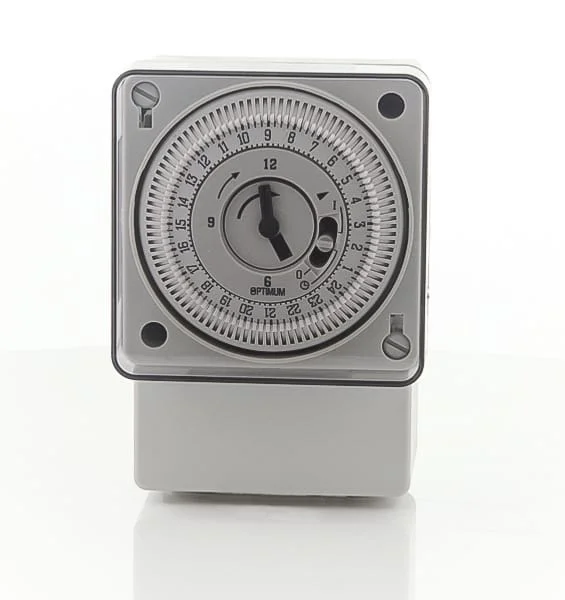
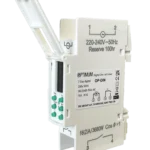
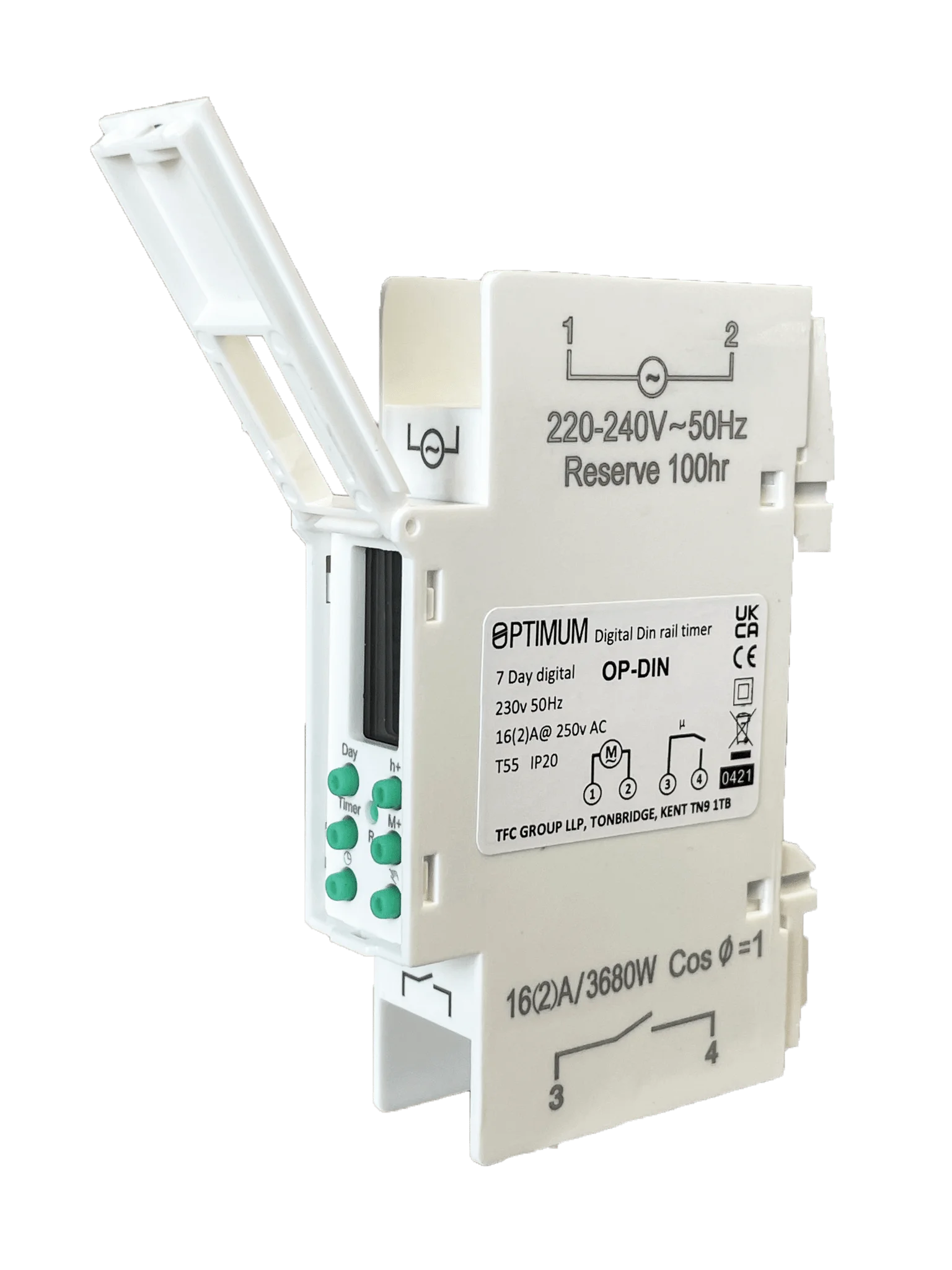
Compact and straightforward, this single-module DIN-rail timer is designed to give reliable day-to-day scheduling where space in a distribution board or control enclosure is at a premium. It is a small digital time switch intended for general electrical control tasks such as lighting, simple heating circuits and other resistive loads. Programming is performed on a clear LCD and the unit stores up to six on/off events, either across a single 24‑hour cycle or as a 7‑day schedule.
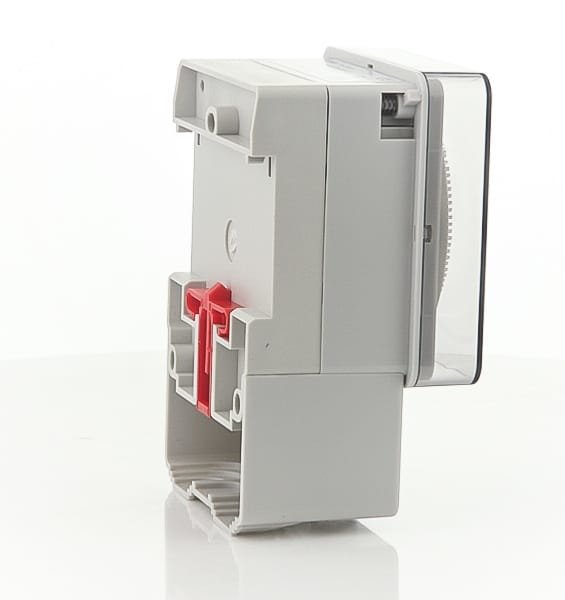
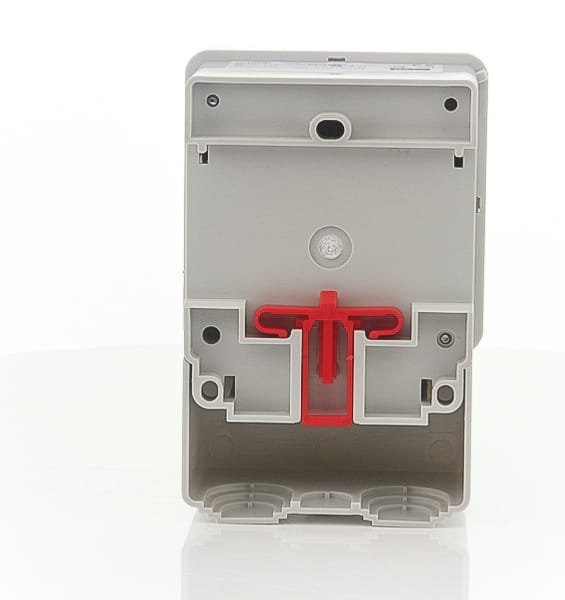
The OP-DIN sits on a standard DIN rail and occupies the width of a single module. Internally it uses a rechargeable cell to keep clock and programme data during mains interruptions (the running reserve is specified at around 100 hours), and switching is handled through a volt-free contact rated for typical panel loads. Manual override gives immediate control without erasing the stored programme, so you can temporarily force an ON or OFF state for maintenance or testing.
Key specifications
- Supply voltage: 220–240 V AC, 50 Hz
- Switching contact: SPST / volt‑free; resistive rating 16 A
- Programming: 7‑day or 24‑hour; 6 ON / 6 OFF events
- Battery backup: rechargeable cell, approx. 100 hours running reserve
- Dimensions: 90 × 18 × 60 mm; weight ~110 g
- Accuracy: ±2.5 seconds per day
Controls and day‑to‑day use
The OP‑DIN’s small LCD and push‑button layout are aimed at functional programming rather than advanced scheduling. You can set either a repeating 24‑hour programme or different settings for each day of the week; the device provides six ON and six OFF slots, which will suit most simple lighting or boiler timer tasks but may be limiting when complex, multi‑event schedules are required.
Manual override modes include Advance ON, Timed and Advance OFF. These let you force an immediate ON or OFF, or enable a temporary interval without altering the stored programme. That behaviour is useful for commissioning or short‑term overrides (for example, temporarily running a circulation pump or lighting circuit while work is being done).
Installation and electrical compatibility
Installation is performed on a standard 35 mm DIN rail and the unit uses four screw terminals. The terminal capacity is suitable for typical panel wiring (up to 2.5 mm² conductors). The contact is rated for a 16 A resistive load; the inductive rating is much lower (2 A at cos φ 0.6), so the OP‑DIN is best suited to resistive loads such as electric heaters or lighting circuits rather than heavy motor or transformer loads. The module’s minimum switching specification (noted in the technical data) is one minute, so it is not appropriate for applications that need sub‑minute cycling.
Power consumption is negligible (around 1 VA at mains supply) and the internal cell retains time and programme data for extended mains outages — important in installations where reprogramming would be disruptive. Note that the battery backup preserves settings and the clock; it is not intended to power any switched load while mains is off.
Where the OP‑DIN makes sense — and where it doesn’t
This is a practical, economic choice when you need a tidy, low‑profile timer inside a control panel: think staircase lighting in smaller communal systems, simple heating schedules, or switching of lighting circuits in shops and offices. Its single‑module footprint helps when panel space is limited and you want a conventional, non‑networked timer that is quick to set and reliable in service.
It is less suitable if you need high inductive switching capacity, very frequent on/off cycles, sub‑minute resolution, remote/IoT control or sophisticated multi‑event programming (more than six on/off operations). For motor loads, contactors or larger inductive devices you should choose a timer with a suitably rated output or wire the timer to drive a correctly rated contactor.
Practical points to check before buying
- Confirm the load type and make sure the 16 A resistive / 2 A inductive ratings are suitable. For inductive loads fit a contactor sized for the true motor/transformer current and use the timer only to drive that contactor coil.
- Observe the terminal capacity (2.5 mm²) when planning wiring runs; larger conductors will need terminating appropriately.
- Take account of the unit’s environmental limits (operating temperature range) and that no IP rating is given for exposed outdoor use — it is intended for enclosure / panel mounting.
Overall, the OP‑DIN is a straightforward, no‑frills DIN‑rail timer intended for installers who want reliable, local scheduling inside a control panel. It keeps important programming details safe through short power losses and provides the common manual override options technicians expect — all in a very small package.