

Description
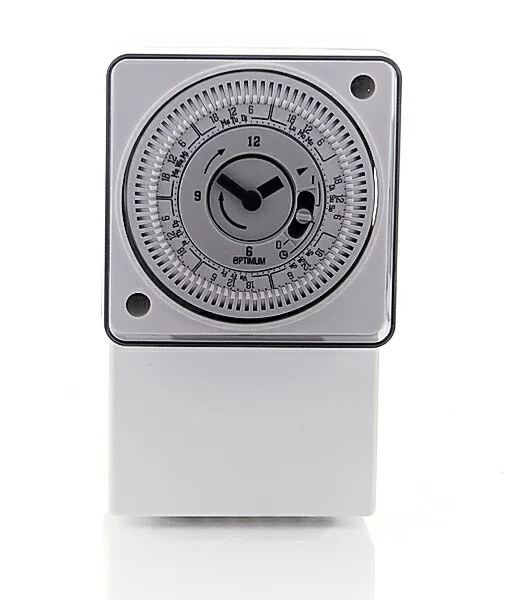
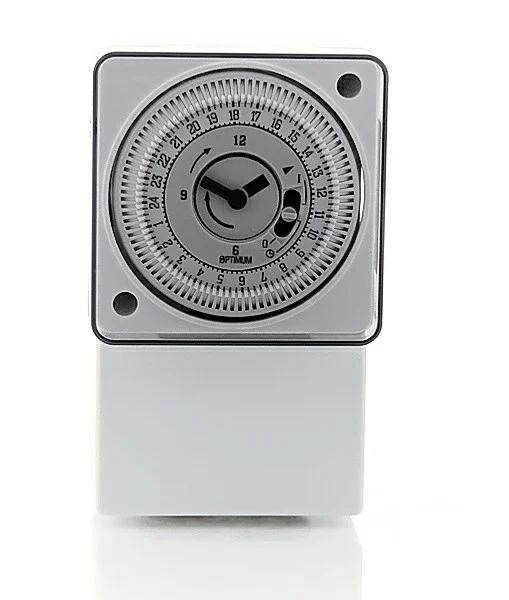
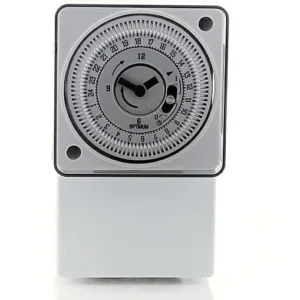
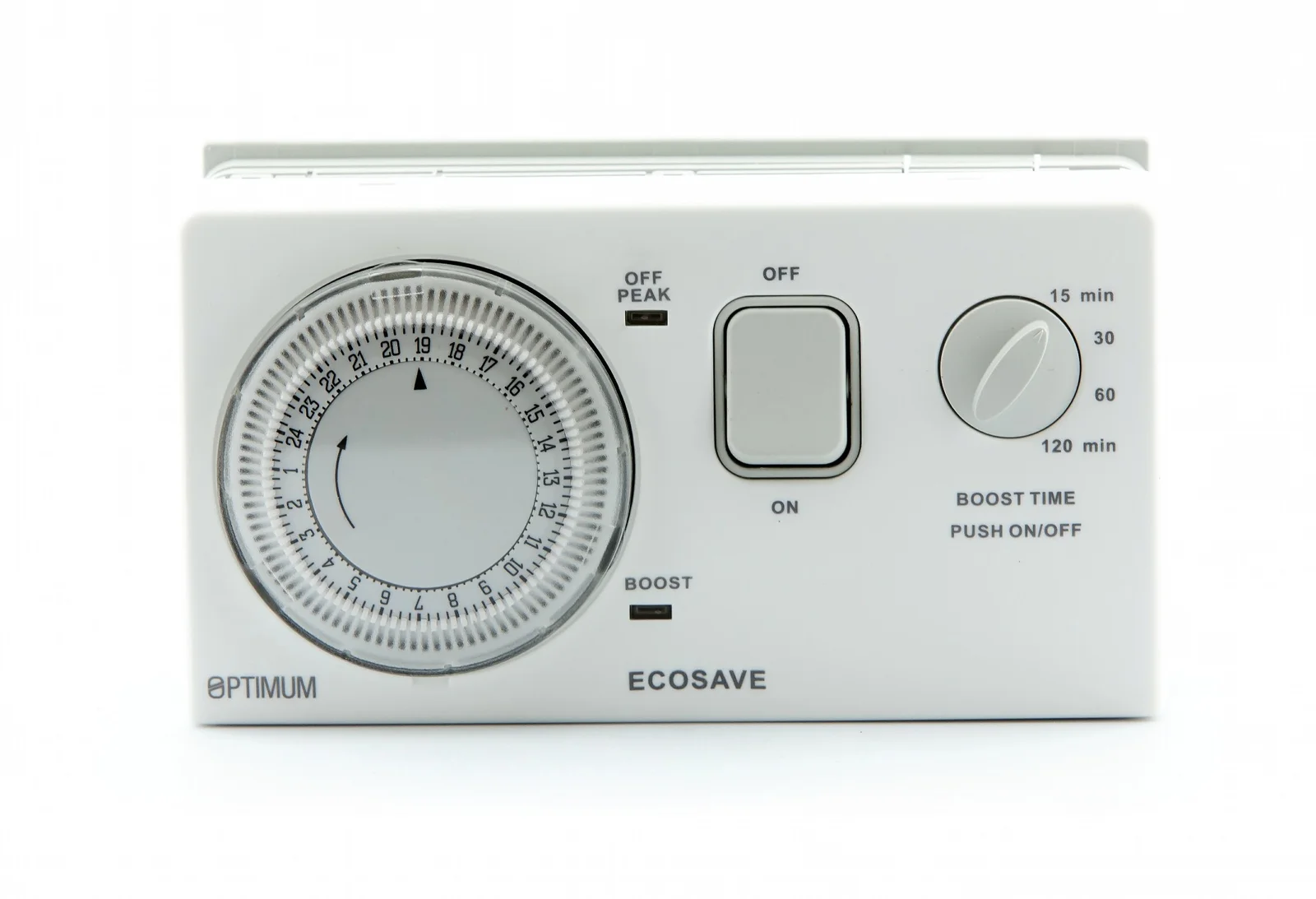
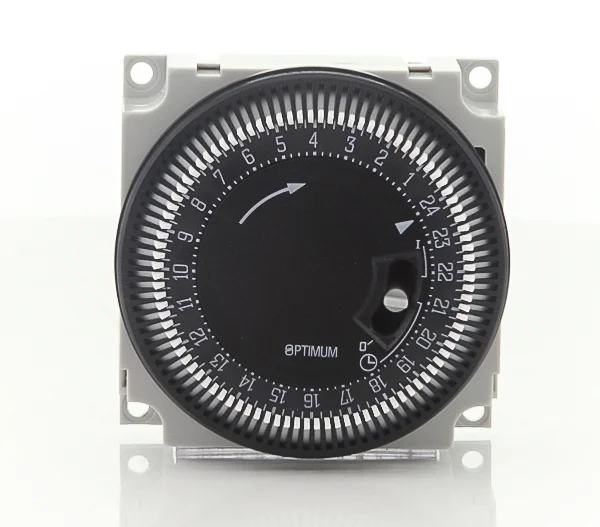
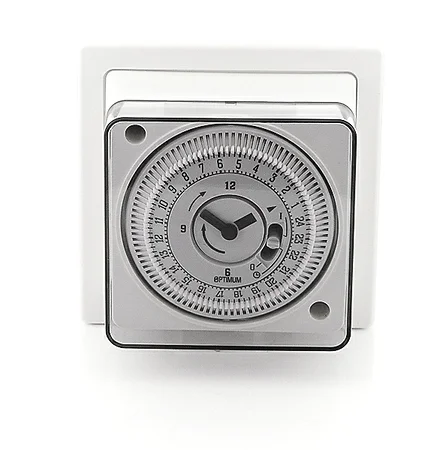
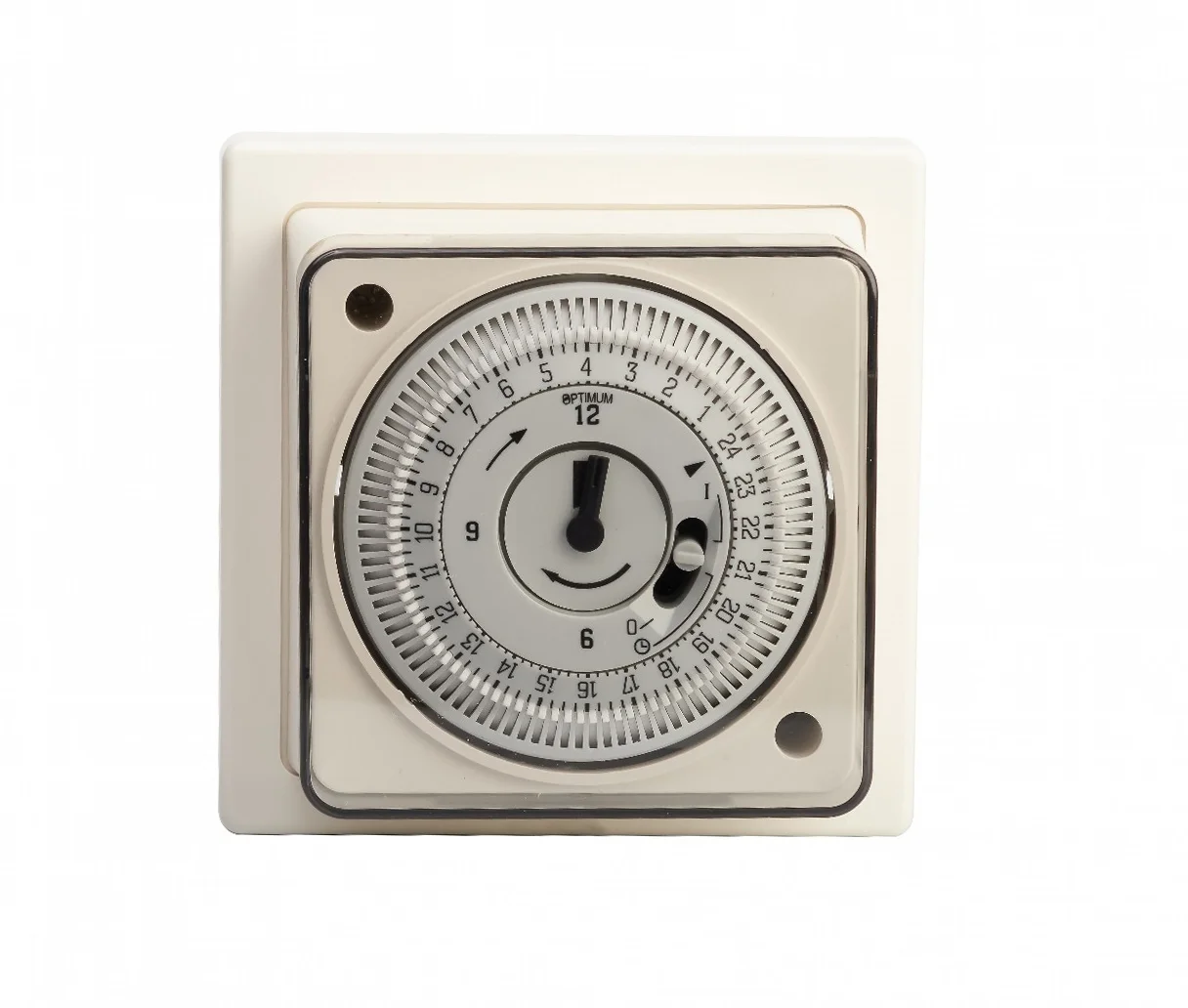
This is a simple, mechanical 24‑hour captive‑tappet time switch intended to sit over a single pattress box and control a low‑voltage control circuit. It uses a 24V DC motor and a clear 24‑hour dial with 15‑minute tappet intervals so you can set repeating daily ON/OFF periods reliably. Because the output is a volt‑free SPDT changeover contact, it’s placed correctly as a control device rather than a plug‑in mains timer.
Put plainly: it’s the kind of timer electricians fit where you need dependable daily scheduling for heating or control equipment that uses a 24V control supply — for example zone valves, boiler interlocks, or heating plant controls — and where a simple mechanical programming method (tappets on a dial) is preferred over digital programming.
How it operates
The mechanism is synchronous: rotate the dial to set the current time and move the captive tappets to define ON or OFF periods in 15‑minute steps. The unit provides three manual override positions (Timed / OFF / Constant) so you can temporarily force the output without changing tappets. The switching element is a volt‑free single‑pole double‑throw (SPDT) changeover contact, driven by the 24V DC motor — that means the timer itself runs from 24V DC and the switching contact does not carry any motor voltage unless you wire it to do so.
Installation and wiring notes
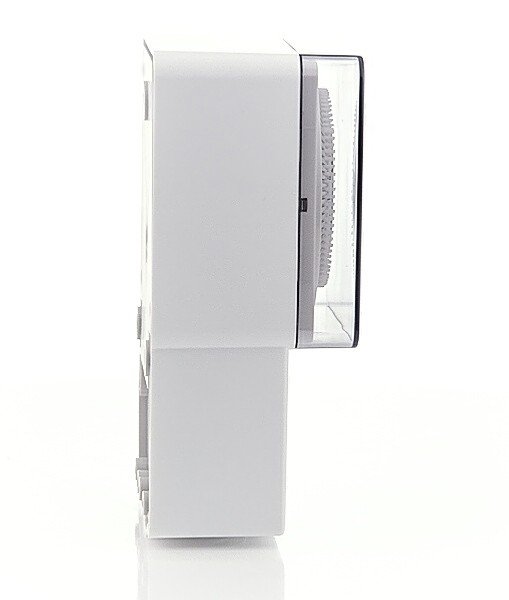
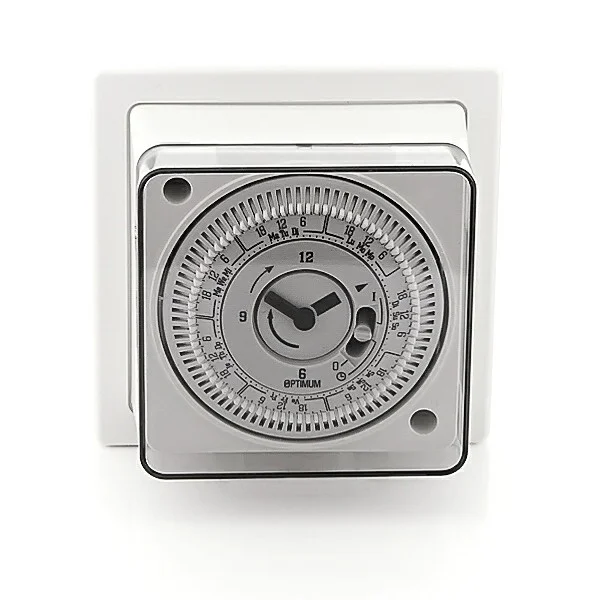
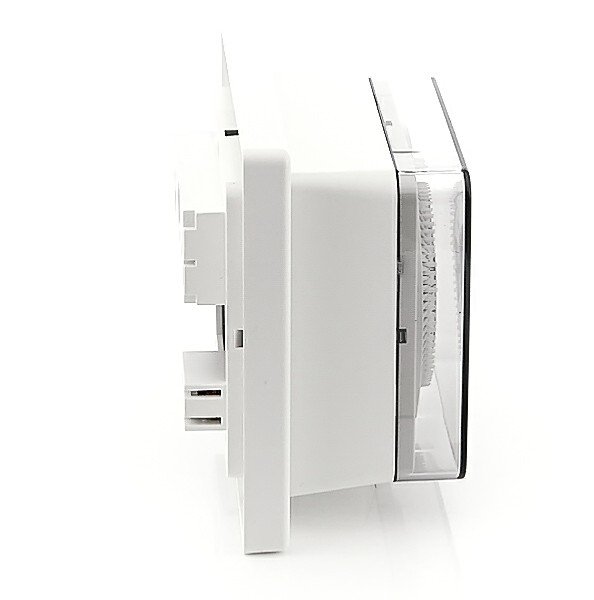
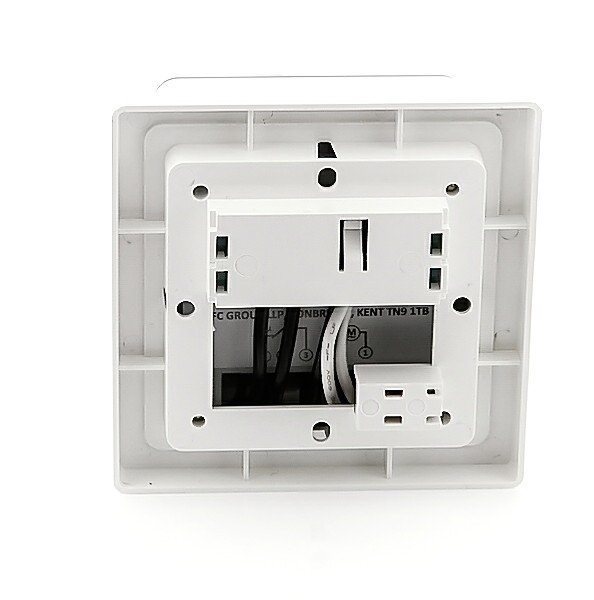
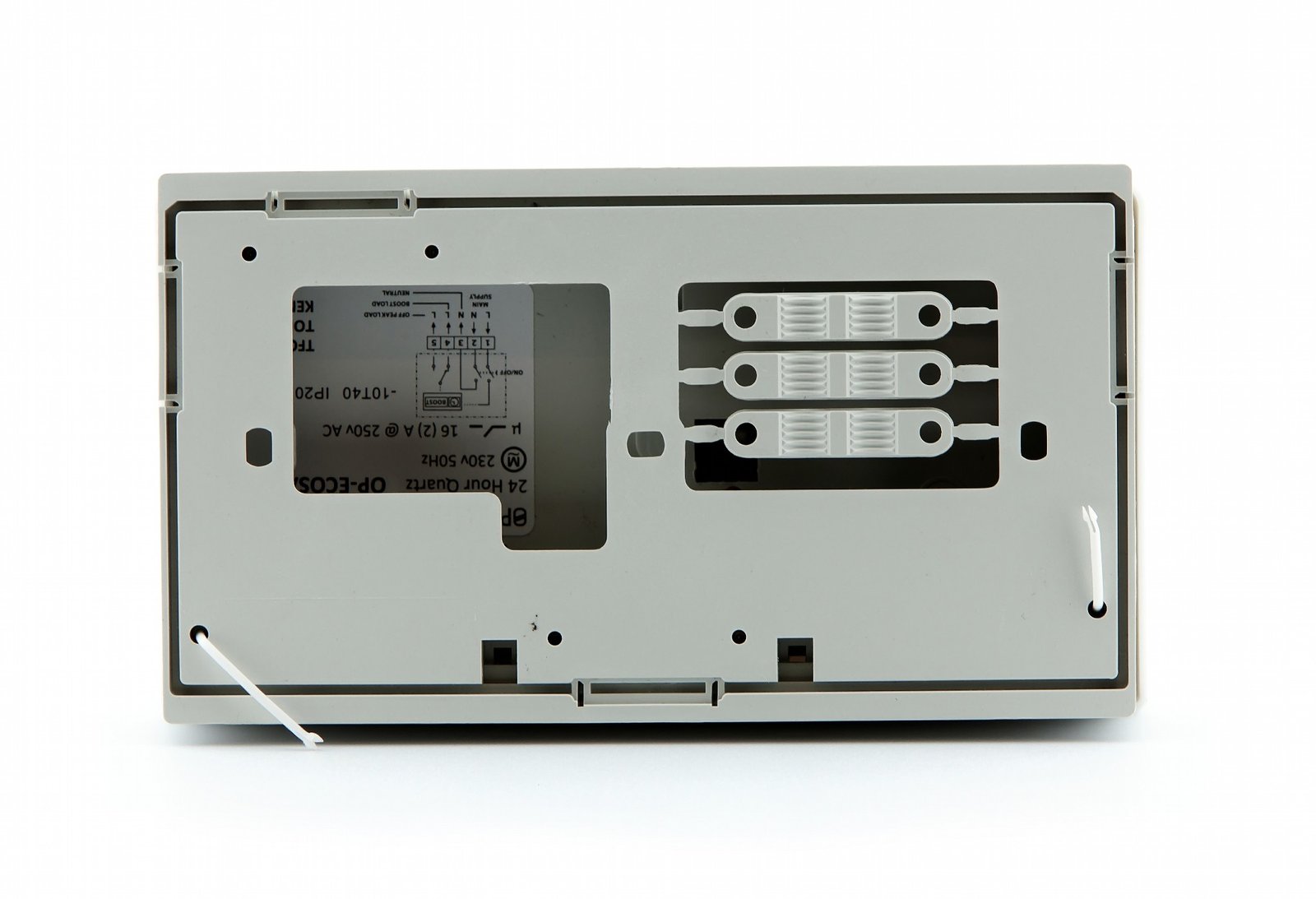
The timer is designed for fixed wiring and installs on either a surface pattress or into a flush (in‑wall) pattress box. Internally it uses screw terminal connections (five terminals plus an earth park) and the wiring diagrams in the instructions show both volt‑free switching and low‑voltage switching arrangements. Because the motor is 24V DC, confirm your control supply is the correct polarity and rating before installation.
Practical points for electricians: the unit is Class II control with IP20 protection, so it’s intended for dry interior locations and must be mounted in an appropriate pattress. Follow the included wiring diagram — for low‑voltage switching you will use the V+ and V– motor terminals as well as the contact terminals for the controlled circuit. The installer must fit any required link wires and ensure the timer is accessible for setting and occasional maintenance.
Where it suits and where it doesn’t
This model is best where a straightforward daily schedule is enough and where you want a robust, mechanical programming method that is easy to understand on site. Typical applications include central heating control circuits, pump or valve interlocks, small control panels and other automation tasks running on a 24V DC control supply.
There are important limitations to bear in mind. The SPDT contact is rated 16A for resistive loads and 8A for inductive loads — fine for many control circuits, but not for switching mains LED or discharge lighting directly. The manufacturer specifically warns that fluorescent, HID, SON and LED lamps should not be connected directly; if you must control lighting of these types, fit a suitably rated contactor or relay and use the timer to operate the contactor coil. Also, because the timer is a fixed‑wiring pattress device rather than a plug‑in socket product, it must be installed by a competent electrician to meet wiring regulations.
Practical advantages and limitations
- Advantages: simple programming with captive tappets (15‑minute resolution), reliable mechanical operation, manual override and clear 24‑hour display; suitable for 24V DC control systems.
- Limitations: mechanical only (no weekly programming or advanced schedules), IP20 indoor use only, not for direct switching of many modern lamp types without additional contactor, and limited inductive switching capacity.
Key specifications
- Supply: 24V DC motor
- Switch: volt‑free SPDT (changeover)
- Switch rating: 16A resistive / 8A inductive
- Programming: 24‑hour dial, 15‑minute tappet intervals
- Mounting: surface or in‑wall single pattress box
- Manual override: Timed / OFF / Constant
- Protection/Environment: IP20, Class II control, indoor use
- Typical accuracy and durability: synchronous motor with standard mechanical tolerances and serviceable tappets
If you need weekly programming, multiple independent programmes per day, or remote connectivity, a digital or multi‑day timer would be a better fit. Conversely, if you want a straightforward, low‑cost and durable daily timer to sit in a pattress box and switch a 24V control circuit, this is a practical and widely stocked option from the Optimum/TFC Group range.