

Description
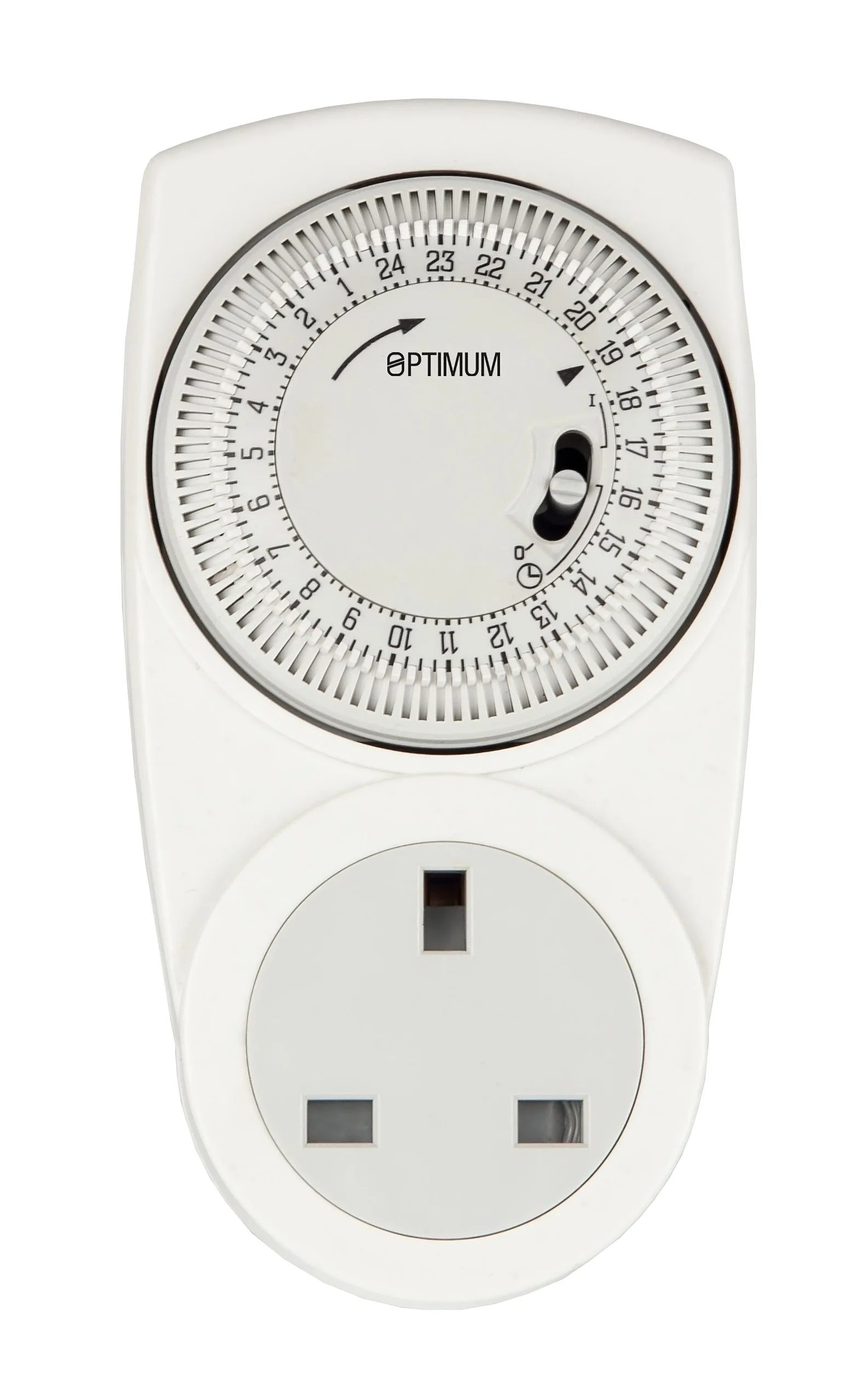
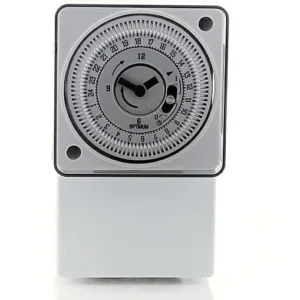
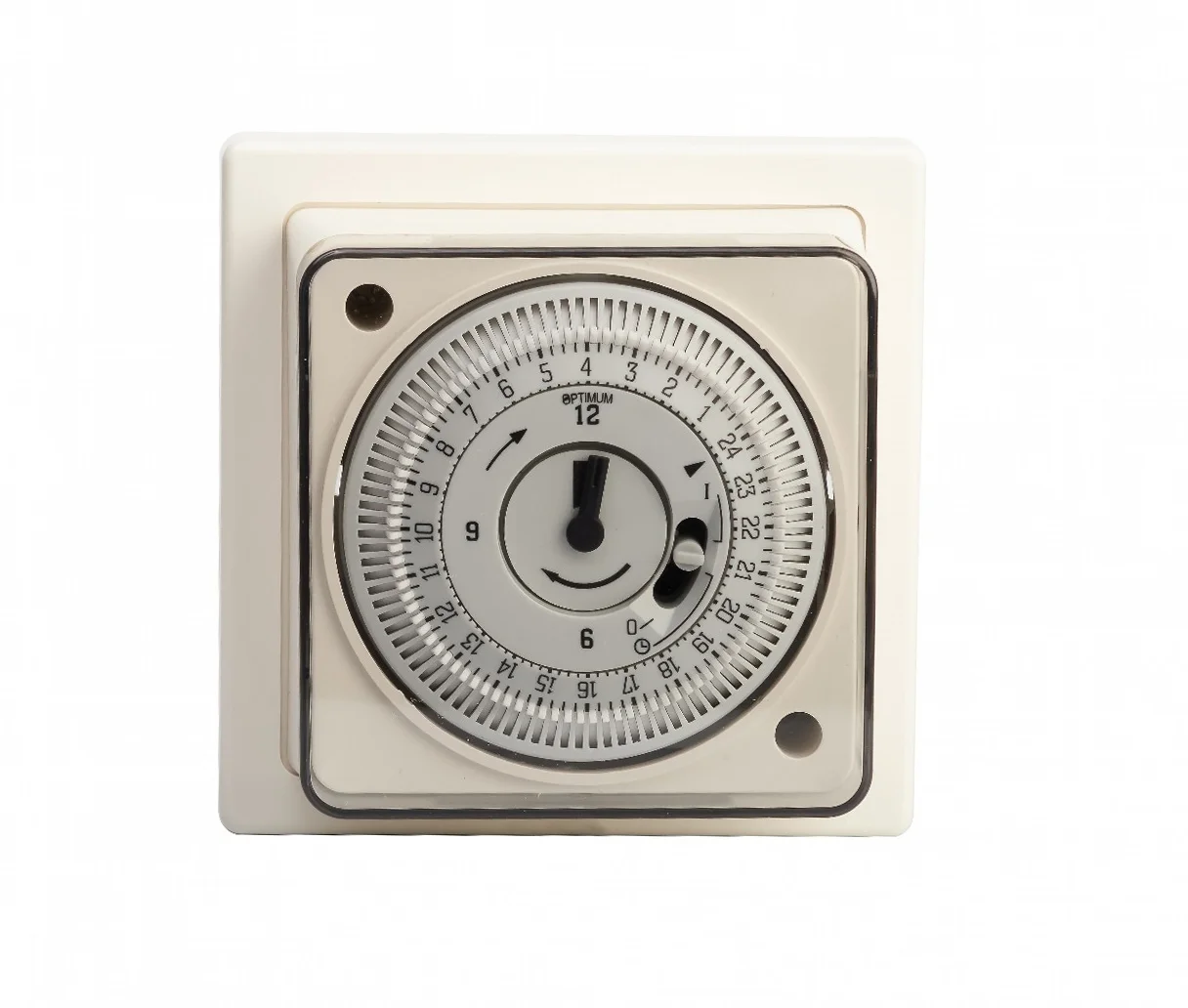
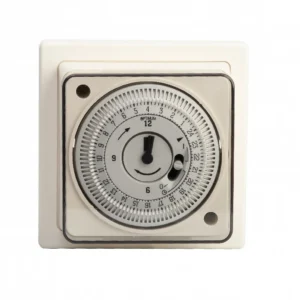
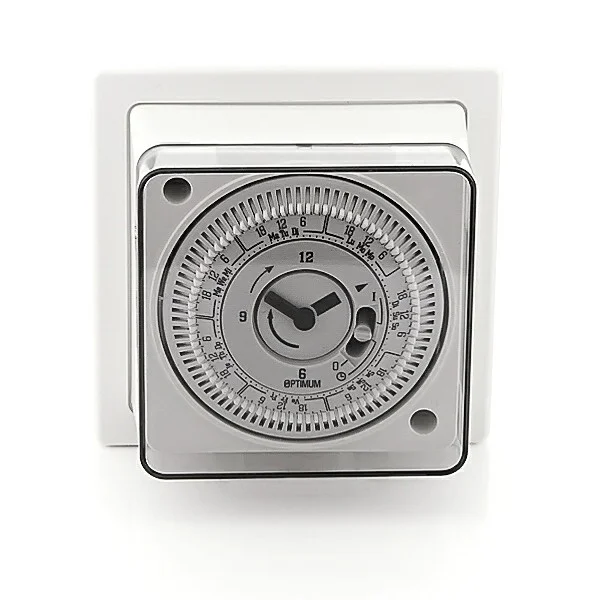
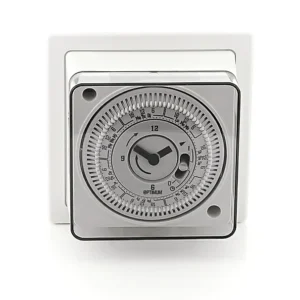
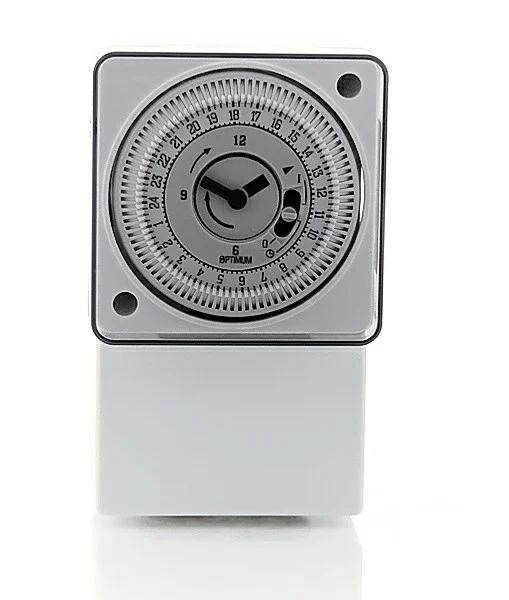
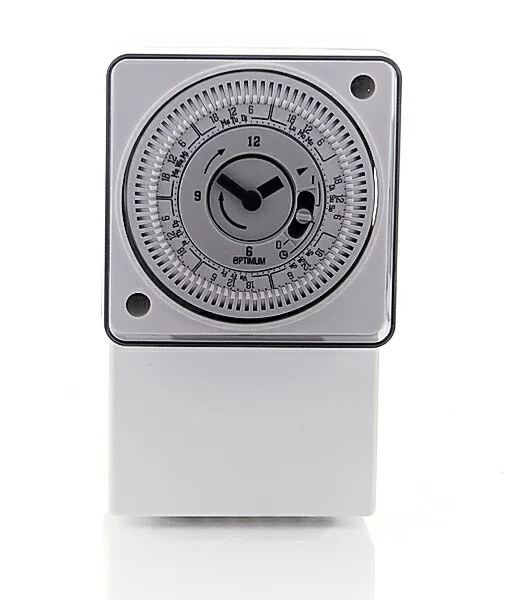
This is a straightforward mechanical weekly timeswitch intended mainly for immersion heaters and other simple resistive or inductive loads. It’s a surface‑mount, captive‑tappet 7‑day clock timer that gives you repeatable on/off scheduling across a full week, using 2‑hour tappet increments. Put simply: it lets an immersion element run only when you want it to, which can save energy on off‑peak tariffs and reduce unnecessary run‑time on older cylinders.
How it works in practice
The dial is divided into day sectors and runs on a synchronous 7‑day clock. Programming is by moving the captive tappets on the outer dial into the “IN” (on) or “OUT” (off) position — tappets operate in 2‑hour blocks so you plan on/off periods in that granularity. There is a three‑position manual override on the clock face: ON (I), AUTO (middle) and OFF (0), so you can temporarily force the heater or return it to scheduled control without reprogramming.
Installation and wiring notes
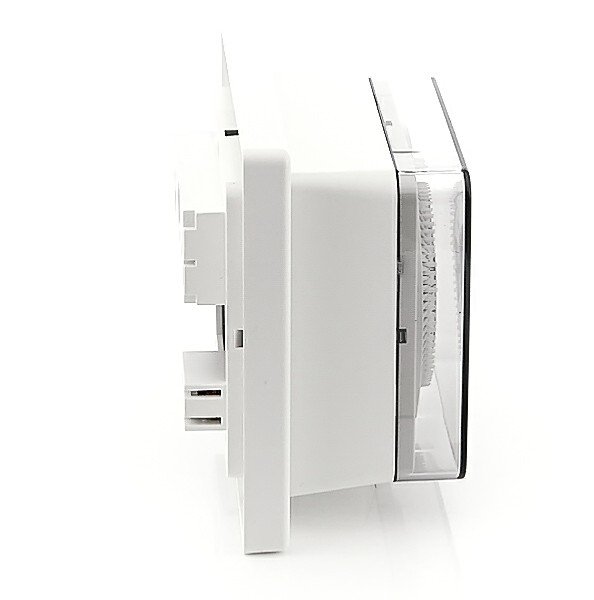
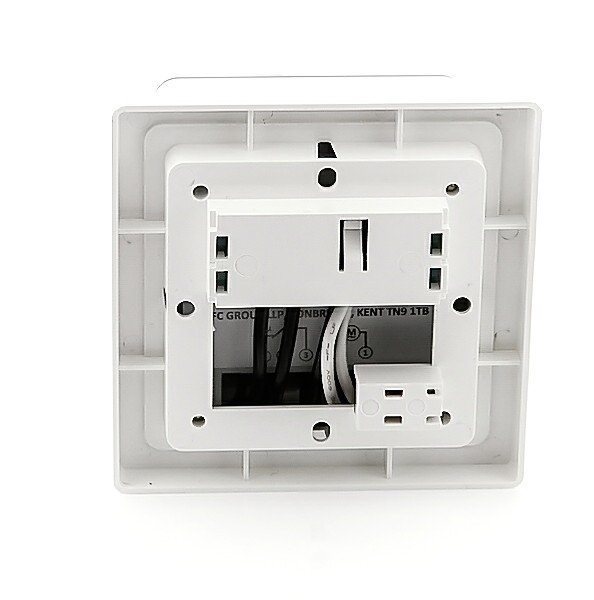
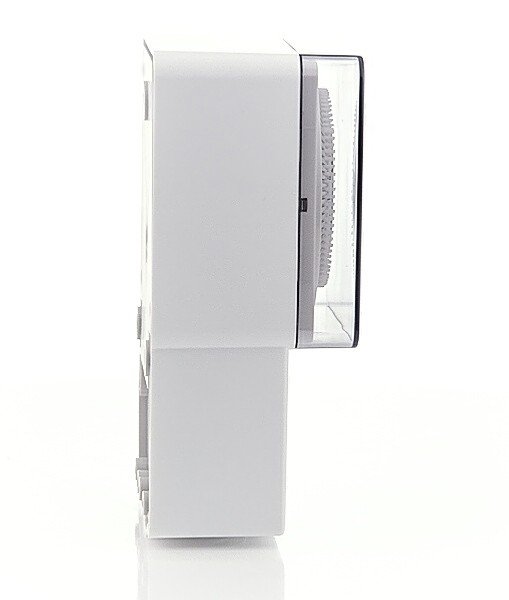
The unit is intended for surface mounting and includes a backplate with cable clamps and an earth park terminal for tidy, secure connections. It is supplied with a brass link fitted by default: leave that link in place for standard immersion/heater applications where the timer itself is powered from the mains and switches the load live. If you require volt‑free switching (for example to drive a contactor or because the control circuit is separate), the brass link is removable and the wiring arrangement changes — the instructions show which terminals become the supply and which are the switched common/NO/NC. The timer’s switching is via an SPDT (changeover) contact set, giving flexible wiring options for most simple control circuits.
Suitability, limits and practical points
This timer is built for simple, robust control rather than fine resolution or smart features. Its strengths are simplicity, mechanical reliability and a load rating that suits many immersion heaters and general purpose loads: 16 A for resistive loads and 8 A for inductive loads. That rating makes it appropriate as a direct controller for many domestic immersion elements, but not for switching modern discharge or LED lighting or loads that exceed those currents — a contactor should be used in those cases.
Practical details from the instructions worth noting: the minimum switching interval is two hours (so you cannot set shorter pulses), it is protection class IP20 (indoors only), and the manufacturer recommends installation by a qualified electrician in accordance with UK wiring regulations. The timer is not designed to be mounted on un‑earthed metal or metallised surfaces.
Programming and day‑to‑day use
Setting the correct time and day is the first step — the outer dial has markings for the days of the week so you align the clock pointer within the current day sector. Move the tappets to create the on/off windows you need; because tappets are captive they are easy to reposition but won’t fall out during handling. Once set, the unit will follow the programme every week until you change it. The manual override lets you temporarily force the output on or off without changing the weekly programme, which is handy during holidays or maintenance.
Key specifications
- 7‑day mechanical timer with captive tappets (2‑hour tappet intervals)
- Load rating: 16 A resistive, 8 A inductive
- Volt‑free SPDT (changeover) contacts; link removable to convert to volt‑free operation
- Supply: 220–240 V AC, 50 Hz (synchronous motor)
- Minimum switching interval: 2 hours; manual override: ON/AUTO/OFF
- Surface mounting; protection class IP20
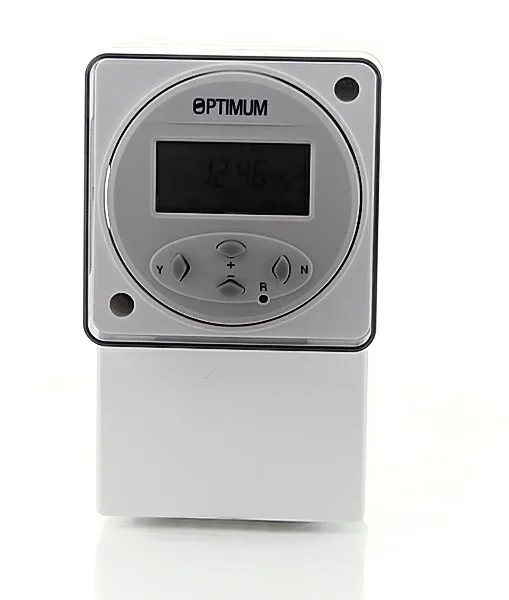
Overall, the OP‑IHTGPW is a practical, no‑nonsense weekly timeswitch for anyone who needs dependable scheduled control of an immersion heater or other straightforward loads. It isn’t clever — there’s no digital programming, smartphone app or minute‑resolution timing — but where simplicity, mechanical reliability and clear, repeatable weekly schedules matter, it’s a sensible, cost‑effective solution. Make sure the load and application match the switch ratings and the unit is installed per the instructions by a competent electrician.