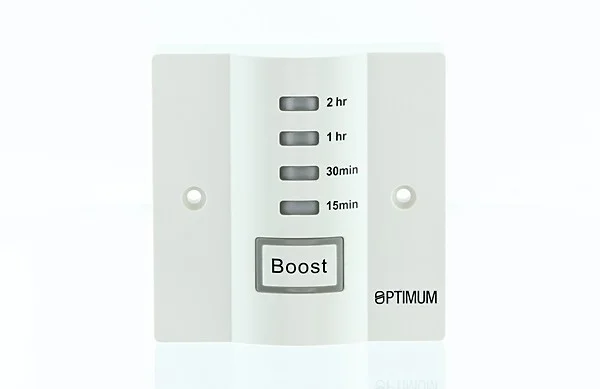
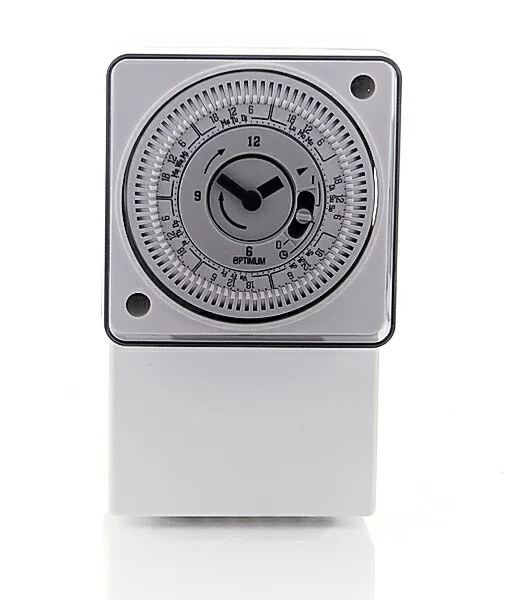
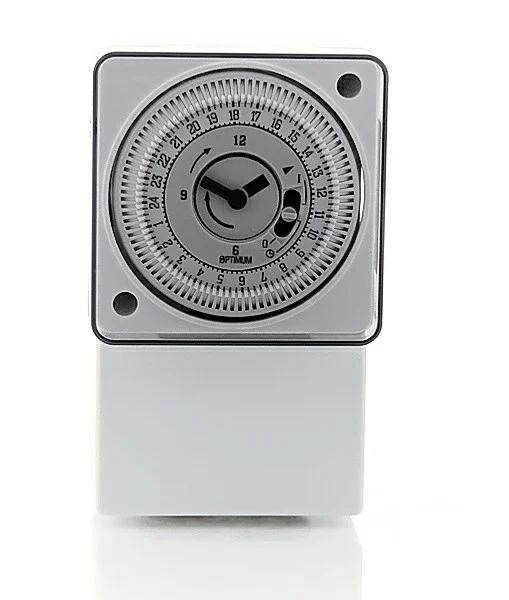


Description
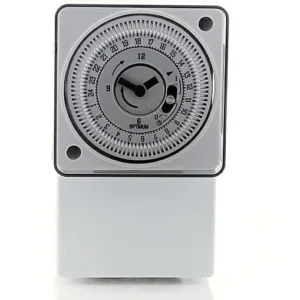
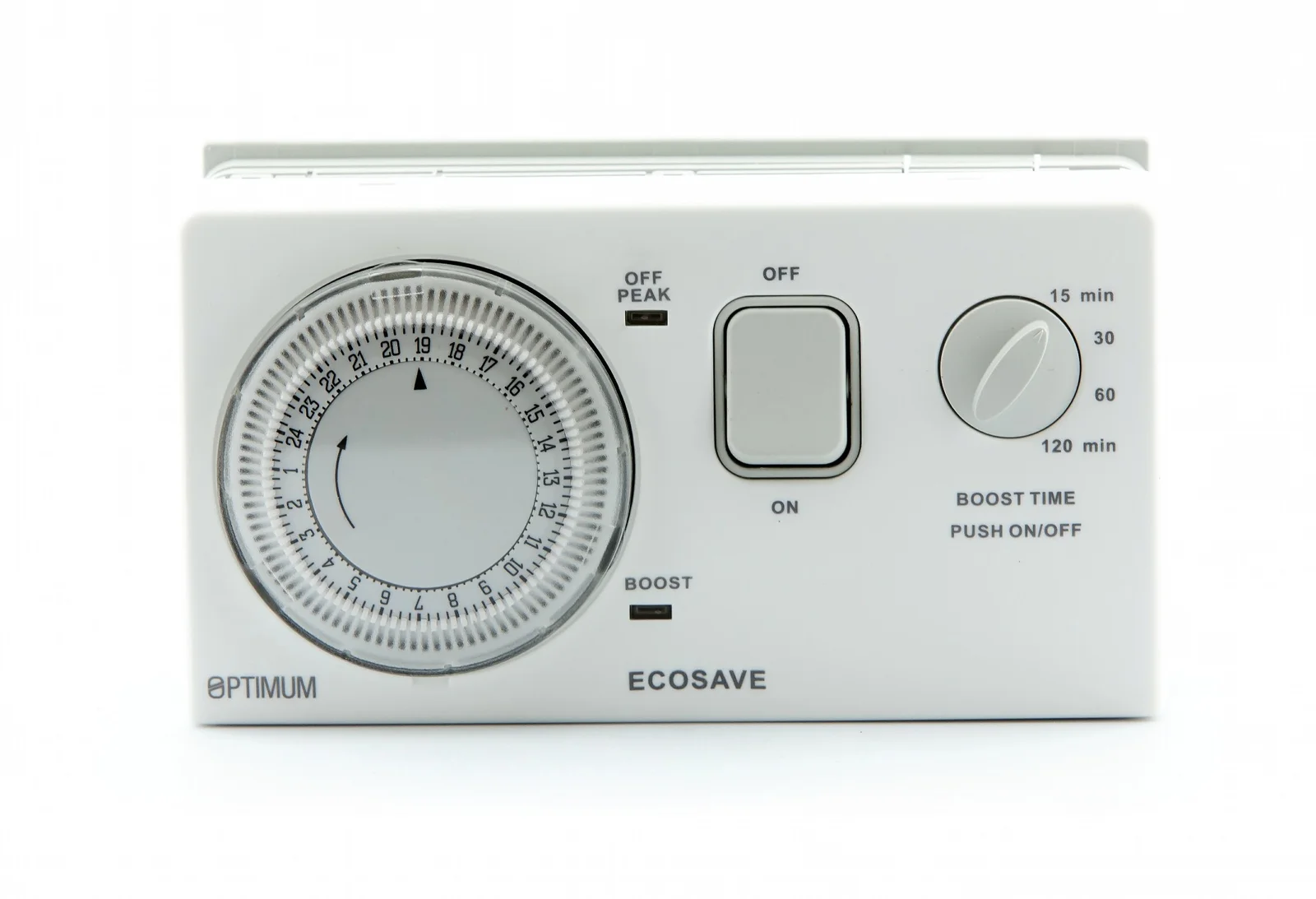
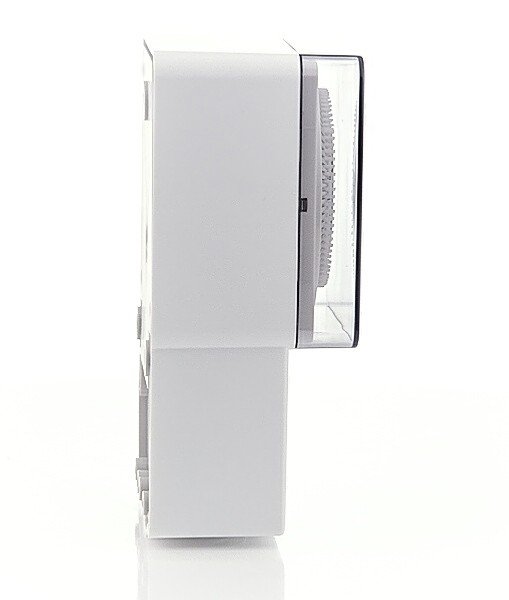
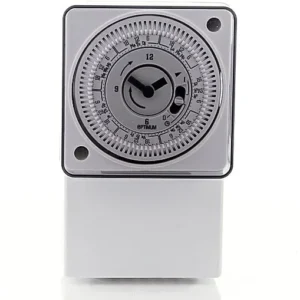
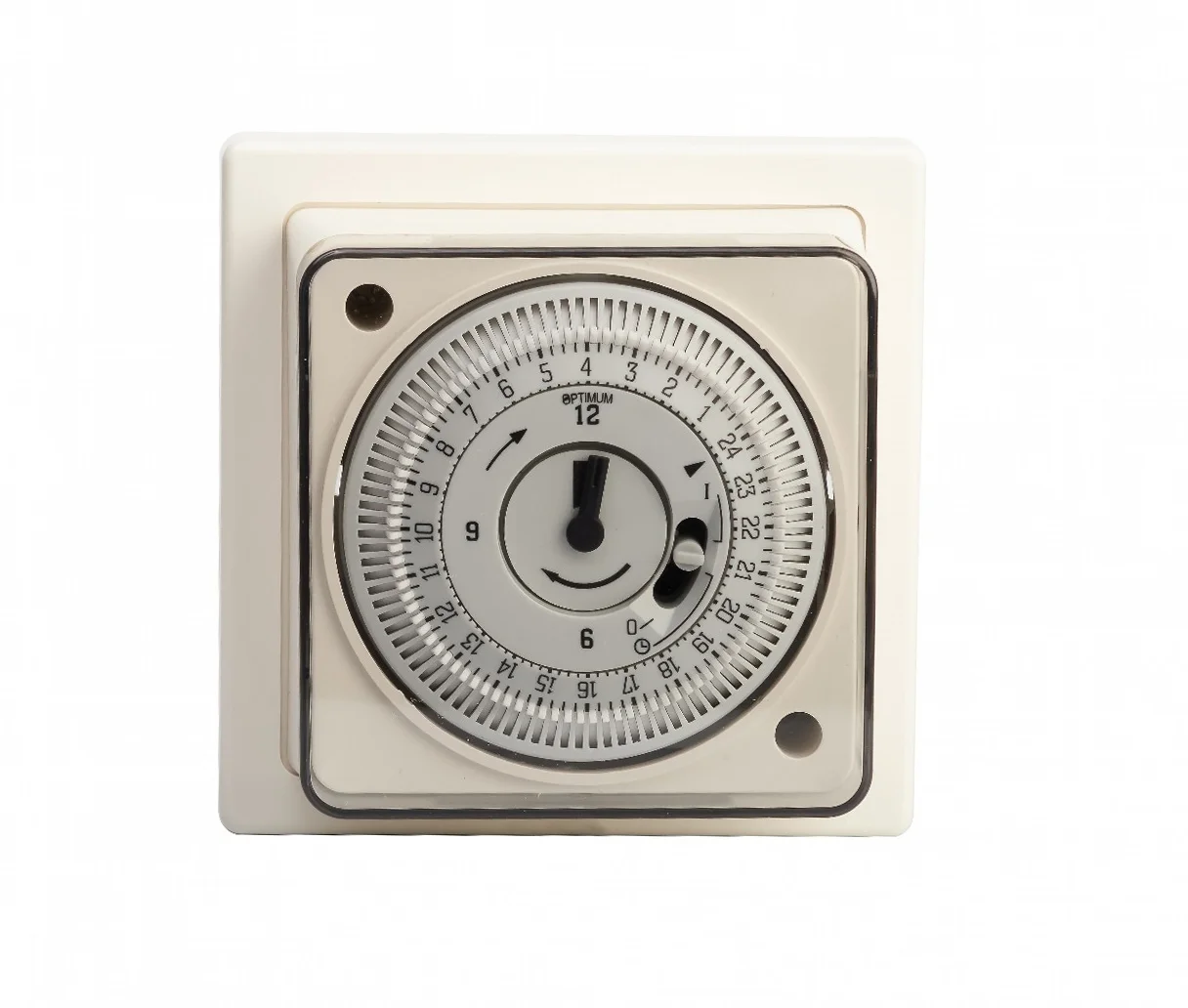
This is a simple, robust 24‑hour mechanical timer intended primarily for immersion heaters and other mains‑powered resistive or inductive loads. It’s a surface‑mount unit with a 24‑hour synchronous dial divided into 15‑minute tappet intervals, a three‑position manual selector (Fix ON / Timed / Fix OFF) and a removable link that converts the switch from mains‑linked to volt‑free operation.
It’s best thought of as a basic daily scheduler rather than a precision electronic controller: set the time, push the tappets in or out to mark ON/OFF periods and the internal synchronous motor runs the dial in step with mains frequency. The construction and feature set make it suitable for simple domestic hot‑water scheduling and similar time‑based control tasks where an inexpensive, proven mechanical solution is preferred over digital timers or smart controls.
Key specifications
- Model/code: OP‑IHTGPT
- Supply: 220–240 V AC, 50 Hz
- Switch type: Volt‑free changeover (SPDT) — removable link for mains switching
- Load ratings: 16 A resistive, 8 A inductive
- Programming intervals: 15‑minute captive tappets, 24‑hour synchronous dial
- Manual override: Fix ON / Timed / Fix OFF
- Protection class: IP20; Class II control
- Dimensions (nominal): 121 × 72 × 52 mm; weight ~160 g
How it works and what it’s good for
The OP‑IHTGPT uses a mains‑synchronised motor and a mechanical dial with captive tappets to create daily ON/OFF periods in 15‑minute steps. That makes it straightforward to programme a typical hot‑water schedule — for example, bringing the cylinder up to temperature once or twice a day timed around cheaper tariff windows — or to switch other loads that don’t require rapid cycling or sub‑15‑minute control.
Because the switch is a changeover (SPDT) contact with a removable brass link, you can fit it either as a mains‑switching timer (link fitted) or as a volt‑free control for a contractor/relay (link removed). That flexibility is useful when you need the timer to drive a contactor for high current equipment, or when integrating it into an existing control loop that expects volt‑free contacts.
Installation, wiring and controls
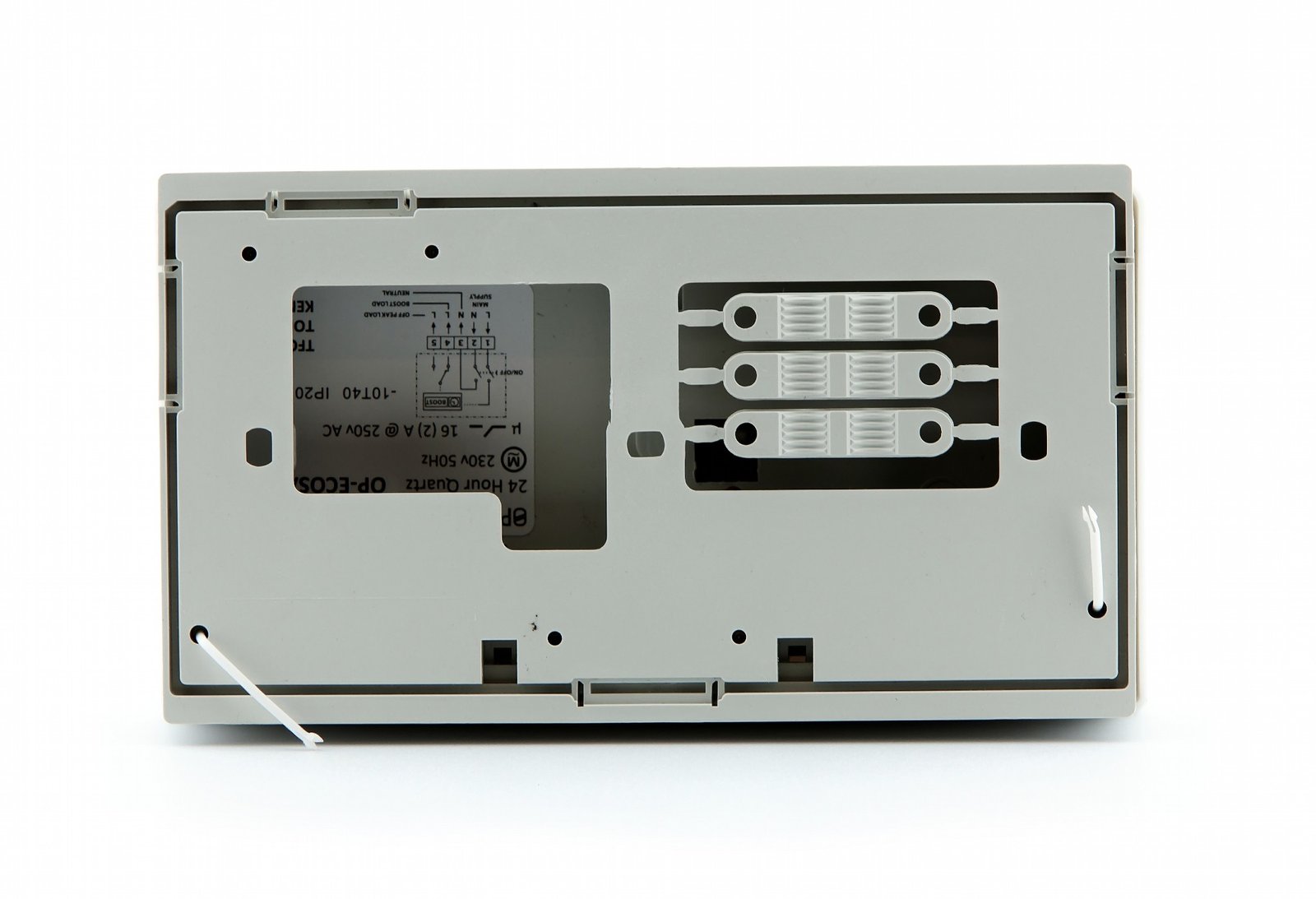
The unit is surface‑mount and intended to be fixed to a dry, non‑metallic surface with the supplied backplate and cable clamps. Wiring is via five screw terminals plus an earth park; when used for immersion heaters the pre‑fitted brass link is retained between the designated terminals, and removing that link converts the output to volt‑free operation. The dial has a three‑position manual selector: ON, AUTO (timed) and OFF — a fixed selection that only changes when you move the lever again.
Practical installation notes: it must be installed in accordance with current IEE wiring regulations and TFC Group recommend fitting by a qualified electrician. The timer is Class II with IP20 protection, so it’s for indoor, dry locations only and should not be mounted where it will be exposed to rain or persistent condensation.
Compatibility and limitations
The OP‑IHTGPT is rated 16 A resistive and 8 A inductive (cosφ 0.6). That covers typical domestic immersion heaters (up to about 3–3.5 kW depending on supply) when wired correctly and/or used to drive a suitably sized contactor. It is explicitly not suitable for direct switching of discharge lamps, HID, SON or LED lighting: those loads require a contactor or a specifically rated switching device because of different inrush and driver electronics.
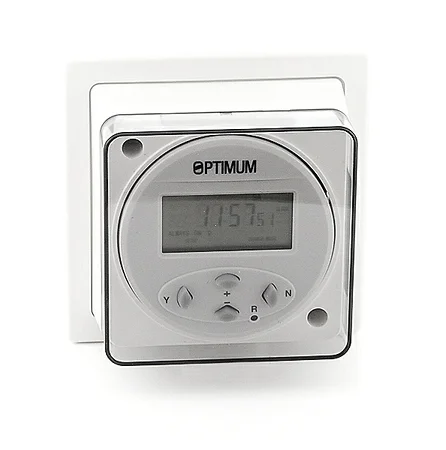
Also remember the timer’s minimum switching resolution is 15 minutes — it’s not suitable for applications that need short or frequent on/off bursts. Accuracy is mains‑synchronised and the mechanism is typical of mechanical 24‑hour timers: reliable for daily scheduling but without the programmable flexibility, remote control or energy‑monitoring features of digital or smart timers.
Advantages and practical tips
- Advantages: very low cost, simple to set up and understand, captive tappets avoid losing parts, and the removable link makes the unit versatile for mains or volt‑free control.
- Tip: if you plan to control an immersion with off‑peak tariffs, use the timer to control a contactor rather than trying to run the heater straight from the timer if the load is close to the timer’s maximum rating — this reduces wear on the timer contacts.
- Tip: do not rotate the dial anti‑clockwise (the instructions warn this will damage the mechanism); always set time by rotating clockwise.
Overall, the OP‑IHTGPT is a no‑frills, dependable mechanical daily timer for straightforward immersion and general‑purpose time switching. It’s best where simplicity, low cost and proven mechanical operation are priorities, and where the limitations in switching resolution and protection class are acceptable.