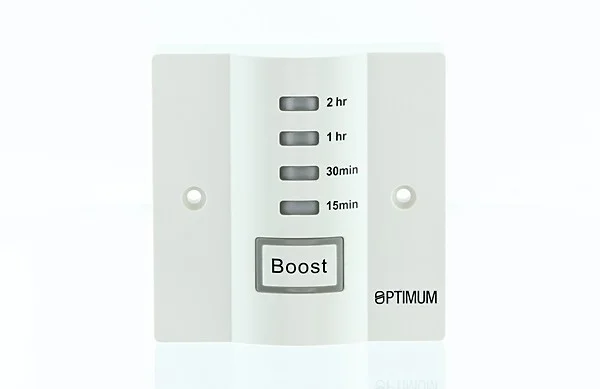


Description
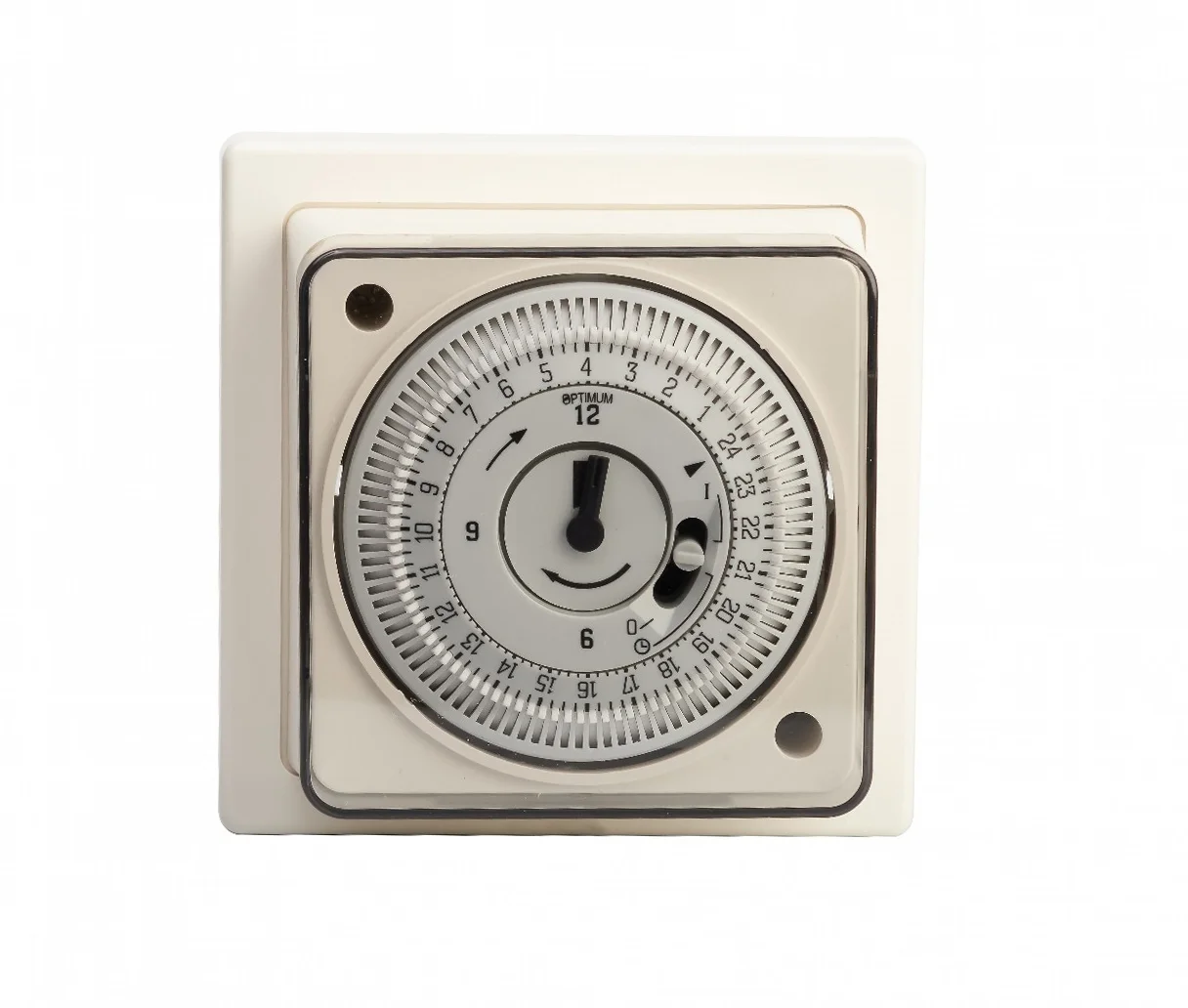
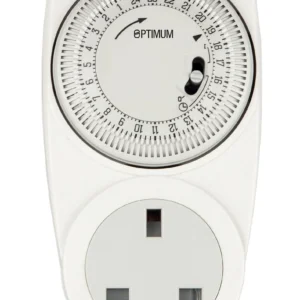
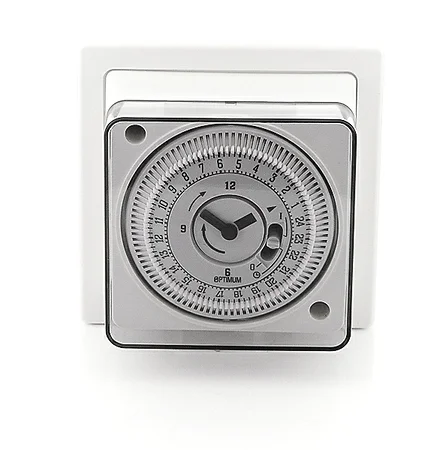
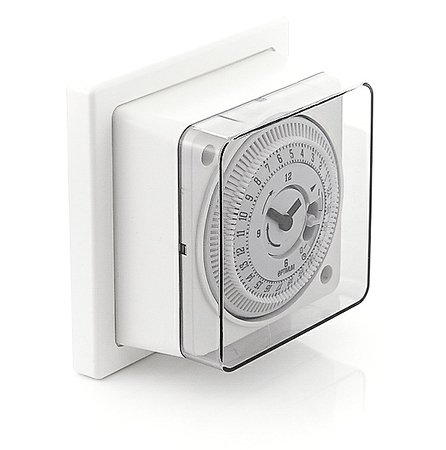
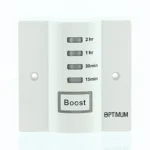
The OP-EBT2 is a compact, single‑gang electronic boost timer designed to deliver short, timed mains power to high‑demand domestic appliances such as immersion heaters and towel rails. It uses a one‑button interface to step through four pre‑set boost periods (15 minutes, 30 minutes, 1 hour and 2 hours) and shows the selected timing with LED indicators, making it easy to call for a controlled burst of heat without leaving an appliance permanently energised.
Key specifications
- Selectable boost periods: 15 min, 30 min, 1 hr, 2 hr
- Supply: 230 V, 50 Hz
- Switching capacity: 16 A resistive (mains linked relay)
- Dimensions (mm): 85 × 85 × 30
- Mounting: standard pattress (socket) box; surface or recessed
- Quartz‑regulated timing (typical accuracy ±1.0 s)
These are the product’s core facts as supplied by the manufacturer and authorised distributors; the unit is sold under the Optimum brand (TFC Group) and is commonly stocked by UK electrical wholesalers.
How it works in day‑to‑day use
Operation is deliberately simple. A single press cycles through the four pre‑set boost durations; pressing again cancels an active boost. The chosen period is indicated by LEDs so the installer or occupant can confirm the setting at a glance. Because the timer switches the mains feed through an internal relay it is effectively acting as a timed on/off switch — ideal for resistive loads such as immersion heaters or fixed towel rails, where you want heat on demand for a short, defined period. Quartz timing keeps the periods accurate and repeatable.
Installation and electrical compatibility
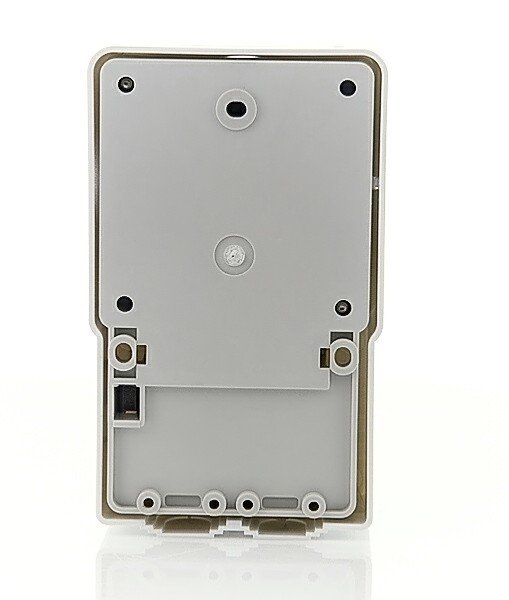
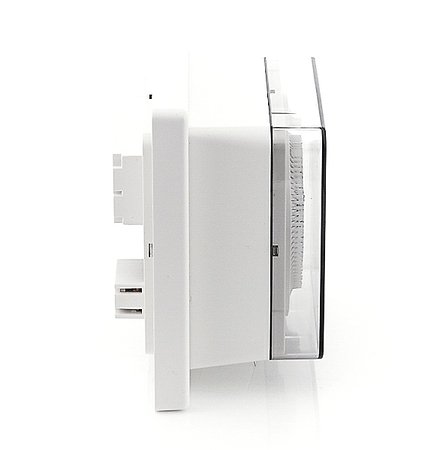
The OP-EBT2 is built for socket‑box mounting: it fits into a standard single pattress box and also allows surface mounting when required. It provides 4 screw‑type wire‑protect terminals plus an earth park terminal and a surface‑run cable outlet with a clamp for strain relief. The relay is rated for 16 A resistive loads; the documentation therefore specifies resistive switching only — this is important when deciding whether the timer is appropriate for your application. The unit is intended for a 230 V, 50 Hz mains supply. Installation requires standard electrical wiring practice and, in the UK, should be completed by a competent electrician in accordance with current wiring regulations.
Suitability, strengths and sensible limits
Where the OP-EBT2 does well is straightforward timed control of resistive heating elements: it’s compact, inexpensive, and removes the need to leave a heater permanently switched on. The single‑button interface is useful in properties where simple, obvious controls are preferred — for example rental properties, small flats or outbuildings. The LED indicators are helpful for quick checks of which boost period is active and for confirming cancellation.
There are two important limitations to note. First, the relay is specified for resistive loads; inductive or motor loads may exceed the device’s intended duty and require a different controller or an appropriately rated contactor. Second, the OP-EBT2 provides basic timed control and does not include remote, programmable or smart functionality — it’s not intended as a replacement for multi‑way programming clocks or smart controllers. If you need scheduling, remote control or integration with a central smart system, you’ll need a different product.
Practical points for buyers and installers
Before buying, check the exact nature of the load you plan to switch. Immersion heaters and most towel rails are resistive and therefore suitable; pumped hot‑water systems, motors or some electronic units may not be. Confirm the local supply is 230 V and remember that although the product is compact, you must allow enough depth in the pattress box for safe wiring. The manufacturer provides a short installation sheet and product data sheet that include wiring diagrams, terminal identifications and environmental ratings; consult these during installation.
Overall, the OP-EBT2 is a practical, no‑nonsense solution if you want a simple, visible, on‑demand boost for resistive heating circuits. Its strengths are simplicity, compact size and compatibility with standard socket‑box wiring; its limitations are the lack of programmability and the restriction to resistive mains switching, which should guide whether it’s the right fit for your particular heating setup.