Description
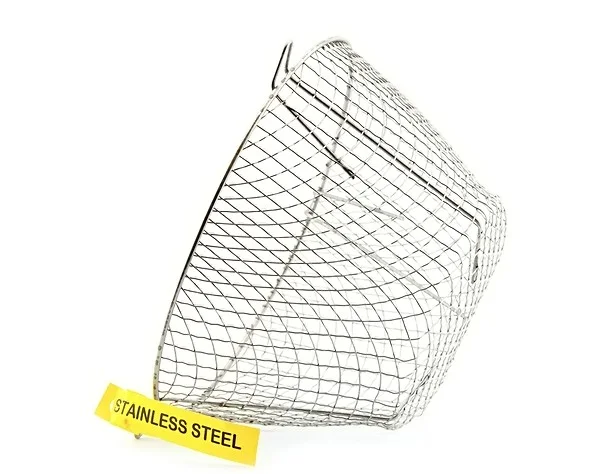
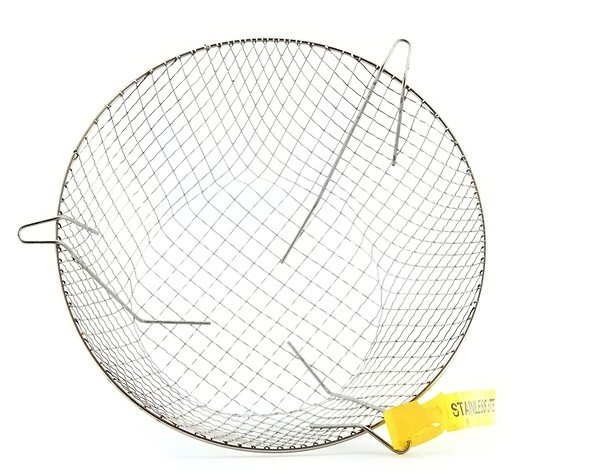
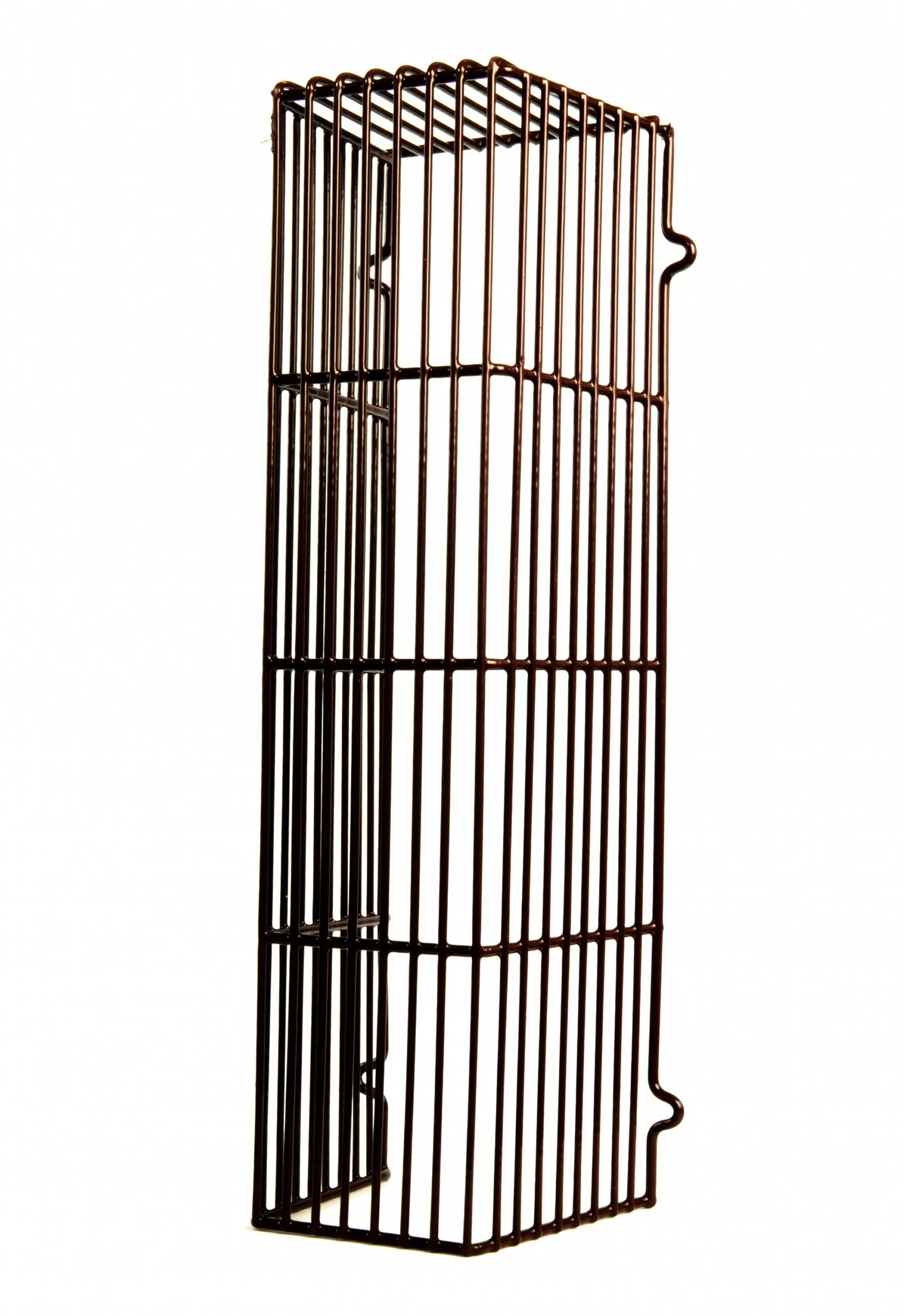
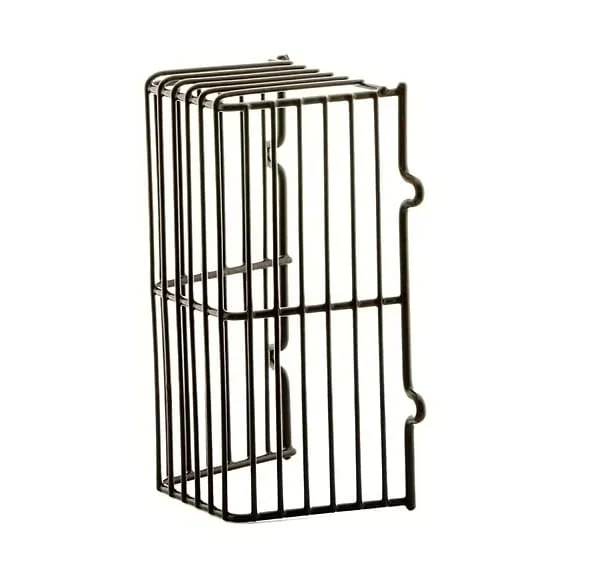
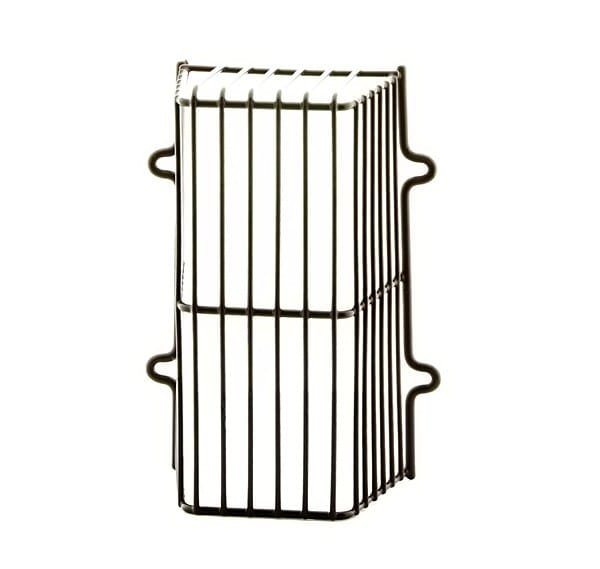
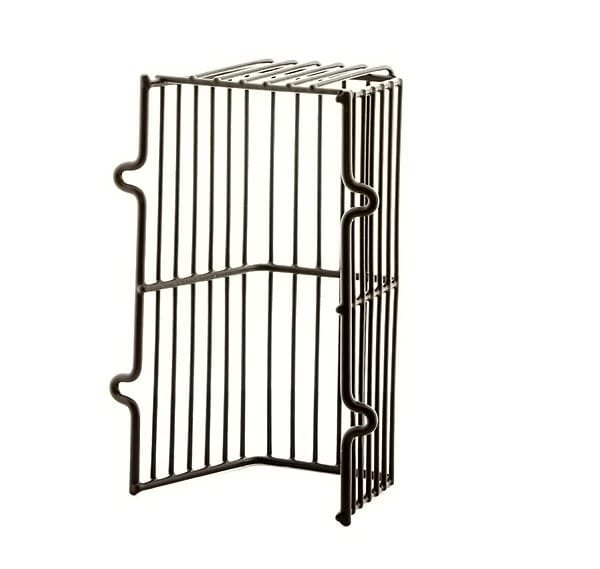
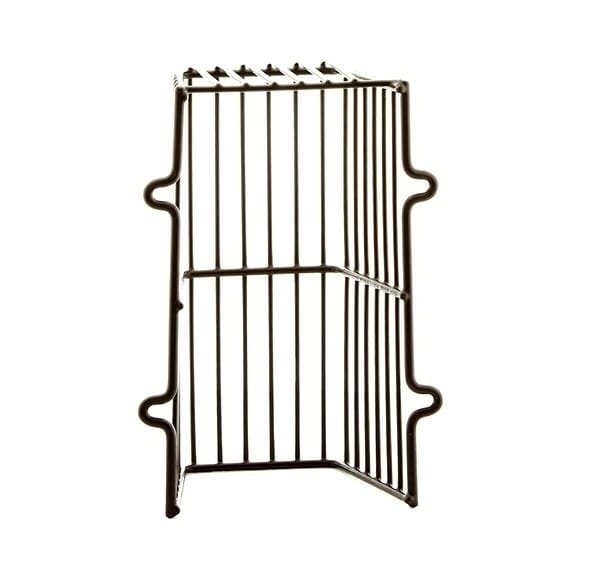
This is a small, purpose‑made wire guard intended to sit around a domestic boiler’s pressure‑relief/overflow outlet where that outlet discharges to the outside. Its role is straightforward: provide a physical barrier so people (children in particular) cannot readily touch or come into direct contact with hot discharge water or steam from a pressure‑relief event, while still allowing the outlet to function and remain visible.
The unit is formed from mild steel wirework and finished with a brown low‑density polyethylene plastic coating. At 204mm x 102mm x 76mm (8″ x 4″ x 3″) it’s compact enough to fit neatly around standard vertical overflow/terminal pipe outlets and is commonly specified for domestic heating installations where a protective cage is required by good practice or where Building Regulations guidance (G3) suggests a guard should be fitted to prevent accidental contact.
Key specifications
- Model / code: TGDOF843
- Material: Mild steel wire construction
- Finish: Brown plastic (low‑density polyethylene) coating
- Outside dimensions: 204mm x 102mm x 76mm (8″ x 4″ x 3″)
- Application: Protective guard for boiler pressure‑relief / overflow discharge outlets
How it works and where it’s appropriate
The guard is essentially a mesh cage that surrounds the terminal or short length of overflow pipe as it exits a wall. It prevents fingers or small hands from reaching the discharge point and reduces the likelihood of an accidental scald if the pressure‑relief valve operates. It does not alter the hydraulic behaviour of the boiler, nor does it slow or stop a discharge; the openings remain large enough for free flow so the safety valve and tundish can still operate correctly and be visually inspected.
Because of the plastic coating, this TGDOF843 variant is intended for condensing gas boiler applications where the exhaust or discharge is cooler and can produce acidic condensate that might otherwise accelerate corrosion of plain zinc finishes. The manufacturer’s product guidance also makes clear that different finishes exist (zinc‑plated, JS500, stainless steel) for other appliance types and environments — for example stainless steel is recommended where full weather resistance or coastal exposure is a concern, and zinc/JS500 variants are targeted at non‑condensing gas or non‑condensing oil installations respectively.
Installation and practical points
The guard is small and simple to fit but should be installed so it does not block or cap the discharge. It is normally fixed to the wall adjacent to the pipe or to the terminal itself using appropriate screws or clips; the fixing method is determined by the wall material and the exact terminal arrangement. Installers should leave enough clearance to allow easy inspection of the tundish and to ensure any water runs freely away from the building fabric.
Routine checks are sensible: make sure the guard remains firmly fixed, that the plastic coating hasn’t split, and that the cage has not become obstructed by debris. If the guard shows corrosion under the coating, or if it is fitted near the coast where salt spray is present, consider the stainless‑steel alternative rather than relying on a coated mild‑steel product.
Advantages and limitations
- Advantages: inexpensive, quick to fit, provides clear mechanical protection around a discharge point and supports compliance with guidance that a guard be used where accidental contact is possible.
- Limitations: it is a passive protective cage only — it won’t stop discharges, reduce noise or prevent flooding, and it may not be suitable for oil boilers, non‑condensing appliances or coastal locations (see finishes guidance). The guard does not replace the need for correct sizing, installation and maintenance of the pressure‑relief valve and associated tundish.
In short, TGDOF843 is a practical, low‑cost safety accessory for domestic boiler installations where a brown, plastic‑coated mild‑steel guard is appropriate — especially for condensing gas boilers in standard domestic settings. Choose a different finish (stainless steel or JS500/zinc variants) when the appliance type or local environment demands greater corrosion resistance.