Description
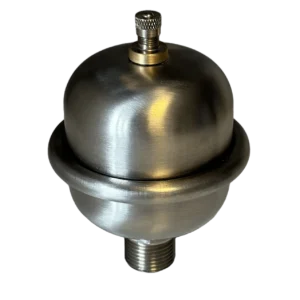
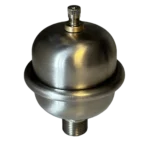
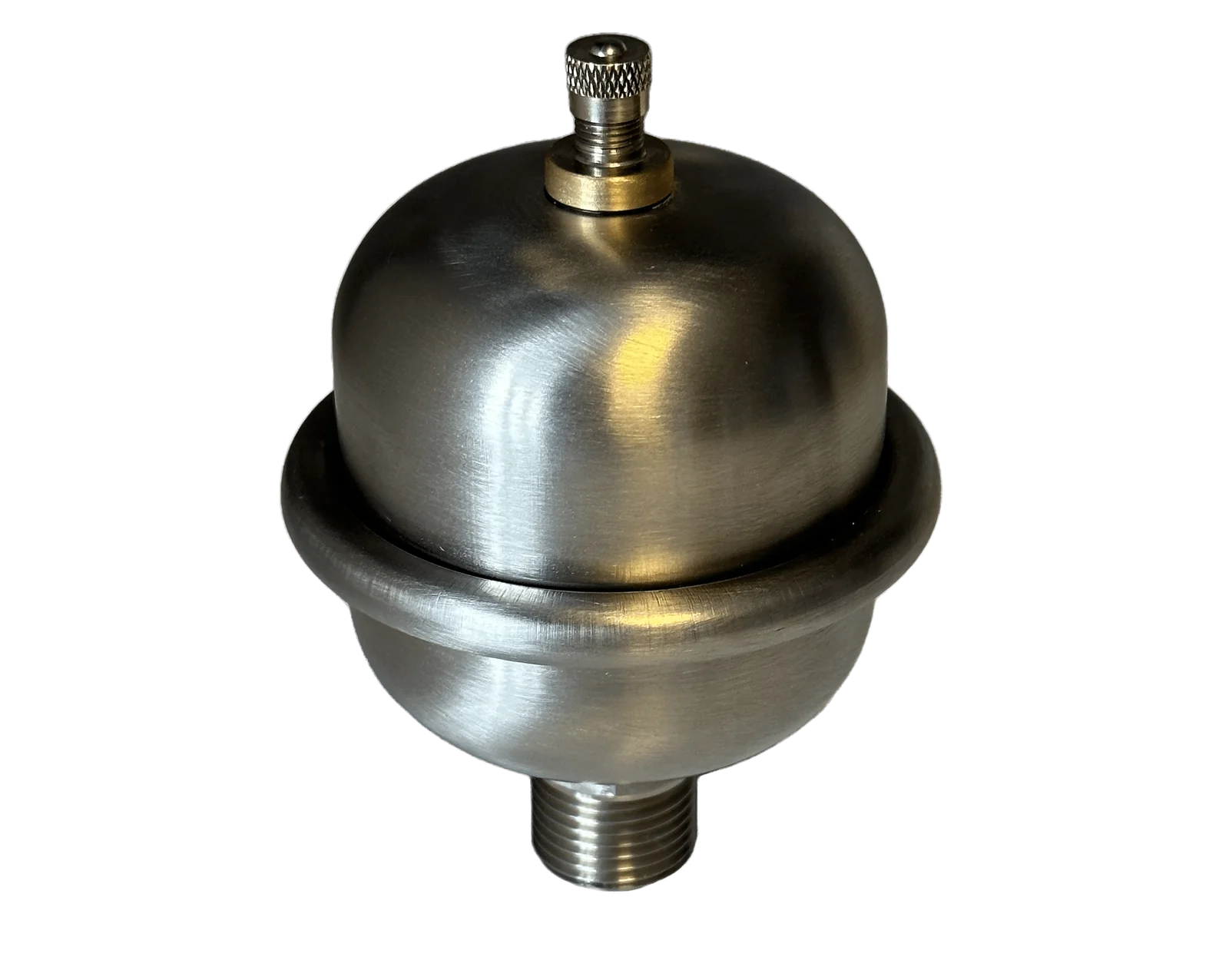
This is a compact point-of-use shock arrestor — a mini expansion vessel designed to absorb the pressure surge (water hammer) that happens when flowing water is stopped suddenly. Built for potable systems, the unit provides a short, compressible volume that cushions the hydraulic shock wave before it travels along pipework and stresses fittings, valves or appliances. Its small size makes it suitable for tight locations such as under sinks or immediately adjacent to washing machines, dishwashers and other solenoid-controlled devices.
- Key specifications
- Model / reference: SA1/2 (Tower Mini Expansion Vessel Shock Arrestor)
- Capacity: 0.16 litres
- Connection: 1/2″ BSP (parallel)
- Pre-charge (factory): Nitrogen, 3–3.5 bar
- Maximum operating pressure: 10 bar
- Dimensions: H 110 mm × Ø 78 mm
- WRAS approved for potable water
How it works and where it helps
Inside the device a small air (gas) pocket sits behind a diaphragm. When a fast valve closure produces a pressure spike, a small volume of water is forced into the vessel and compresses the gas cushion. That compression absorbs energy from the pressure wave so less force reaches the rest of the system. Because the unit holds only around 0.16 litres, it is effective at dampening local, short-duration surges — for example the snap-closing of a washing machine valve or a dishwasher solenoid — rather than correcting whole-system hydraulic design faults.
Installation and routine checks
The SA1/2 connects via a standard 1/2″ BSP fitting and can be fitted either vertically or horizontally, which helps with locating it close to the appliance that is generating the noise or hammer. For best results it should be positioned as near to the offending valve as possible and mounted on a short stub or adapter so it does not place torque on pipe joints.
The unit ships pre-charged with nitrogen to roughly 3–3.5 bar, which is chosen so the gas cushion is already compressed and ready to react against typical domestic supply pressures. After fitting you should check the pre-charge with a pressure gauge and adjust if needed to match the local static supply pressure and the manufacturer’s instructions. Periodic checks (for example at annual service) keep the pre-charge effective — a lost or low pre-charge reduces the device’s ability to absorb surges.
Practical suitability and limitations
There are three common use-cases where this product is a sensible choice: (1) quieting rapid valve closures on appliances close to the fitting, (2) protecting valve seats and cartridge assemblies from repetitive shock, and (3) reducing mechanical stress on short lengths of pipework in confined spaces where a larger expansion vessel would not fit.
Because the internal volume is small, it will not substitute for correct system design or a full-size expansion vessel intended to manage thermal expansion in a closed heating circuit. It is also unlikely to cure water-hammer that is caused by trapped air, undersized pipework, long velocity runs, or persistently faulty valves — those problems need a different remediation route (pipework rework, larger accumulators, or valve replacement).
Maintenance, compliance and practical notes
The SA1/2 requires little maintenance but a few simple checks will keep it working: verify the threaded connection is leak-free after installation, confirm the pre-charge pressure is within the 3–3.5 bar band and inspect the vessel for any signs of external damage or corrosion. The WRAS approval confirms the materials and construction meet UK standards for use on drinking water; that approval depends on installation and use in line with the manufacturer’s guidance.
Installation should be carried out by a competent plumber. Use a WRAS‑compliant thread sealant (for example PTFE tape suitable for potable mains) and avoid over-tensioning when making the connection. If the device does not eliminate the noise or shock, re-check location, supply pressure and consider whether another solution (larger tank or system rework) is required.
For someone wanting a neat, affordable way to reduce local water hammer and protect nearby appliances, the SA1/2 delivers a straightforward and WRAS‑approved option. It’s best treated as a targeted point-of-use device rather than a system-wide cure.