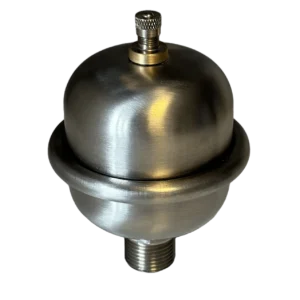
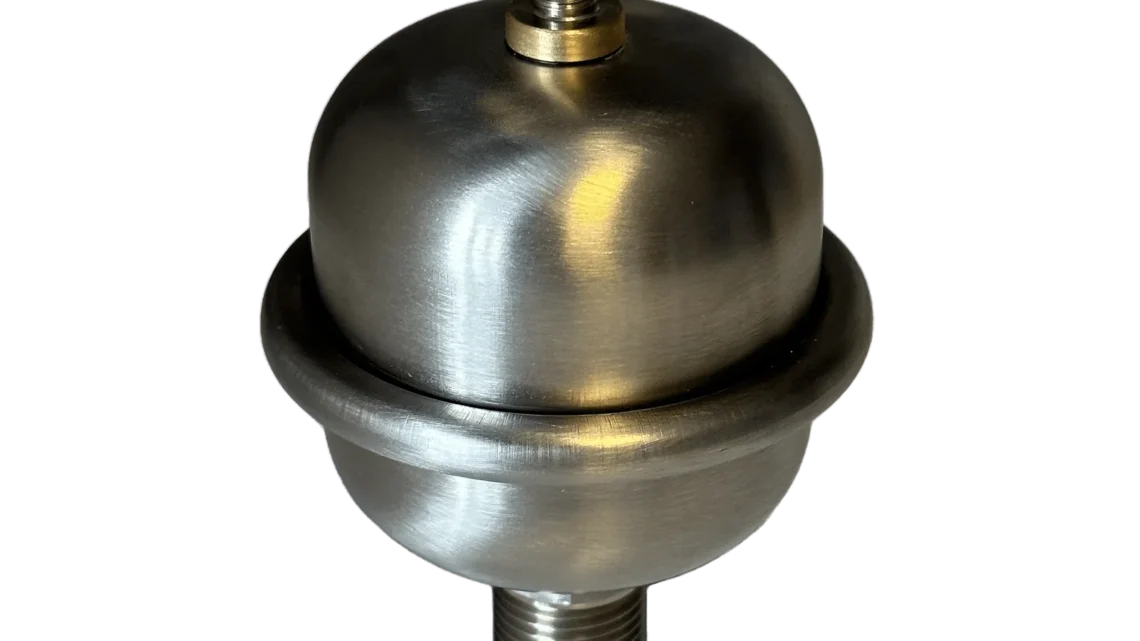
Tower SA1/2 Shock Arrestor — a compact WRAS‑approved answer for local water hammer
July 27, 2026What this unit is for — and what it isn’t
The Tower SA1/2 is a mini expansion vessel (commonly called a shock arrestor) designed to reduce local water hammer by providing a tiny compressible volume directly at the valve or appliance causing the surge. At roughly 0.16 litres and with a 1/2″ BSP connection, it’s explicitly intended for point‑of‑use applications: washing machines, dishwashers, solenoid valves and other fast‑closing devices in confined spaces such as under sinks or behind appliances.
It is not a replacement for system‑level fixes. The SA1/2 reduces short, local pressure spikes — it will not correct poor pipework design, long high‑velocity runs, trapped air or a persistently faulty valve. It’s a targeted tool rather than a universal cure.
Who should consider this product — and who should look elsewhere
Consider the SA1/2 if you need a compact, WRAS‑approved solution to reduce rattles, banging noises or repeated stress on appliance valves where access is tight. Installers working in retrofits (for example adding an arrestor to the isolating valve of a washing machine) will appreciate the 1/2″ BSP fitting and the small footprint.
Avoid it if the problem is one of overall system dynamics. If hammer occurs throughout a property, particularly on long runs or at multiple points, the likely solutions are larger accumulators, changes to pipe sizing, velocity reduction or replacing failing valves. Similarly, if thermal expansion in a closed heating circuit is the issue, a proper heating expansion vessel sized to the system is required — the SA1/2’s tiny 0.16‑litre capacity cannot manage that.
How it works in plain terms
Inside the SA1/2 a diaphragm separates a small gas pocket (filled with nitrogen at the factory) from the water inlet. When a valve snaps shut, a pressure wave briefly pushes some water into the vessel, compressing the gas and absorbing energy that would otherwise travel along the pipe and cause noise or stress. Because the internal volume is small, the benefit is local and instantaneous rather than providing ongoing volume for thermal changes.
Installation and setup: practical points for installers
The SA1/2 uses a parallel 1/2″ BSP thread and can be mounted vertically or horizontally, which gives flexibility when locating it close to the offending valve. That flexibility is useful under sinks or behind appliances where space and pipe orientation are limited.
Key practical steps and considerations:
- Position the arrestor as near as possible to the fast‑closing valve or appliance. The closer it is, the more effectively it intercepts the pressure spike.
- Fit the unit on a short stub or adapter to avoid putting torque on the appliance valve or pipe joint. The vessel should not be used as a structural support.
- Use a WRAS‑compliant thread sealant (PTFE tape suitable for potable water) and avoid over‑tightening. A competent plumber will take care to avoid damage to threads and to maintain the potable water integrity.
- The unit is supplied factory‑precharged with nitrogen at about 3–3.5 bar. After installation check the pre‑charge with a gauge and adjust if necessary so the gas side pressure sits appropriately relative to local static mains pressure. A pre‑charge that’s too low reduces effectiveness; too high could limit the water ingress the vessel can accept.
- Confirm the system’s maximum static pressure is within the unit’s 10 bar maximum operating rating before fitting.
Installation should be carried out by a competent plumber to ensure compliance with potable water regulations and to avoid inadvertent damage to pipework or fittings.
Compatibility and practical limits
Compatibility is straightforward where you have standard 1/2″ BSP fittings and typical domestic mains pressures. The WRAS approval confirms the materials are suitable for potable water installations in the UK, but the approval only applies when installed and used according to the manufacturer’s guidance.
Limitations to be aware of:
- Volume: at 0.16 litres the SA1/2 has a small energy absorption capacity. It will noticeably reduce short, high‑frequency spikes close to the fitting, but won’t replace a larger accumulator in systems with sustained or high‑volume pressure issues.
- Causes of hammer: if the underlying cause is a worn solenoid, sticky valve, excessive flow velocity or trapped air pockets, the arrestor may mask symptoms without addressing the root cause. Diagnose the origin of hammer before assuming a point‑of‑use arrestor is sufficient.
- Pre‑charge: the device is precharged at the factory but local static pressure varies. Failure to check and, if necessary, set the pre‑charge to match site conditions will reduce the device’s effectiveness.
- Orientation and mechanical support: it will accept vertical or horizontal orientation, but it should be mechanically supported so forces from pipe movement are not transmitted into the arrestor’s connection.
Realistic ownership scenarios
Scenario 1 — Retrofit to silence an appliance: In many homes a washing machine or dishwasher that makes a loud bang when the inlet valve closes is the typical use case. Fitting the SA1/2 directly to the appliance isolating valve or the last accessible point on the supply line can substantially reduce the noise and reduce wear on the valve itself.
Scenario 2 — Protecting expensive fittings: Repetitive hydraulic shocks can shorten the life of cartridge taps and inexpensive valves. When replacing a valve in a tight space, an installer might fit the SA1/2 nearby to reduce repetitive shock and potentially extend component life.
Scenario 3 — Not the right fix: In a property where multiple taps and showers ‘hammer’ when the same motorised valve operates elsewhere, the SA1/2 will likely be insufficient. This is a system problem that calls for a larger accumulator, changes to pipe sizing or examining the valve control logic.
Maintenance and long‑term considerations
Maintenance is light, but routine checks keep the device performing:
- At commissioning and annually thereafter check the pre‑charge pressure and top up or adjust only as per the manufacturer’s instructions and with the system isolated as required.
- Inspect the unit for external damage, leaks or corrosion at periodic service intervals. Replace if the diaphragm shows failure signs or if the vessel integrity is compromised.
- Ensure the thread seal remains fit for potable use; if you undo and re‑seal, use an approved potable PTFE tape or other WRAS‑compliant sealant.
- Keep records: for commercial installs, record the pre‑charge and check dates to support ongoing maintenance responsibilities.
A lost or low pre‑charge destroys the vessel’s effectiveness — it won’t be obvious visually, so measuring the gas pressure with a suitable gauge is the reliable check.
Strengths and compromises
Strengths:
- Compact size and flexible orientation make it easy to position in tight spaces.
- WRAS approval means the materials and construction are suitable for drinking‑water installations in the UK when installed correctly.
- Factory pre‑charge simplifies installation; installers still need to check and adjust as required.
- Simple, passive device with minimal maintenance when compared with active or more complex solutions.
Compromises:
- The small 0.16‑litre capacity limits its effective range to local disturbances — it’s not a system‑wide cure.
- Effectiveness depends on correct placement and a maintained pre‑charge; incorrect installation can leave the visible issue unresolved.
- If the root cause is faulty valves, pipework design or sustained pressure issues, money spent on a point‑of‑use arrestor may be better allocated to corrective work.
Value and buying considerations
When evaluating value, balance the unit cost against the likely benefit in your situation. For single‑appliance noise or minor valve protection in confined spaces, a compact, WRAS‑approved arrestor is often a cost‑effective solution compared with rewiring pipe runs or installing a larger accumulator. For whole‑house or persistent hammer problems, the better investment is diagnosing and addressing the systemic cause rather than using multiple mini arrestors as a workaround.
Other factors that influence value:
- Proximity of the installation: the closer the unit is to the problem valve, the greater the benefit.
- Access for checks: if the arrestor is buried in an inaccessible void, the ability to check and maintain pre‑charge is reduced.
- Quality of installation: a competent plumber who sets the pre‑charge appropriately and mounts the device without stressing fittings increases the likelihood of a satisfactory outcome.
Support, compliance and disposal
WRAS approval covers suitability for potable water; installers must still follow manufacturer guidance and local regulations. The device does not require specialist tools for day‑to‑day ownership, but a pressure gauge and a means to add nitrogen (or inert gas as recommended by the manufacturer) may be needed to reset pre‑charge if it drifts over time — this is typically part of a plumber’s toolkit rather than a homeowner purchase.
At end of life, dispose of the unit in line with local waste regulations for metal and composite components; the presence of a diaphragm and gas charge means it shouldn’t be crushed or punctured in normal household waste streams.
Conclusion — when the SA1/2 makes sense
The Tower SA1/2 is a pragmatic, WRAS‑approved mini expansion vessel that answers a common practical problem: local, short‑duration pressure spikes caused by fast‑closing valves in tight spaces. It’s well suited to retrofit work where space is limited and to protecting or quieting individual appliances. Its small capacity, however, means it should be chosen only after confirming the issue is local and not a symptom of wider system faults.
In short: use the SA1/2 where you need a neat, compliant point‑of‑use shock arrestor and where correct placement and occasional maintenance are feasible. If you face whole‑system hydraulic problems, undersized pipework, or thermal expansion requirements, look to larger, system‑sized solutions instead.
Latest product offer
Ready to check Shock Arrestor?
Check the latest product page, price and offer details before buying.