

Description
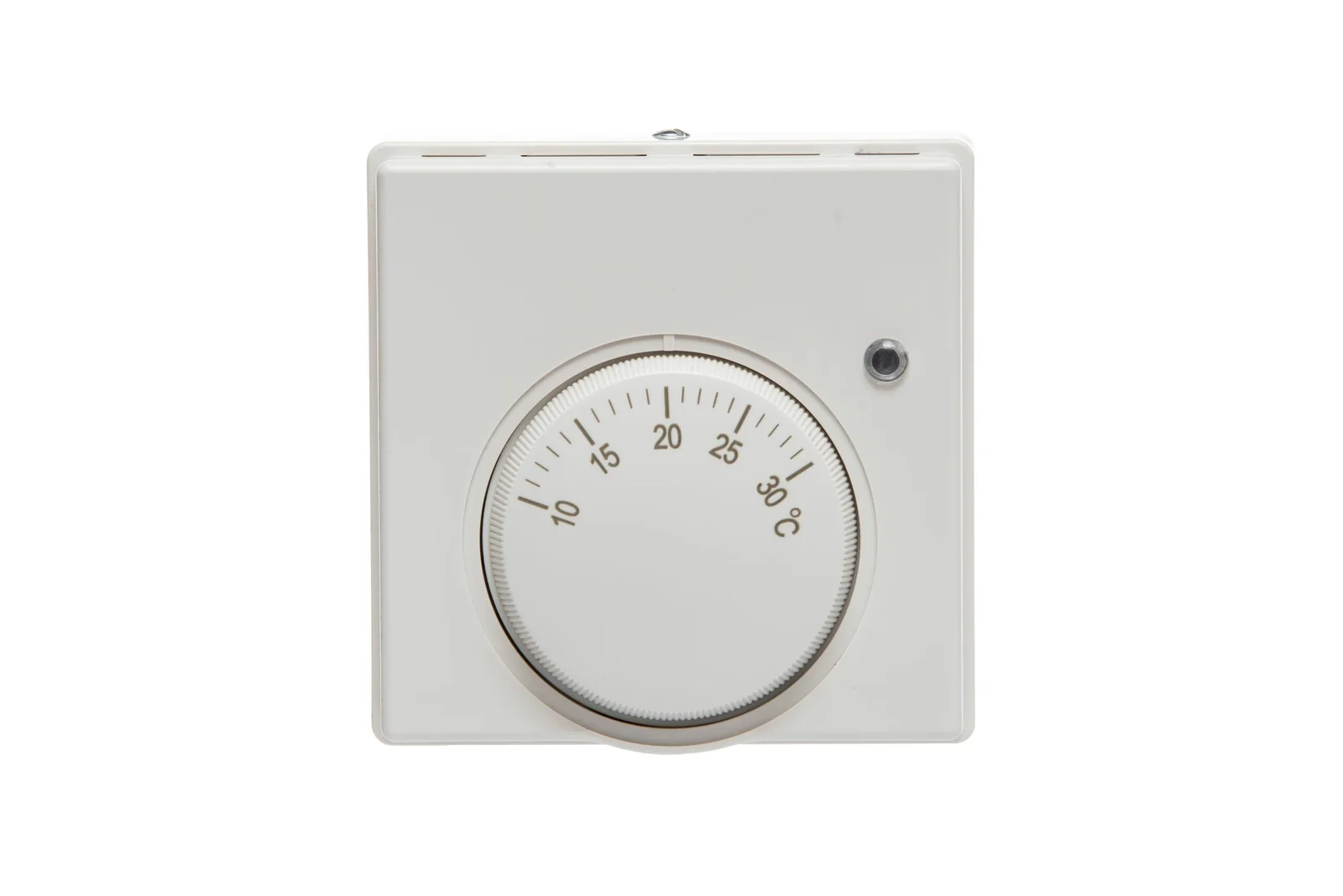
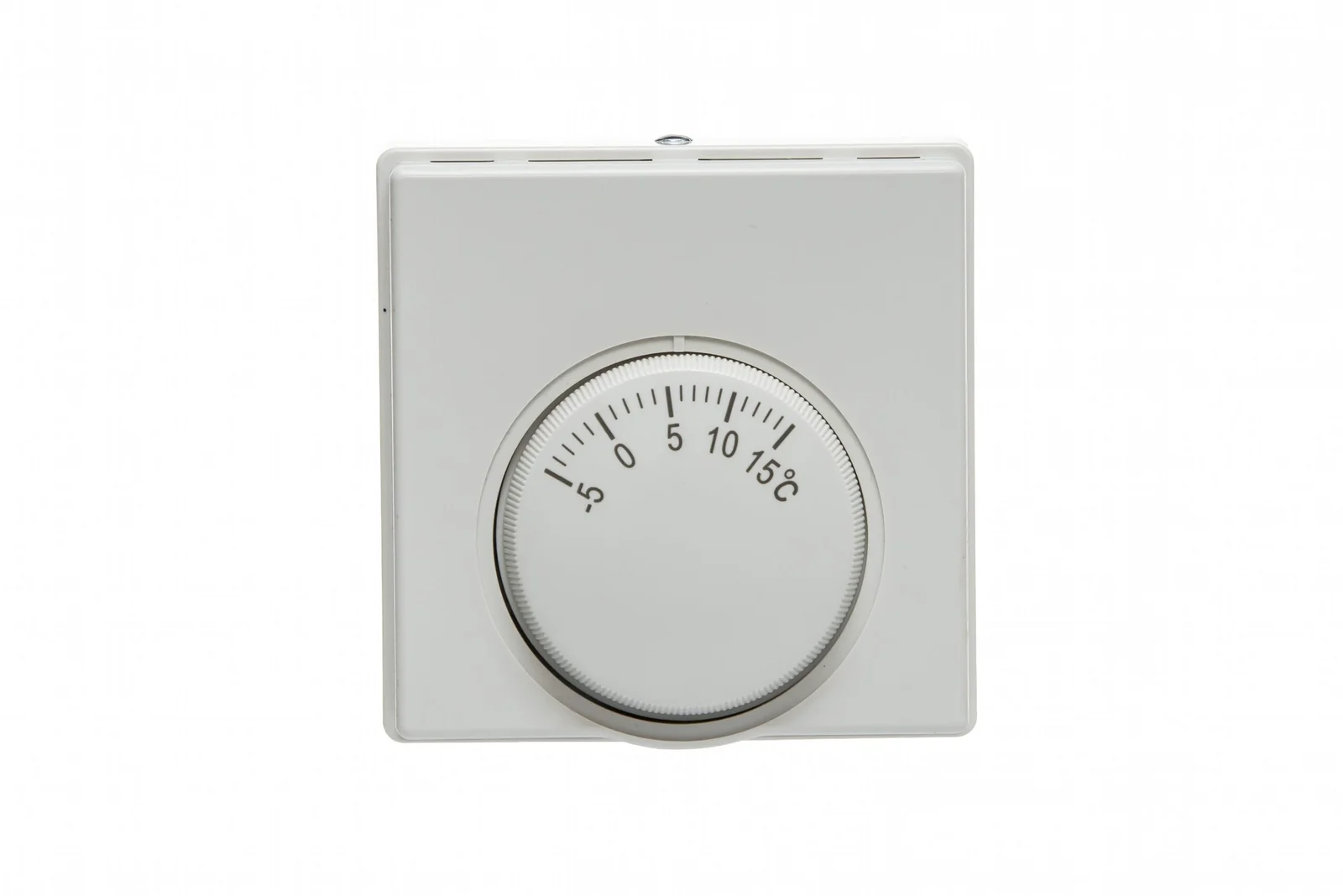
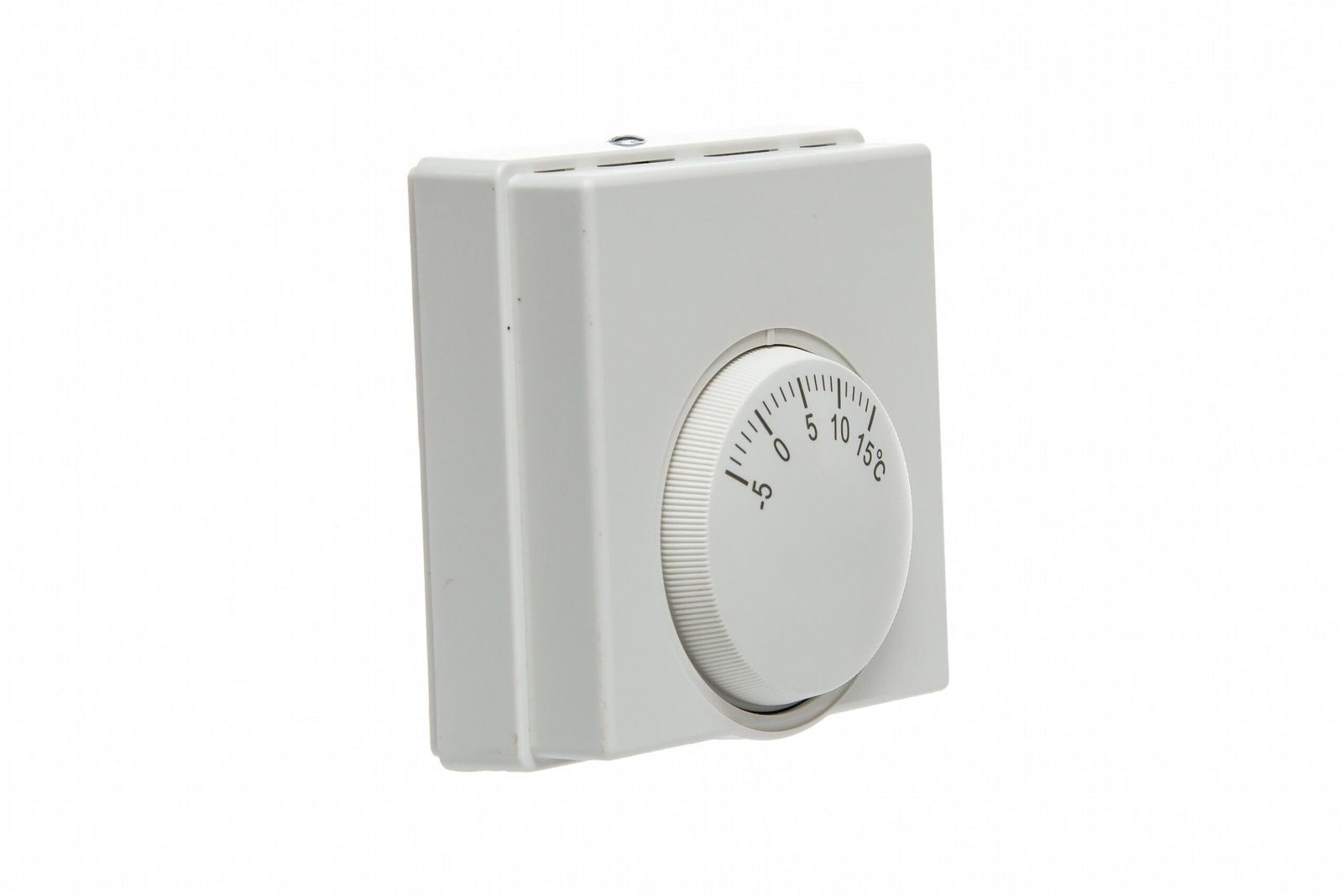
This is a simple, mechanical frost-protection thermostat intended to stop pipes, boilers and other heating components from freezing in cold conditions. It’s a dial-operated, bellows‑sensing unit that closes or opens a volt‑free contact when the ambient air temperature falls below the set level, so it’s typically installed in a cool or unheated part of a house and wired in parallel with the main room thermostat.
Because it is strictly a frost stat rather than a programmable room controller, it doesn’t schedule heating or respond to remote controls — its job is to keep a safe minimum temperature in the building or plant room so that frost damage is avoided.
Key specifications
- Temperature range: -5°C to +15°C
- Switching differential: 1°C
- Contact type and rating: volt‑free changeover (SPDT), 10(3) A (10 A resistive at 230 V AC)
- Mounting: wall mount, 60 mm fixing centres; overall size 85 × 85 × 40 mm
- Compatibility: mains (230 V AC) or low‑voltage systems; suitable for combi boilers
How it works in practice
The STTRFSN V2 uses a sealed bellows (sometimes referred to as a diaphragm or diaphragm/ bellows sensing element) and a mechanical dial to set the temperature. When the ambient air temperature around the thermostat drops to the set point, the internal mechanism changes the state of the SPDT contact. Because the contacts are voltage‑free, the unit can switch an external control circuit (for example a boiler call for heat) without supplying mains power through the thermostat itself.
Installers normally put a frost stat in a porch, attic, garage, cellar or plant room — anywhere the main room thermostat won’t correctly sense very low temperatures. It is common to wire the frost stat so it will override the room thermostat if a dangerously low temperature is reached, shutting down the risk of frozen pipes or allowing the boiler to fire to maintain the minimum temperature.
Installation and compatibility notes
The case is compact and neutral in appearance, intended for wall mounting on standard back boxes (60 mm fixing centres) or surface conduit. The cover commonly includes knock‑outs for surface wiring runs and the unit’s terminals are arranged for simple connection by a competent electrician. The thermostat is double insulated (no earth required for the enclosure) and its volt‑free contact means it will work with most boilers and control systems — but it does not provide a switched live feed unless wired into a circuit that supplies that function.
Because the contact rating is 10 A (with a 10(3) designation to indicate resistive/inductive considerations), you should check the type of load you intend to switch. Many modern boilers, motorised zone valves and some contractors’ control circuits present inductive loads; in those cases the thermostat will often be used to drive a relay or actuator that is sized correctly for the load rather than switching heavy equipment directly.
Strengths and limitations
- Strengths: very simple, inexpensive and reliable; mechanical sensing requires no batteries or electronics; volt‑free contacts make it flexible across systems.
- Limitations: no programming, scheduling or remote control; mechanical dial only so set‑point repeatability is limited to the device’s 1°C differential; contact rating means it is not a direct substitute for heavier switching devices without an appropriate intermediate relay.
For most domestic frost‑protection duties — protecting boilers, pipework and unattended spaces — it’s a straightforward and cost‑effective option. If you need remote management, holiday setback schedules, or integration with a smart heating system you’ll need a different product or additional interface modules. Likewise, if a contractor intends to switch heavy loads directly from the thermostat, fit a suitably rated relay or contactor and follow the manufacturer’s wiring guide.
What to check before you buy
Confirm the voltage and wiring style used by your boiler or heating controller and whether you need a switched‑live return or a simple volt‑free contact. If the load is inductive (pumps, valve motors, some boiler inputs) make sure the installer provides an appropriately rated relay rather than relying on the thermostat’s 10 A contact directly. Finally, verify you’re getting the V2 version (product code STTRFSN V2) if your supplier differentiates revisions; the printed label inside the lid often carries the version code.
If you require an installation diagram or terminal numbering, consult the manufacturer’s installation guide — the unit is intended for fitting by a qualified electrician or competent heating engineer and the guide includes wiring diagrams and safety advice.