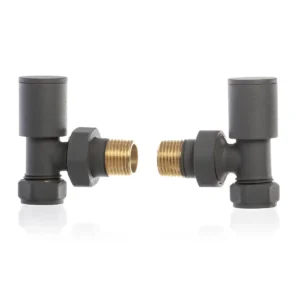
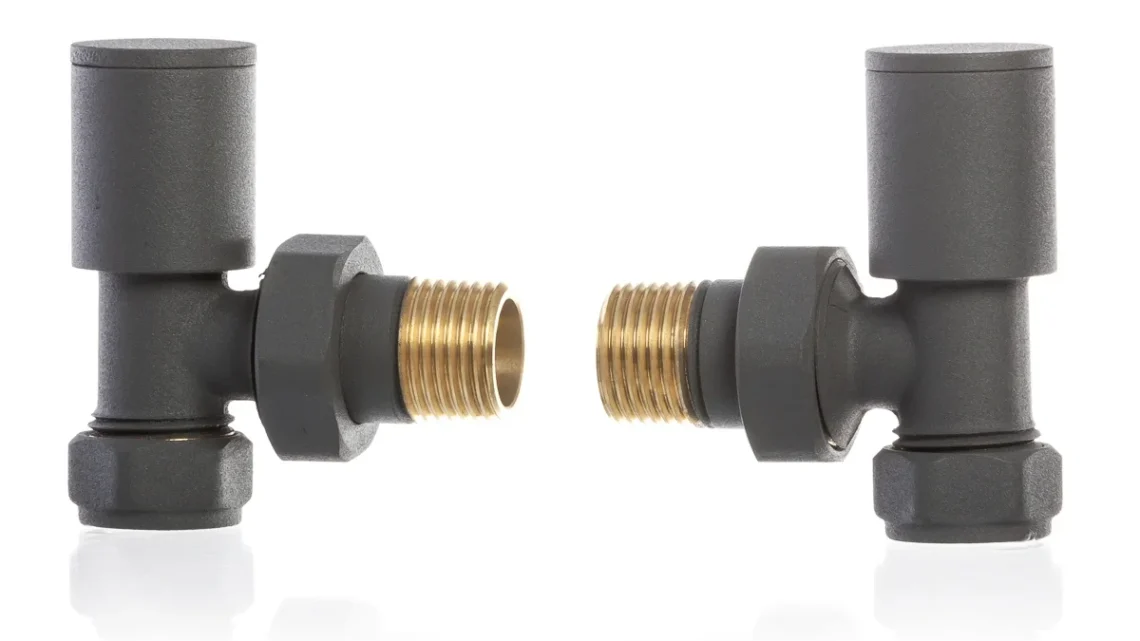
Anthracite Angled Radiator Valves (15mm to 1/2″ BSP) — Practical assessment for installers and homeowners
July 27, 2026Anthracite Angled Radiator Valves (Tower / TFC Group MRVM‑A) are a straightforward option when you need a matched pair of manual valves in a contemporary dark‑grey finish. They’re supplied as two angled shut‑off/flow valves, use 15mm pipe and a 1/2″ BSP connection to the radiator tail, and are rated for typical central‑heating conditions.
Who will find these sensible — and who should look elsewhere
These valves are aimed at two main groups: homeowners or decorators who want a colour‑matched valve set to complement anthracite or dark radiators and installers working on standard domestic systems where manual control is acceptable. They’re particularly convenient where the pipework meets the radiator at a right angle (for example when pipes come up from the floor) because the angled body keeps the finished run neat and compact.
They are not suitable if you need automatic room temperature control. These are manual valves and offer basic on/off and coarse flow adjustment only. If your priority is per‑room temperature regulation you should use a thermostatic radiator valve (TRV) on the flow and a dedicated lockshield on the return instead. Also, check your radiator’s tail/spud size: these valves use a 1/2″ BSP tail. Non‑standard radiators or older models sometimes use different tail sizes or proprietary fittings that will need an adaptor or a different valve type.
Practical installation and compatibility notes
Two small but critical details determine compatibility: the pipe size and the radiator tail thread. These valves accept 15mm pipe and join the radiator via a 1/2″ BSP tail. That combination is standard for the majority of modern radiators and towel rails, so in most new‑build and retrofit jobs they will fit without special parts.
Installation considerations:
- Compression fittings are commonly used on valves of this type, so you need enough physical access to tighten the nut and make a clean joint. The pack dimensions are compact (around 75 × 35 × 120 mm), but working space behind and below the radiator should be checked before ordering.
- Surface finish: the anthracite coating is decorative and more prone to showing chips or scratches than unplated metal. During installation avoid dragging tools over the valve body and protect the finish if the valves will be handled repeatedly (for example during decorating or when manufacturers fit radiators on site).
- Cleaning pipes before assembly is sensible. Painted or contaminated pipe ends can damage the finish when inserted and tightened; debris left inside a system can also affect valve internals, so flush or clean as appropriate for the job.
What these valves will handle
The manufacturer rates the valves to a maximum flow temperature of 120°C and a working pressure of 10 bar. Those figures are comfortably within normal domestic central‑heating ranges and cover many light commercial installations as well. In plain terms, they are designed for standard hot‑water heating systems rather than specialised high‑temperature or high‑pressure industrial circuits.
Bear in mind that the quoted temperature and pressure are maximums for the valve body and sealing materials. Performance in service depends on correct installation, compatibility with system water chemistry and the general health of the heating system (for example, corrosion or debris in old systems can shorten valve life regardless of stated ratings).
Use cases and realistic ownership scenarios
Scenario 1 — Home renovation with anthracite radiators: if you’re replacing old valves to match new anthracite radiators, this pair provides a consistent look and the angled body keeps pipework neat where it rises from the floor. They’re a sensible choice if you intend to control radiators manually or if your central thermostat and room thermostats provide primary temperature regulation.
Scenario 2 — New build standard plumbing: for a straightforward new build with standard 15mm copper pipe and modern radiators, these valves work well as the inlet and return pair. The matching finish keeps the appearance tidy and you avoid mixing finishes on the same radiator.
Scenario 3 — Systems needing TRVs: if you intend to fit TRVs on every radiator for per‑room control, these valves are less useful on the flow. You’d typically use a TRV head on the flow valve and reserve a lockshield on the return for balancing. Because this product is a pair of manual valves, it could still be used as the lockshield and a plain inlet if you add a separate thermostatic head elsewhere — but that removes automatic control on whichever radiator has the manual inlet.
Scenario 4 — Older or non‑standard radiators: if your radiator has a different tail size or an unusual spud, plan for an adaptor or an alternative valve. Using the wrong size risks leaks, poor mechanical fit and potential damage to threads or the valve finish.
Strengths, compromises and realistic expectations
Strengths:
- Appearance: the anthracite finish suits contemporary schemes better than chrome for many homeowners and can lift the overall aesthetic when coordinated with anthracite radiators or fittings.
- Ease of selection: 15mm to 1/2″ BSP is a common pairing so compatibility with new radiators and standard copper pipe is high.
- Pack of two: buying the inlet and return together keeps finishes consistent and simplifies stock for installers.
Compromises and limitations:
- No thermostatic control: these are manual valves, so you won’t get automatic temperature regulation at the radiator. If that’s important to you, pick a proper TRV for the flow side.
- Finish durability: anthracite coatings look good but are more visible when scratched. Install carefully and consider minor maintenance like touch‑up paint or protective covers in high‑traffic areas.
- Not a solution for non‑standard fittings: older radiators and some designer towel rails can have unusual tail sizes; measure before buying.
Installation tips for a tidy, reliable job
Plan the installation with the finish in mind. Use soft jaws or cloth when gripping the valve body with spanners and avoid excessive force that could scuff the surface. When tightening compression joints, hold the valve body steady with one tool and turn the compression nut with another to avoid twisting the finish.
Where possible, run a system flush or at least ensure pipe ends are clean before assembly to minimise the introduction of flux, paint or debris. If you’re replacing valves on an in‑use system, follow safe draining and isolation procedures and consider fitting a temporary cap to the radiator tail to protect finished threads while working.
Maintenance and longevity considerations
Manual radiator valves are low‑maintenance items but they are mechanical and benefit from simple periodic checks. Look for leaks around the compression nut and at the radiator tail after initial hot‑water cycles and again after a few weeks of normal use. If a valve becomes stiff to operate, it may be due to limescale or corrosion in older systems; consider cleaning or, if access allows, replacement.
Because the finish is decorative, treat the anthracite coating as you would any painted metal fitting. Avoid abrasive cleaners that could remove the coating, and wipe down with a damp cloth. If the finish chips during installation, a carefully applied touch‑up paint in a matching anthracite tone will preserve appearance and reduce corrosion risk.
Supply and value considerations
These valves are a functional, economy‑orientated choice: they provide the look of a modern finish without the added cost or complexity of integrated thermostatic functionality. When assessing value, weigh three things:
- Do you need thermostatic control at the radiator? Paying more for TRVs can pay back in comfort and energy control in many homes.
- Are your radiator tails and pipework standard 15mm/1/2″? If adaptors are required, factor those into the overall cost and installation time.
- How important is the finish? Saving on valve cost but later replacing scratched units for aesthetic reasons can cancel any upfront saving.
For many renovation jobs and straightforward installs where manual isolation is acceptable, these valves represent sensible value: a matched pair, standard connections and a contemporary finish. For projects that require per‑room control or need robust, high‑traffic durability, consider spending on a TRV or a higher‑grade valve finish.
Support and spares
As with most off‑the‑shelf valves, the main support needs are practical: ensure the installer can source matching spindles, lockshields, or adaptors if required. The valves sit within a common family of heating components, so matching items and replacement parts are usually available through trade suppliers. Keep the product code (MRVM‑A) to hand when ordering replacements or compatible parts to avoid mix‑ups with different finishes or thread sizes.
Concluding assessment
These Anthracite Angled Radiator Valves are a practical, attractive choice for standard installations where manual control is sufficient and a contemporary finish is desired. They fit the common 15mm pipe to 1/2″ BSP radiator tail arrangement, are rated for normal domestic heating temperatures and pressures, and are supplied as a matching pair for neat installations.
They will not replace the functional benefits of a thermostatic valve and the anthracite finish needs careful handling to avoid cosmetic damage. If you need automatic temperature control, or if your radiators have non‑standard tails, choose an alternative solution. Otherwise, for straightforward new builds, renovations and retrofit projects that prioritise appearance and compatibility over thermostatic performance, these valves represent a sensible, economy‑minded choice.
Latest product offer
Ready to check Anthracite Angled Radiator Valves?
Check the latest product page, price and offer details before buying.