Trade‑Tec PRVG22 Pressure Reducing Valve — practical assessment for domestic and light‑commercial systems
July 27, 2026The Trade‑Tec (Intatec) PRVG22 is a small, mechanical pressure‑reducing valve (PRV) intended to reduce mains pressure to a controlled downstream level for domestic and light‑commercial water systems. Supplied with a pressure gauge and 15mm reducing adapters, it is a ready‑to‑fit regulator for properties with 22mm service pipework that need 15mm connections elsewhere. Below I set out the practical scenarios where this valve performs well, the installation and compatibility points you should check, and the realistic strengths and compromises to expect over ownership.
Where this valve is a practical choice
The PRVG22 is most useful in straightforward domestic and small commercial installations where mains pressure is higher than desired at appliances and heating plant. Typical uses include fitting the unit on the incoming cold‑water service ahead of a boiler feed, ahead of distribution manifolds, or to protect sanitary fittings and radiators from overpressure.
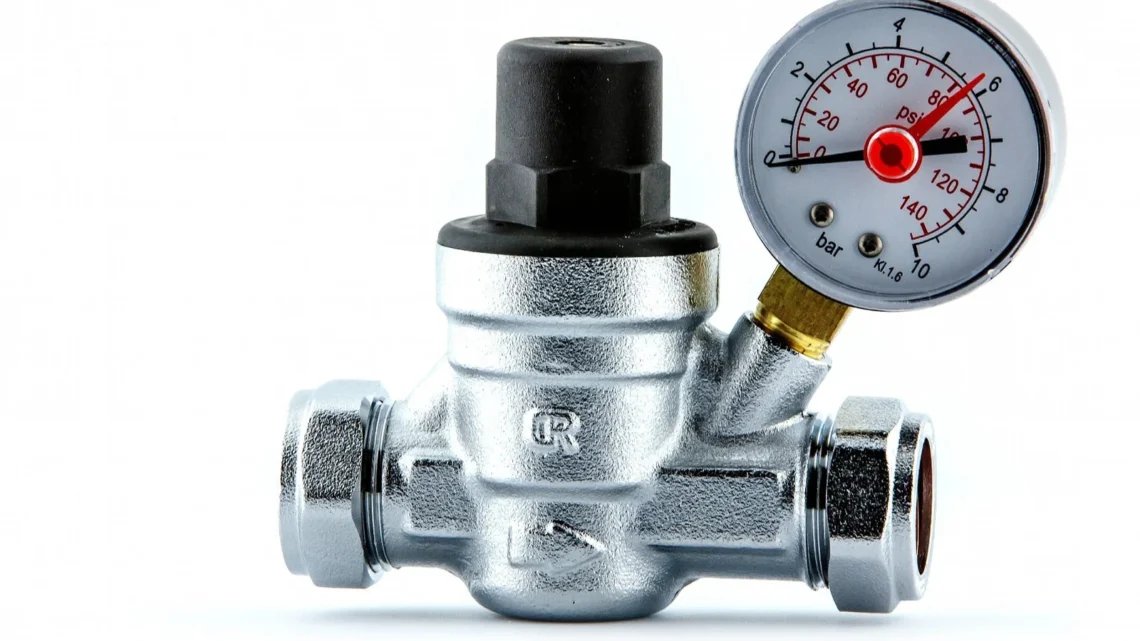
What makes it convenient on many jobs is the combination of a 22mm body with supplied 15mm reducing adapters, and a fitted pressure gauge on a G¼” port so the outlet pressure can be read and adjusted during installation. The valve is factory‑preset to around 3 bar and is adjustable up to its maximum setting (documented as up to 6 bar), which fits the needs of most modern domestic heating and hot‑water circuits.
How the PRV works in day‑to‑day systems
The PRVG22 is a single‑stage, spring‑loaded regulator: inlet water pressure acts against a diaphragm and seating assembly, and spring tension determines the downstream set pressure. As inlet pressure or flow changes, the mechanism rebalances to maintain the set outlet pressure within its adjustment range. For end users that translates to reduced stress on boilers, valves and fittings and fewer pressure‑related faults in the system.
Important practical numbers from supplier literature are a maximum inlet (working) pressure of 16 bar and a recommended maximum water temperature in the region of c.80–85°C, so the PRVG22 comfortably suits domestic hot‑water and most central‑heating circuits. The unit is also listed as WRAS approved on supplier pages, which is necessary where approvals for potable water components are required in the UK.
Installation, setup and compatibility considerations
Physically the regulator is compact and may be fitted either vertically or horizontally, which helps in tight meter cupboards or boiler rooms. Typical installation steps are straightforward in principle: isolate and drain the incoming line (or work from an isolation valve), fit the PRV with the correct orientation, and set the outlet pressure by turning the adjustment head while reading the supplied gauge.
Key practical points to note before you buy or fit:
- Pipe sizes and connections: the body is 22mm and 15mm reducing adapters are included. Confirm the actual pipe diameter and thread standards on the connecting pipework before you order; while the unit is designed for common domestic systems the exact fit depends on the adjacent fittings and how you intend to join into the service pipe.
- Gauge access: a G¼” gauge port is provided and the valve is supplied with a gauge. Make sure you can access and read the gauge once the valve is installed; concealed locations can make adjustment awkward.
- Orientation and space: the compact footprint is helpful, but plan space for turning the adjustment head and for any future maintenance or replacement of the gauge.
- Isolation and straining: although the PRVG22 includes an integral mesh gauze to protect the seat from debris, good practice is to install an upstream isolating valve and allow for flushing or a separate strainer if the incoming water contains solids or detritus.
- Flow capacity: the PRVG22 is intended for domestic and light‑commercial flows. If you have unusually high flow demand — for instance multiple showers and large instantaneous water heaters running concurrently, or a large commercial load — you should consult the manufacturer’s flow/pressure‑loss curves and consider a higher capacity regulator if necessary.
Performance and capability — what the specs mean in use
The supplier literature gives the principal limits: adjustable outlet commonly preset to c.3 bar and adjustable up to 6 bar, max inlet 16 bar, and maximum recommended water temperatures around 80–85°C. Translated into realistic ownership terms, this means:
- Temperature compatibility: suitable for domestic hot‑water and heating circuits but not intended for continuous high‑temperature process services beyond the stated range.
- Pressure handling: the valve will handle the pressures normally encountered on UK mains supplies and will protect downstream plant when set appropriately. It is not designed for very high inlet pressures beyond the 16‑bar working figure.
- Adjustment range: with a factory preset around 3 bar you can leave the unit as supplied for many boiler installations; installers can raise or lower the setting up to the unit’s maximum if the system specification requires a different set point.
- Flow considerations: because flow capacity and pressure loss vary with size and construction, sizing the PRV against expected peak flow is important. For many typical houses the PRVG22 will be adequate; for large properties or multi‑apartment communal supplies you should check the published curves and consider a larger model if necessary.
Strengths and sensible expectations
Practical strengths you can rely on from the supplied information:
- Ready‑to‑fit: supplied with a gauge and 15mm reducing adapters so it’s convenient for a range of common installs.
- WRAS approval: suitable for potable water installations where that is required.
- Compact and flexible: small footprint and ability to fit vertically or horizontally helps in tight spaces.
- Integral mesh gauze: provides a basic level of protection for the internal seat against debris.
- Manufacturer warranty: a two‑year warranty is listed on supplier pages, which aligns with typical expectations for this product type.
What to expect as limitations or compromises:
- Not for high‑duty industrial use: the PRVG22 is aimed at domestic and light‑commercial duties. For sustained, high‑flow industrial applications a specialist high‑capacity regulator is more appropriate.
- Temperature ceiling: the maximum water temperature is given around 80–85°C; this is fine for heating and hot water but may be a limiting factor for certain process environments.
- Sensitivity to debris: the integral mesh reduces risk but is not a substitute for upstream straining or good site cleanliness during installation.
- Flow performance requires checking: since capacity and pressure‑loss curves are decisive for larger demands, you should consult the manufacturer’s technical data to confirm suitability for peak flow scenarios.
Typical ownership and maintenance scenarios
Once installed and set, a pressure‑reducing valve like the PRVG22 is largely maintenance‑free, but there are sensible checks and occasional tasks to ensure long‑term reliability:
- Periodic visual check: verify there are no visible leaks around connections and the gauge reads a reasonable downstream pressure.
- Clean or service if the supply is dirty: if your water supply contains particulate matter or you see pressure instability, isolate the valve and inspect/clean the integral strainer or any upstream filter. Persistent debris issues should be addressed with a dedicated strainer or service flush.
- Gauge integrity: the supplied gauge allows adjustment and monitoring; replace or recalibrate the gauge if it becomes unreadable or inaccurate over time.
- Re‑setting after upstream works: if the mains is replaced or other changes are made, re‑check the PRV setting and adjust as needed. Exposure to unusually high pressures during mains work can affect downstream settings on any PRV.
- End of life: if the unit shows signs of sticking, leakage past the seat, or irregular control it should be repaired or replaced; the modest size and cost typical of PRVs make replacement a common option.
Support, approvals and documentation
The PRVG22 is listed as WRAS approved on supplier pages and supplier listings also reference a two‑year manufacturer’s warranty. For installation, always follow the detailed installation instructions provided with the product and consult the manufacturer’s datasheet for exact dimensions, flow curves and the definitive operating limits. The specification tab on supplier documentation gives useful measurements and confirms the gauge port size (G¼” BSP), which you should match when replacing gauges or fitting test instruments.
Who should consider this valve — and who should look elsewhere
Consider the PRVG22 if:
- You need a straightforward PRV for a house or small commercial premises where mains pressure is high or variable.
- You want a compact unit that can be installed in limited space and offers both 22mm and 15mm connection flexibility.
- WRAS approval is required for the application and you prefer a unit supplied with a gauge for easy on‑site setting.
Look elsewhere if:
- Your installation has unusually high peak flow demands; a higher capacity PRV with published flow curves suited to that duty would be safer.
- You require continuous operation at temperatures above c.85°C or have specific process requirements outside the valve’s stated temperature range.
- You need extremely fine pressure control or multi‑stage pressure reduction for complex systems; more sophisticated regulators exist for those scenarios.
Value and buying considerations
The PRVG22 is positioned as a practical, cost‑effective regulator for common installations. When assessing value, the main considerations are not just the purchase price but compatibility with your pipework, the expected flow duty, and whether the supplied gauge and adapters reduce time on site. If you expect typical domestic flows and want a compact WRAS‑listed PRV that’s quick to set up, the PRVG22 represents a pragmatic choice. If your project is large scale or has unusual demands, the right value may instead be a larger or more specialised regulator that reduces pressure loss and gives higher capacity.
Conclusion — a balanced recommendation
The Trade‑Tec PRVG22 is a well‑specified, compact PRV for routine domestic and light‑commercial use. Its 22mm body with 15mm reducing adapters and fitted gauge make it convenient for many installations, and WRAS approval and a two‑year warranty address common procurement requirements. It is not a high‑capacity industrial regulator, so for installations with significant peak flow demands or continuous high temperatures you should confirm performance with the manufacturer’s flow curves and consider a model engineered for that duty.
In short: choose the PRVG22 for straightforward household and small commercial installations where space is limited, meter or gauge access is needed, and the expected flows are within typical domestic ranges. Check pipe dimensions, plan for basic strain protection upstream, and consult the product documentation for exact limits before installation.
Note: this review is based on manufacturer datasheets and authorised supplier listings for the PRVG22. Always use the installation instructions and technical documentation supplied with the purchased product when installing or commissioning equipment.
Latest product offer
Ready to check Pressure Reducing Valve?
Check the latest product page, price and offer details before buying.