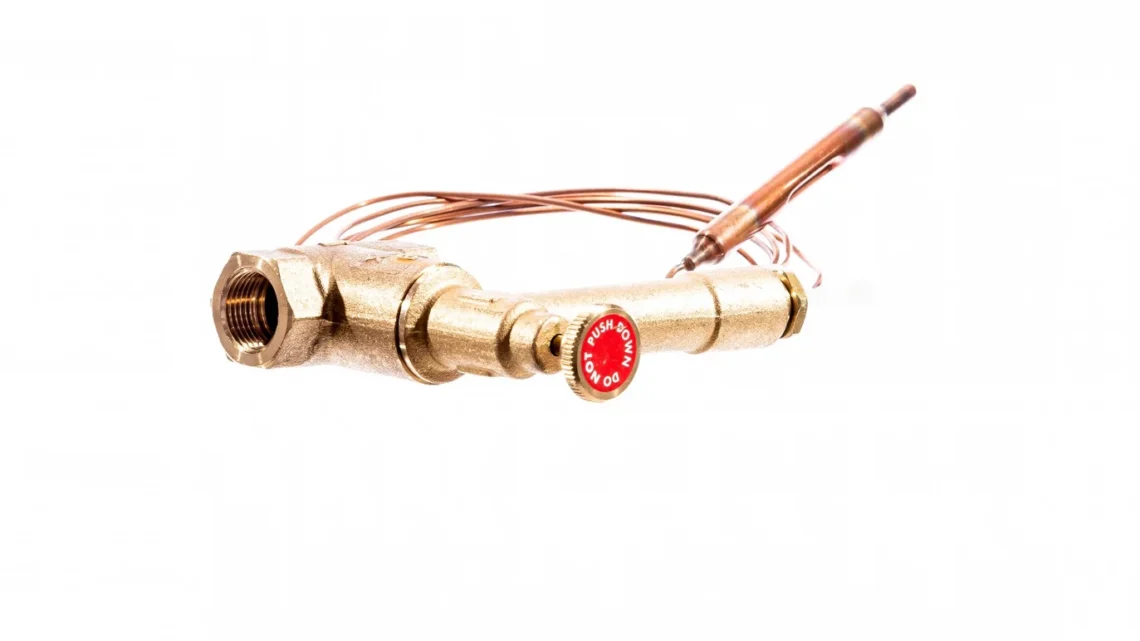
Remote Fuel Stop Valve 66° — a pragmatic look at a mechanical fire shut‑off for domestic oil and LPG burners
July 27, 2026When thinking about fuel‑fed domestic heating appliances, the question isn’t whether something can go wrong, but how you reduce the consequences if it does. The Remote Fuel Stop Valve 66° is a deliberately low‑tech device designed to cut the fuel supply automatically when a capillary temperature sensor reaches 66°C. It’s a straightforward mechanical solution that has a useful place on many small oil and LPG systems — provided you understand what it does, how it’s fitted and where it is limited.
How the valve works, in plain terms
The valve sits in the fuel line and is linked to a remotely mounted temperature sensor by a thin capillary tube. When the sensor reaches its trigger temperature (66°C for this variant) the sensing element mechanically expands and trips the valve closed. The closure is mechanical, so no mains power or control wiring is required. After the event the valve must be manually reset once it is safe to do so.
Where this device is useful
There are two clear, practical scenarios where the Remote Fuel Stop Valve 66° is a sensible addition:
- Domestic oil‑ or LPG‑fired boilers with a separate day tank or gravity feed, where a passive, power‑independent shut‑off reduces the risk of fuel keeping a fire going.
- Installations where a remotely mounted thermal sensor needs to reach into the appliance area but where electrical interlocks aren’t available or are undesirable — for example in older properties or where a simple fail‑safe is preferred.
Its simplicity is an advantage: there is no reliance on electrical supply, no electronics to fail, and the valve is compact and straightforward to integrate into a supply line.
Who should consider this valve — and who should look elsewhere
Consider this valve if:
- You have a domestic oil or LPG burner with modest flow requirements (see flow note below).
- You want a passive, automatic shut‑off that doesn’t depend on mains power or control wiring.
- Your installer can site the sensor so it senses genuine overheating of the appliance rather than normal nearby heat sources.
Think twice or avoid this valve if:
- Your burner needs higher flow than the valve is nominally rated for; the valve is specified around 395 litres/hour at a 2 m head, which suits most domestic burners but will be restrictive on larger units.
- Your insurance, building regulations or site rules require electrically monitored emergency shut‑down devices with status reporting and interlocking. This valve provides no remote signalling out of the box.
- You need an everyday service isolator. The valve is not intended or approved as a routine shut‑off for maintenance.
Installation, siting and capillary length choices
Installers will recognise the practical points to get right. The valve itself uses 3/8” female threads so it fits standard domestic fuel line fittings; material construction is brass with a copper capillary and stainless moving parts. Crucially, you must choose the correct capillary length: the product comes in 1.5 m, 3 m, 6 m, 9 m and 15 m variants. Pick the length that allows the sensing bulb to sit beside the appliance casing or burner housing where it will detect dangerous heat quickly.
Siting guidance that matters in practice:
- Fit the sensor where it senses heat from the appliance or immediate burner area, not in a warm air duct or above a flue where normal operation periodically raises temperatures. Incorrect siting leads to nuisance trips or missed trips.
- Keep the capillary routed to avoid tight bends, kinks and areas where it could be abraded or exposed to mechanical damage.
- Bear in mind the valve’s closed pressure limit (1.5 bar). It’s best suited to gravity feeds or low‑pressure pump systems. High‑pressure supply lines are outside its intended use.
Because the valve requires a manual reset after trip, give thought to accessibility so resetting is straightforward once the appliance is safe and an inspection has been carried out.
Compatibility, fuel types and materials
The product literature states compatibility with class C2 and D fuels to BS2869 and explicitly notes use with LPG and fuel blends compatible with bio‑oil burners. Construction uses brass for the body and sensor housing, a copper capillary with a stainless‑steel piston, nitrile O‑rings and a stainless spring. Those materials are a standard practical choice for domestic fuel duty and, when used with compatible fuels, should deliver routine longevity if correctly installed.
Important compatibility checkpoints before you buy:
- Confirm the burner’s nominal fuel demand and ensure the valve’s flow capability (listed as approximately 395 l/hr at 2 m head) is adequate. If the burner requires higher flow rates, look for a valve rated accordingly.
- Check that the piping pressure in your system when the valve is closed will not exceed 1.5 bar.
- If your property uses non‑standard fuels or high percentages of biodiesel, verify compatibility with the burner manufacturer and the valve’s material limits.
Performance and capability — what to expect
This is a thermal, mechanical shut‑off. It will not provide electrical signalling, remote status or integration with building management systems without additional hardware. Its primary capability is reliability by simplicity: there are no electronics to fail, and the trip relies on temperature rather than electrical detection.
How it behaves in real ownership terms:
- Delay to closing: the trigger is thermal, so closing depends on sensor exposure to sustained heat. This is exactly the behaviour you want for detecting real overheating, but it is not instantaneous like a current‑sensing electrical trip.
- Manual reset: after a trip the valve remains closed and must be reset by hand once it is safe to do so. This forces an inspection before fuel is restored, which is a safety benefit but an operational inconvenience if trips are false or frequent.
- No diagnostics: the valve doesn’t report faults, so if you need a log of safety events you will need a separate monitoring solution.
Strengths, compromises and realistic limits
Strengths:
- Power independence — operates when mains power is absent.
- Simple mechanics — fewer failure modes compared with electronic systems.
- Choice of capillary lengths — helpful flexibility when siting the sensor relative to the appliance.
Compromises and limitations:
- Flow rate — adequate for many domestic boilers but not for larger commercial burners.
- Closed‑pressure limit — intended for low‑pressure lines; high‑pressure applications aren’t suitable.
- No electronic integration or remote alarm capability without extra equipment.
Understanding those trade‑offs is essential. The valve excels as a last‑line passive safety component — it is not designed to replace active system interlocks, monitored emergency shut‑downs or a competent maintenance regime.
Maintenance, support and long‑term ownership considerations
Because the valve is mechanically simple, maintenance demands are modest but not zero. Practical upkeep notes:
- Regular visual checks for leaks, corrosion or damage to the capillary are sensible as part of routine boiler servicing.
- After any trip, check the cause of the overheat condition thoroughly before resetting; the valve is intended to force that inspection as a safety precaution.
- Nitrile O‑rings and moving parts are industry‑standard, but exposure to incompatible fuels or contaminated oil can accelerate wear. If you use alternative fuel blends, confirm long‑term compatibility.
If you require manufacturer support or spares in the longer term, check availability up front — mechanical devices are straightforward to service, but capillary damage or lost reset heads will render the product unusable until repaired or replaced.
Regulatory and insurance considerations
Two practical cautions:
- Some installations or insurers require electrically monitored emergency shut‑down equipment or specific certified devices. Because this valve provides no electrical signalling it may not meet those obligations on its own.
- Installation must follow the applicable regulations and the installer should understand the valve’s intended use: it is explicitly not a service isolator and must be sited as a safety device rather than everyday control equipment.
Always check local codes and insurance conditions before relying on a passive thermal valve as your only protection strategy.
Value and buying considerations
Value for money here depends on what you need. For a homeowner or installer who wants a compact, low‑maintenance, power‑independent fire shut‑off for a domestic oil or LPG appliance, this valve is a practical, sensible add‑on. Its strengths are simplicity and ease of integration where flow and pressure requirements match the valve’s limits.
Things to consider when comparing options:
- Confirm the correct capillary length for your site at the point of purchase so you don’t end up with an unsuitable sensor reach.
- Compare nominal flow figures if your burner is close to the valve’s rated limit; oversizing here prevents performance problems.
- Factor in potential additional costs if you require electrical monitoring or integration — such features will need extra hardware and installation time.
Practical ownership scenarios
Scenario 1: A suburban detached house with an oil‑fired boiler and a small day tank. The installer chooses a 3 m capillary so the sensor sits beside the burner housing. The system runs under gravity or low‑pressure pump feed and the valve’s flow rating is comfortably within the burner’s demand. The homeowner gains a passive layer of protection that closes automatically in a fire without relying on mains power.
Scenario 2: A larger property with multiple high‑demand burners. Here the valve may introduce a flow restriction and the closed pressure limit could be problematic. For these properties a more robust, electrically monitored shut‑off designed for higher flow is likely a better option.
Scenario 3: A property where the insurance policy requires event reporting to a building management system. The mechanical 66° valve on its own won’t meet that requirement without additional monitoring hardware. In this case the valve could still be used as a local passive safety device, but it would need to form part of a broader, monitored safety solution.
Summary judgement
The Remote Fuel Stop Valve 66° is a sound, purpose‑built mechanical safety device for domestic oil and LPG burners. Its clear selling points are simplicity, power independence and a choice of sensor lengths for flexible siting. It performs the narrow job it is designed for: mechanically cutting fuel when the sensing bulb reaches 66°C and holding the system closed until a deliberate manual reset.
Its limitations are equally straightforward: a modest nominal flow rate that suits domestic but not larger commercial use, a closed‑pressure limit that excludes high‑pressure systems, no built‑in electrical signalling and a requirement that it must not be used as an everyday service isolator. Those are not flaws so much as design choices — this is a low‑tech fail‑safe, not a monitored ESD.
If your installation matches the valve’s intended use — domestic oil/LPG burner, low‑pressure feed, and a need for a passive, non‑electrical shut‑off — it makes practical sense. If you need event reporting, higher flow capability or regulatory compliance requiring monitored devices, factor in the additional cost and complexity of a different solution or additional monitoring hardware.
Practical buying checklist
- Confirm burner fuel demand and ensure the valve’s nominal flow is adequate.
- Choose the right capillary length so the sensing bulb sits correctly on the appliance.
- Verify system maximum pressure will not exceed 1.5 bar when the valve is closed.
- Check compatibility with any unusual fuel blends before installation.
- Discuss with your installer whether your insurer or local codes accept an unmonitored thermal shut‑off or require electrically monitored equipment.
In short: a practical, well‑understood safety item for the right domestic applications, but one that must be specified and sited with care and not relied on where monitored, high‑flow or regulatory requirements demand more capable equipment.
Latest product offer
Ready to check Remote Fuel Stop Valve 66°?
Check the latest product page, price and offer details before buying.