Tower A2PORT Replacement Actuator: Practical Assessment for Zone Valve Repair
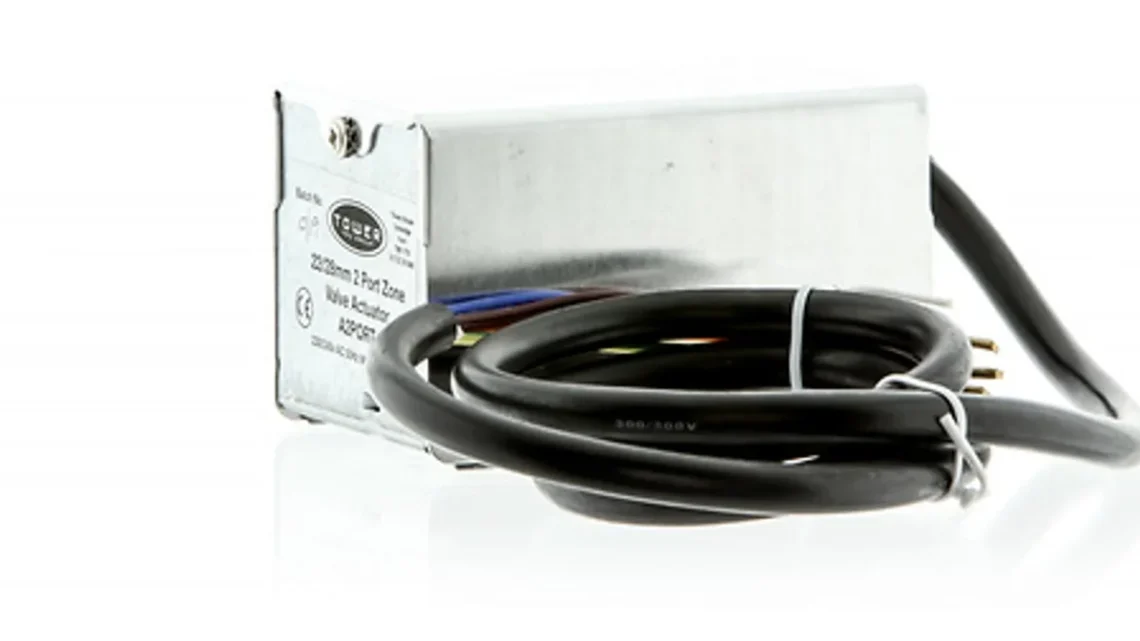
July 27, 2026When a two‑port valve on a central heating system stops responding, the cheapest and least disruptive fix can be to replace the actuator head rather than the whole valve body. The A2PORT is the specific replacement actuator made to refit removable heads on Tower two‑port valves designed for 22mm and 28mm compression fittings. It contains the motor, an auxiliary switching contact, a manual override and a short pre‑wired cable — everything needed to reinstate the valve’s role in zoning or indirect hot water control without disturbing the plumbing.
Which installations will benefit from this actuator?
The A2PORT is chiefly for domestic and light‑commercial heating systems that already use Tower VAL222MV (22mm) or VAL228MV (28mm) two‑port valve bodies. It’s a practical choice for:
- Servicing engineers and plumbers who carry a compact spare for on‑site failures.
- Homeowners with some electrical confidence who want to replace a failed actuator without draining the system and replacing the entire valve.
- Installations where the valve body is sound but the actuator motor or internal contacts have failed.
Because the unit is purpose‑designed for Tower valve bodies with removable heads, it usually refits without having to replace any pipework or isolate and drain the water loop. That is a clear time and cost saving compared with replacing a full valve assembly.
Who should avoid it?
- Anyone whose valve body is not a compatible Tower VAL222MV/VAL228MV. The mechanical fit of spindle, mounting and screws matters; an apparently similar head from a different make can be incompatible and risk damaging the valve spindle.
- Systems that require an actuator with a higher auxiliary switch or load rating. The fitted auxiliary contact on the A2PORT is rated at 3 A resistive, which is suitable for signalling low‑current control circuits but not for switching mains pumps, boilers or other high‑current devices directly.
- Installers who need a long cable out of the box. The built‑in flex is 1 metre long; in some cupboard or cylinder locations this will need extending to reach the controller safely.
- Situations where different electrical specifications (for example different supply voltage or a non‑synchronous motor requirement) are specified by the valve/boiler manufacturer.
What the key specifications mean in practice
Voltage and motor: The actuator is designed to run from a standard 220–240 V AC, 50 Hz supply and uses a synchronous motor with a spring return. The synchronous design gives predictable movement, and the spring‑return ensures the valve fails closed if power is lost — an important safety/operational behaviour on many zoned systems where you do not want a zone to remain open after a power cut.
Auxiliary switch: An auxiliary (end‑stop) contact is fitted. It is useful for signalling a controller, a programmer or a low‑current interlock. The caveat is the 3 A resistive rating. That is adequate for miniature relays, control inputs and low current circuits but not for directly switching mains loads such as a cylinder pump or boiler control if those devices draw more current. If you intend to use the auxiliary contact for such purposes, fit an appropriate relay/contactor to do the heavy switching.
Cable: A 1‑metre, 5‑core flex with conventional wiring colours is provided. For many typical cupboard or loft mounting positions this is sufficient, but tight spaces or controllers positioned further away will require an extension. Any extension must follow wiring regulations, use suitably rated cable and secure termination; isolate power before working on the wiring.
Installation considerations and practical steps
Replacing the removable actuator head is a mechanical swap in most cases. The practical sequence is:
- Turn off electrical supply to the valve at the mains or the appropriate fused spur and verify power is isolated.
- If accessible, note or photograph the existing wiring connections on the old actuator to ensure the new unit is wired identically.
- Remove any cover or retaining screws on the existing actuator and lift off the old head. The valve spindle and mounting should be visible; handle them carefully to avoid bending the spindle.
- Locate the manual override lever on the new actuator and check its neutral position. Fit the A2PORT onto the valve spindle and secure it in place following the mounting points used by the original head.
- Reconnect the 5‑core flex following the wiring notes, restoring the same connections used previously. Use appropriate cable glands or connectors if you extend the cable.
- Restore power and check operation using the manual override to confirm the valve opens and that the auxiliary switch changes state where expected.
That description assumes someone with basic electrical safety knowledge and common‑sense tools. If you are unsure about mains isolation, wiring or the precise wiring function of the actuator’s terminals, call a qualified electrician or Gas Safe‑registered heating engineer. Incorrect wiring can damage controls or create unsafe conditions.
Compatibility checks before you buy
Do not rely on valve external shape alone. Confirm the part code on the existing actuator or the valve body (VAL222MV or VAL228MV for the intended fit) and compare spindle diameter and shape, mounting screw positions and the way the actuator engages the spindle. If the existing head is marked with a compatible Tower part number, replacement with the A2PORT should be straightforward. If there is any doubt, photograph the mounting and send the images to your supplier or consult a heating engineer — an incompatible head can strip the spindle or fail to operate correctly.
Performance and realistic capability
The A2PORT will restore the basic functions you expect from a two‑port motorised valve actuator: electrically driven opening and spring‑returned closing, plus an auxiliary contact and a manual override. These functions are the practical essentials for zoning a heating circuit or controlling an indirect hot water cylinder in a typical domestic installation.
Bear in mind this is an actuator head only; it does not affect the hydraulic characteristics of the valve body such as flow coefficient or pressure drop. If the system suffers from poor flow or the valve body is damaged or corroded, replacing the actuator alone will not resolve those underlying issues.
Strengths, compromises and noteworthy limitations
Strengths:
- Quick, low‑impact repair option: replaces the head without draining the loop in most cases.
- Built‑in manual override and auxiliary contact provide useful commissioning and interlock functions.
- Compact footprint makes it easy to carry as van stock for service engineers.
Compromises and limitations:
- The auxiliary switch rating is limited to 3 A resistive. It is for signalling and not for directly switching high‑current loads.
- The fixed 1 m cable can be too short in some installations, requiring a tidy and regulation‑compliant extension.
- It is specifically designed for Tower VAL222MV/VAL228MV bodies; cross‑brand compatibility is not guaranteed.
- Because the unit is an actuator only, it won’t fix leaks, corroded valve seats or hydraulic issues — in such cases the valve body must be replaced.
Maintenance and longer‑term ownership
Actuators like the A2PORT are generally low‑maintenance mechanical devices. Routine care is centred on keeping wiring connections secure and checking the manual override is returned to automatic after any testing. Over time the following are sensible checks:
- Confirm the valve still responds to commands and returns to closed when power is removed. A failing spring or motor may indicate end of life for the actuator.
- Inspect the cable and gland/termination for signs of wear, moisture ingress or loose connections — especially where the actuator sits in a damp cistern cupboard or near a cylinder.
- Check the auxiliary switch continues to change state at the end‑stop if you use it for interlocks — electrical contacts can degrade with age or if they’ve been used to switch loads above their rating.
If the actuator fails, it is straightforward to replace again, which is why many service vehicles carry this type of spare. For extended reliability on systems where the auxiliary switch is used heavily or for higher currents, fit an appropriately sized relay so the actuator’s contact only operates a low‑current control coil rather than switching the heavy load directly.
Buying considerations and value
When weighing up whether to buy an actuator head or replace a full valve body, consider the following:
- If the valve body is mechanically sound and connections are leak‑free, a replacement head is almost always the least disruptive and most cost‑effective option.
- If the valve has visible corrosion, leaks or persistent hydraulic issues, a full valve replacement is the sensible long‑term choice.
- Check the exact model code on the old part. Buying the right head first time avoids returns and repeated site visits.
- Factor in the auxiliary switch rating when you plan wiring. If you anticipate switching higher currents, budget for a small relay or contactor as part of the job.
- For engineers, carrying a compact replacement head like this is good practice; for homeowners, having an electrician or heating engineer perform the swap reduces risk and ensures compliance with wiring regulations.
Final assessment
The A2PORT replacement actuator is a pragmatic spare‑parts solution for Tower two‑port valve bodies that need a new head. It restores the essential motorised opening, spring‑return closing and basic signalling functionality with minimal disruption to pipework — precisely the outcomes an engineer or practical homeowner will be looking for when a valve head fails.
Its limitations are clear and manageable: the auxiliary contact is for low‑current signalling only, the cable length may need attention on some installs, and mechanical compatibility must be checked before purchase. If you understand those constraints and your valve body is the compatible Tower type, the A2PORT is a sensible, economical way to get a zone back under reliable control. If your system requires heavier switching capability or the valve body itself is compromised, plan either to fit a relay alongside the actuator or replace the entire valve assembly instead.
In short: useful, purpose‑built and convenient when matched to the right valve body — but not a universal drop‑in for every two‑port valve or every wiring scenario. Match the part code, consider your auxiliary switching needs, and the A2PORT will usually restore zoned control quickly and cleanly.
Latest product offer
Ready to check Zone Valve Actuator 22mm/28mm?
Check the latest product page, price and offer details before buying.