VAL222MV 22mm Zone Valve — a pragmatic choice for straightforward domestic zones
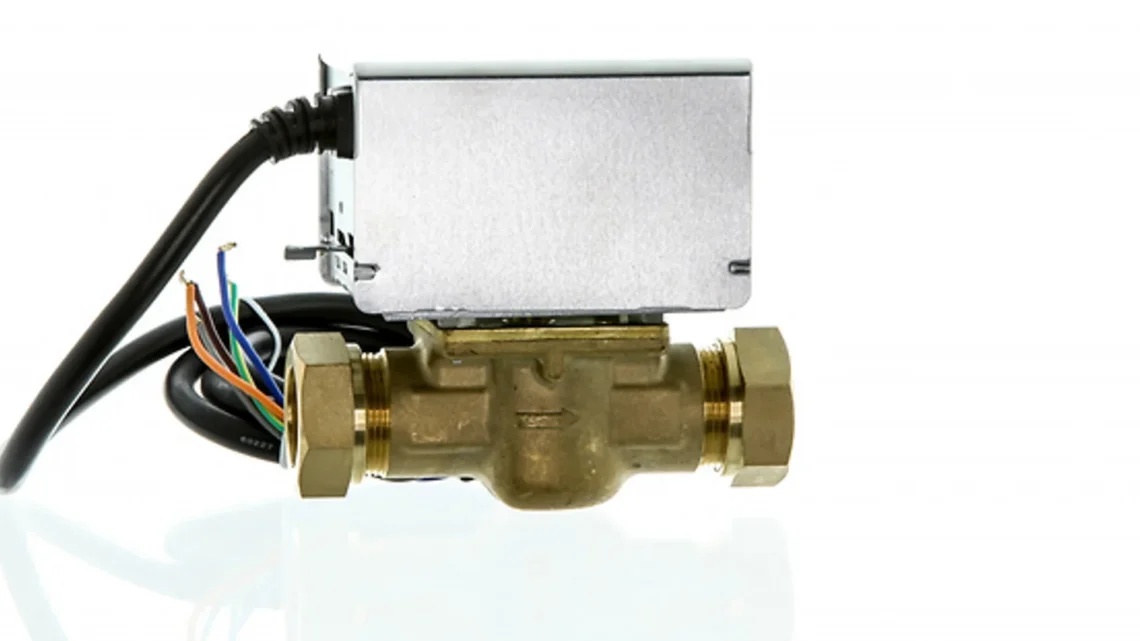
July 27, 2026The VAL222MV is a no‑nonsense 22mm two‑port motorised zone valve designed for standard domestic central‑heating installations. It combines a mains‑powered synchronous actuator with a spring return and an integral auxiliary (end) switch, plus a short pre‑wired five‑core flex. Those basics make it a familiar item to heating engineers and to anyone replacing a like‑for‑like valve in a typical pumped hot‑water system.
Where this valve fits in real systems
This is a pure on/off zone valve. When the thermostat or programmer calls for heat the actuator receives 220–240V AC and turns the valve fully open; when the call ends the actuator is de‑energised and a built‑in spring returns the valve to closed. The auxiliary end switch closes at the end of travel to give a boiler or pump interlock signal. That behaviour is useful in common residential setups where you want the boiler to run only while a zone actually needs heat.
Practical examples where the VAL222MV makes sense:
- Single radiators or radiator groups served from a dedicated zone controller where a simple shutoff is acceptable.
- Hot‑water circuits or cylinder zones that require an end‑switch to start the boiler or pump when flow is allowed.
- Retrofit work replacing failed like‑for‑like 22mm motorised valves in conventional fully‑pumped systems.
Conversely, this valve is not intended for systems that need proportional flow control, position feedback for building management, or where the valve itself must switch high currents. If you require modulating control, electronic position feedback, or a heavy‑duty auxiliary contact to switch significant loads directly, look for a specialist modulating actuator, a valve with a factory‑rated switching relay, or add an interposing relay between the valve’s end switch and the controlled device.
Key specifications explained (in context)
Understanding the main figures helps decide suitability:
- Pipe size — 22mm compression: fits standard 22mm copper runs without adapters. That keeps installation straightforward in most UK domestic systems.
- Supply — 220–240V AC, 50Hz: the actuator uses standard mains on domestic supplies. Power consumption is modest at 6W, so it’s inexpensive to run and easy to feed from a conventional room stat or programmer circuit.
- Actuator type — synchronous motor with spring‑return: the spring‑return provides a fail‑safe closed position should control power be lost, which is sensible in many domestic setups where you prefer a zone to close rather than remain open on power failure.
- Auxiliary (end) switch — rated for low currents (approx. 3A resistive): suitable for signalling most boiler control inputs or pump starters but not for switching large heater loads directly. If the boiler input expects a low‑current signal this works; if the boiler requires a different interface, an interposing relay will be needed.
- Pressure and temperature limits — max differential ~1 bar and system static pressure up to 10 bar, maximum fluid temperature 100°C: these values cover typical domestic hot‑water systems but are not designed for high‑pressure industrial plant or unusual high‑temperature applications.
- Cable — 1m pre‑wired five‑core flex with standard colours: this simplifies wiring and integration with common heating control wiring conventions.
Installation and commissioning notes
The valve comes with 22mm compression connections and a one‑metre five‑core cable. That length is convenient where the valve is near the controller or junction box; for longer runs you’ll need to extend the cable in accordance with good wiring practice and local electrical regulations.
Practical tips for installers and competent DIYers:
- Use the wrench flats on the valve body when tightening the compression fittings. The actuator is not a leverage point for tightening and should not be used as one.
- Observe wiring colours — brown live, blue neutral, grey and orange for the end‑switch circuit, green/yellow earth — and confirm the boiler or pump input expects a volt‑free or mains‑referenced contact as appropriate. The end‑switch here is a low‑current contact designed primarily for signalling purposes.
- There is an AUTO/MAN lever on the actuator. Setting it to MAN allows the head to open or close the valve for filling, venting or draining without energising the motor — handy during commissioning and boiler filling. Remember to return it to AUTO for normal automatic operation.
- Because the actuator head is replaceable without a full system drain in many installations, servicing can be quicker if the motor fails; check access and spare head availability before installation for smoother future repairs.
Electrical considerations: the valve runs from mains so installation should comply with Part P and local wiring regulations. If in doubt, use a qualified electrician. Also check that the boiler’s control input is compatible with the valve’s auxiliary switch rating or provide an appropriate relay/contactor when the boiler requires higher switching currents or a different type of signal.
Performance and capability — what to expect
Performance is intentionally straightforward — the valve is either open or closed. That simplicity brings predictable behaviour: quick full flow when energised and positive closing on loss of power. Expect smooth integration into basic zone control systems where valves are used purely to allow or block flow.
Realistic limitations:
- Not suitable for fine flow balancing or variable flow control. If you need to modulate temperature by throttling flow, choose a modulating valve or a thermostatic mixing arrangement designed for that purpose.
- The maximum differential pressure of about 1 bar limits how well the valve copes with high flow velocites across closed or partially open positions; this is normal for a domestic two‑port valve but means it’s not a high‑pressure service component.
- The auxiliary switch is small‑current and intended for signalling. It will not directly drive high‑current pumps or contactors without an intermediate relay or interface.
Where the VAL222MV scores is in its suitability for conventional domestic systems: reliable open/closed action, low power draw, easy wiring and the safety benefit of a spring‑return. For standard fully‑pumped domestic zones these are exactly the attributes you want in a replacement or new installation valve.
Spare parts, servicing and long‑term ownership
Several practical points affect long‑term ownership costs and downtime:
- Replaceable actuator head: if the motor fails you may be able to replace just the head without draining the entire system — a real time‑saver and cost saver in many situations. Confirm the exact replacement head part numbers with the supplier before purchasing so you can match voltage and switch configuration.
- Common wiring colours and a standardised actuator design mean replacement parts are widely stocked by trade suppliers; this reduces lead times compared with specialist proprietary designs.
- Keep an eye on the auxiliary switch rating when replacing parts. While the valve’s switching contact is convenient, it remains low‑current — fitting a like‑for‑like actuator head is important if you rely on that switch for boiler interlock.
- Routine maintenance is minimal: check for leakage at compression joints after installation, ensure the manual lever moves freely during commissioning, and confirm the end‑switch operation during initial wiring checks. Periodic checks as part of an annual boiler service are sensible.
Support: purchase through reputable suppliers or trade outlets will give better access to technical support and parts. If buying through general marketplaces, keep the part number and any markings for future support queries.
Practical buying considerations
When deciding whether the VAL222MV is the right component for your heating installation, balance these points:
- Compatibility: the 22mm compression connections and standard five‑core flex make it a straightforward physical and electrical replacement in many UK domestic systems.
- Control expectations: it provides simple on/off control with an end‑switch. If the system design expects modulating valves, position feedback or heavy switching from the valve itself, this model is not suitable.
- Electrical interface: the end‑switch is for signalling. If your boiler requires a particular type of input or higher current, plan for an interposing relay or confirm the boiler’s input spec before installation.
- Access for servicing: because the actuator head is removable, factor in head accessibility when you site the valve — easier access makes future repairs cheaper and quicker.
Value judgement: this valve is positioned as a practical, economy‑minded component for conventional systems. Its straightforward design keeps both purchase and running costs low, and for the majority of domestic zoned systems it gives the capability required without unnecessary complexity. If you need advanced control features, be prepared to invest in a different valve class or add control hardware.
Who should consider this valve — and who should look elsewhere
Consider the VAL222MV if:
- You have a conventional domestic hot‑water or heating zone with 22mm copper pipework and need a simple open/closed valve with boiler interlock.
- You prefer components that are easy to wire using standard colour coding and that are commonly stocked by trade suppliers.
- You value the safety of a spring‑return so the zone closes if power to the actuator is lost.
Look elsewhere if:
- Your system needs modulating flow control, continuous position feedback, or compatibility with advanced building‑management systems.
- You need to directly switch high currents from an auxiliary contact — the valve’s end‑switch is not intended for that duty without an interposing relay.
- Your installation operates above the valve’s stated pressure or temperature limits, or requires a different pipe size or connection type.
Final thoughts
The VAL222MV is a workmanlike, installer‑friendly zone valve aimed squarely at routine domestic heating roles. Its strengths are simplicity, standard wiring, low running power and the safety of a spring‑return actuator. These traits make it a sensible, low‑risk choice for most pumped domestic zones and for like‑for‑like replacements.
Its limitations are equally clear: it offers binary control only, a modest auxiliary contact rating, and modest pressure handling compared with specialist industrial valves. Those are not failings so much as design choices that suit the product’s intended market. If your heating system fits the typical domestic profile — 22mm pipework, a boiler that accepts a low‑current interlock, and a need for on/off zoning — the VAL222MV is a practical option. If your needs go beyond that, budget for a valve and actuator combination designed for modulating control or heavier electrical duty.
In short: a solid, pragmatic zone valve for conventional domestic applications — handy for installers and homeowners who want a dependable, easy‑to‑service component without advanced control bells and whistles.
Latest product offer
Ready to check VAL222MV Zone Valve 22mm?
Check the latest product page, price and offer details before buying.