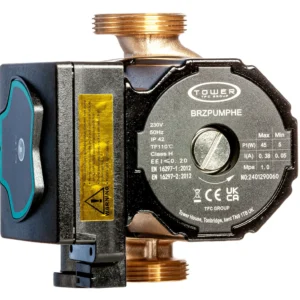
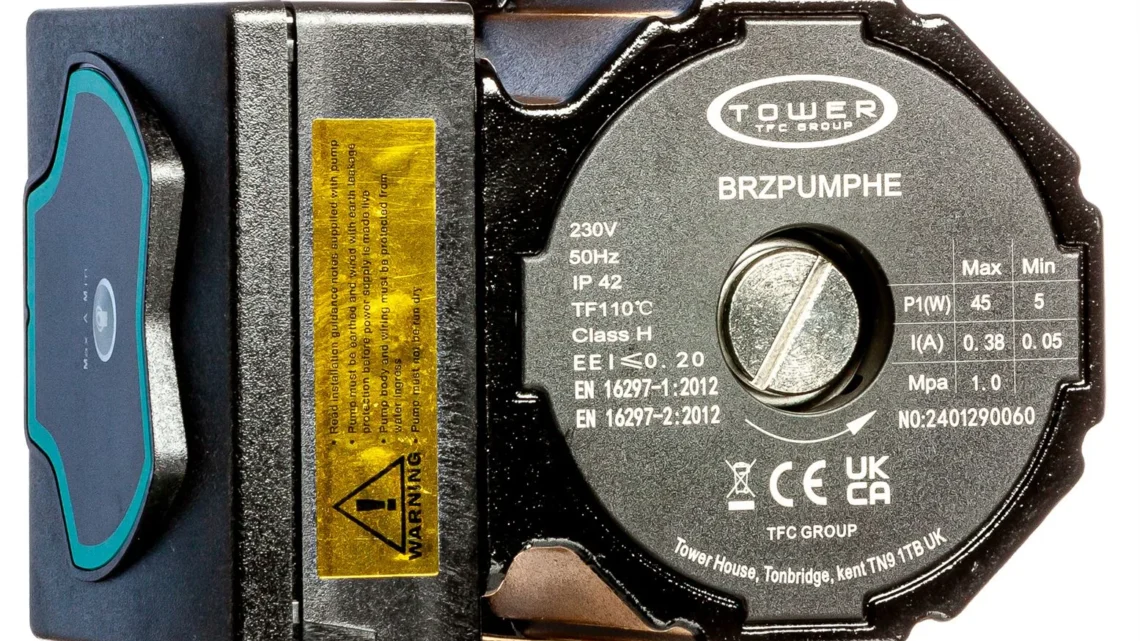
Tower BRZPUMPHE Bronze Recirculation Pump — a practical, low‑power option for domestic hot‑water loops
July 27, 2026Recirculation pumps are a simple idea: keep hot water moving around a return loop so the tap furthest from the cylinder has hot water on demand. The Tower BRZPUMPHE (market name BRZPUMPHE) is built around two clear choices that define its suitability. First, a bronze pump body gives long‑term corrosion resistance in oxygenated potable systems. Second, a modern permanent‑magnet motor with an intelligent differential‑pressure controller limits power use and adjusts speed to demand. Together these deliver a conservative, low‑noise option for domestic installations — with a few important limits any buyer should understand.
Who is this pump for — and who should think twice?
This pump suits homeowners, plumbers and specifiers looking for a dedicated secondary return‑loop pump in a domestic setting. Typical use cases include properties with long hot‑water runs or multiple distant outlets (en‑suite bathrooms, remote kitchens) where instant hot water is desirable. The bronze body is a decisive benefit where the return loop is regularly replenished with oxygenated water or where non‑ferrous materials are preferred for potable systems.
Think again if you need a pump for heavy commercial circulation, very high lift or very high flow. The BRZPUMPHE has a maximum head of 6 metres and a peak flow of about 3.0 m3/h — deliberate sizing for domestic loops rather than commercial distribution. Also avoid using this pump as a continuous, always‑on device with certain heat‑pump or hybrid cylinders unless you have a control strategy that prevents unnecessary cycling; the motor’s low power draw does not eliminate the thermal and efficiency consequences of continuous circulation in all systems.
How the design influences real‑world performance
Two features shape day‑to‑day behaviour: the bronze body and the permanent‑magnet motor with automatic differential‑pressure control. Bronze resists corrosion in oxygenated potable water better than cast iron, which can suffer wet‑rot problems in open or replenished secondary loops. That makes the pump a safer long‑term choice where the return loop is exposed to fresh mains water.
The motor and controller manage speed according to demand, which typically means power use that adapts roughly between 5 and 45 watts. In practice, that allows the pump to run quietly and only work as hard as needed to maintain circulation and sufficient pressure differential for immediate hot water at outlets. The specification states an Energy Efficiency Index below 0.20, which aligns with modern ERP efficiency expectations for this class of pump.
Noise is often a practical concern in domestic installs. The unit is described as typically operating under c. 43 dB(A), which places it in a quiet category for household use — though final noise perceived will depend on mounting, pipework and location in the property.
Installation and control: practical considerations
The BRZPUMPHE is compact (130 × 130 × 128 mm) and designed for retrofit work; its short port‑to‑port length of 130 mm helps slot it into existing return runs without major rework. However, check the connection: it uses a 1.5″ G1 (BSP) threaded flange. If your return loop has a different size, or was fitted with unions or compression fittings, you will need an adaptor or different plumbing component to achieve a leak‑free connection.
Electrical supply requirements are standard for UK domestic systems: 220–240 V AC at 50 Hz. Plan for an appropriate electrical supply and isolator. The manufacturer’s installation manual should be followed for wiring and mounting orientation, and the work should be carried out or inspected by a competent electrician or installer familiar with pump wiring and safety regulations.
Controls matter for both comfort and energy efficiency. The pump supports timers, programmers, cycle timers and pipe thermostats. The recommended strategy for efficiency is a short‑run timer combined with a pipe thermostat placed on the return immediately after the furthest tap. Set that thermostat a few degrees below the hot‑water cylinder thermostat so circulation only runs when the return loop has cooled enough to need reheating. This avoids unnecessary running and reduces frequent cylinder cycling — a particular concern if you have a heat‑pump or hybrid water heater.
Compatibility and system consequences
Compatibility covers three simple checks: mechanical connection, electrical supply and suitability with your hot‑water generation method.
- Mechanical: ensure the 1.5″ G1 BSP flange will mate with your existing pipework or that you can obtain compatible adaptors. Incorrectly adapted connections increase the risk of leaks and noise from flow disturbances.
- Electrical: confirm a nearby 220–240 V supply and plan for isolator placement. If you expect to control the pump from a programmer or building management system, check wiring and control input expectations with your installer.
- Heat source: if your cylinder is heated by a heat pump or hybrid system, discuss control strategy with the installer. Continuous recirculation can increase tank cycling and defeat some of the efficiency gains of low‑temperature heat pumps. Thermostatic or demand‑based control is preferable in those setups.
Strengths and compromises
Strengths
- Bronze construction — more durable in oxygenated potable loops than cast iron and a sensible choice for long‑term corrosion resistance.
- Low and adaptive power draw — the permanent‑magnet motor and differential‑pressure control reduce wasted electricity by running only as hard as required.
- Compact size — makes retrofits easier where space in the return loop is limited.
- Quiet operation — typically under c. 43 dB(A), suitable for domestic locations near living spaces.
Compromises and limitations
- Domestic sizing — 6 m head and 3.0 m3/h flow limit the pump to secondary return loops rather than larger commercial systems.
- Flange compatibility — the 1.5″ G1 BSP threaded flange is common but not universal; adaptors may be needed for older or bespoke systems.
- Control dependency — the pump’s efficiency and the overall system efficiency depend heavily on using appropriate timers or thermostats. Buying the pump alone without a considered control strategy risks extra running hours and increased heating load on the cylinder.
- Electrical installation — requires proper wiring and a competent installer; not a plug‑and‑play item for most homeowners without technical help.
Practical ownership scenarios
Scenario 1 — retrofit in a family home with a distant kitchen: This is an ideal use. The short port‑to‑port length fits into the existing loop with minimal pipework change. Fit a short‑run timer and a pipe thermostat near the kitchen return; the pump will only run when the loop has cooled, avoiding unnecessary energy use.
Scenario 2 — a house with a heat‑pump cylinder: Proceed with caution. If the pump is run continuously to keep the loop hot, the heat pump may cycle more frequently and run at higher power, reducing overall system efficiency. Use a thermostatic or on‑demand control strategy so the pump runs only when there is an actual demand for hot water at the taps.
Scenario 3 — replacing an older cast‑iron or plastic recirculation pump: This bronze pump is a conservative upgrade, reducing corrosion risk and offering lower running costs through variable speed. Ensure flange compatibility and that the controller connections meet your existing timer or thermostat wiring.
Maintenance, service and longevity
Bronze as a pump body material is an inherently low‑maintenance choice for potable loops. It resists corrosion better than cast iron in oxygenated systems, which reduces the likelihood of leaks or internal breakdown from wet‑rot over time. Routine maintenance should nevertheless include periodic checks for leaks at threaded connections, ensuring mounts remain secure and listening for unusual noise that could indicate cavitation or entrained air.
Electrical and control components are typical wear items in modern pumps — ensure wiring and insulation are inspected during service visits. Where the pump is in a concealed location, include it on any regular plumbing service checklist so a failing control or wiring fault is not missed until the system suffers reduced comfort or efficiency.
If you buy this pump, retain the installation documentation and the supplier’s support details. While the product literature lists control compatibility in general terms (timers, programmers and pipe thermostats), channel any detailed wiring or setup questions to a qualified installer or the supplier’s technical team to avoid invalidating warranties or misconfiguring the control logic.
Value and buying considerations
Value depends on the problem you need to solve. If you require corrosion resistance in a potable return loop and want a quiet, energy‑efficient solution, the BRZPUMPHE is a sensible investment compared with basic, non‑variable pumps or cast‑iron wet‑rotor alternatives. The reduction in running costs and the longer service life of a bronze body can make it cost‑effective over the medium term, particularly where the loop would otherwise suffer corrosion or frequent replacement.
On the other hand, if you have a large distribution network, need higher head or flow than this model provides, or cannot integrate suitable controls to prevent unnecessary running, you may be better served by a different pump model sized to match those needs. Always match pump head and flow to your loop’s hydraulic requirements rather than choosing by body material alone.
Summary assessment
The Tower BRZPUMPHE is a technically conservative, well‑targeted recirculation pump. Its bronze body, compact footprint and efficient permanent‑magnet motor make it a good match for domestic secondary return loops where corrosion resistance, quiet running and low power draw matter. It is not a universal solution: check mechanical connections, confirm that its 6 m head and 3.0 m3/h flow meet your loop’s needs, and plan a control strategy (short‑run timer plus pipe thermostat is recommended) that avoids unnecessary running — especially in heat‑pump or hybrid cylinder systems.
If those constraints fit your installation, the BRZPUMPHE gives a balanced package: modest upfront complexity during installation in exchange for quieter operation, lower ongoing electrical use and a corrosion‑resistant construction suited to potable water circuits.
Latest product offer
Ready to check Bronze Recirc Pump?
Check the latest product page, price and offer details before buying.