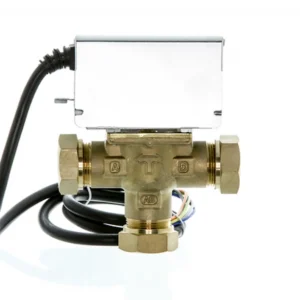
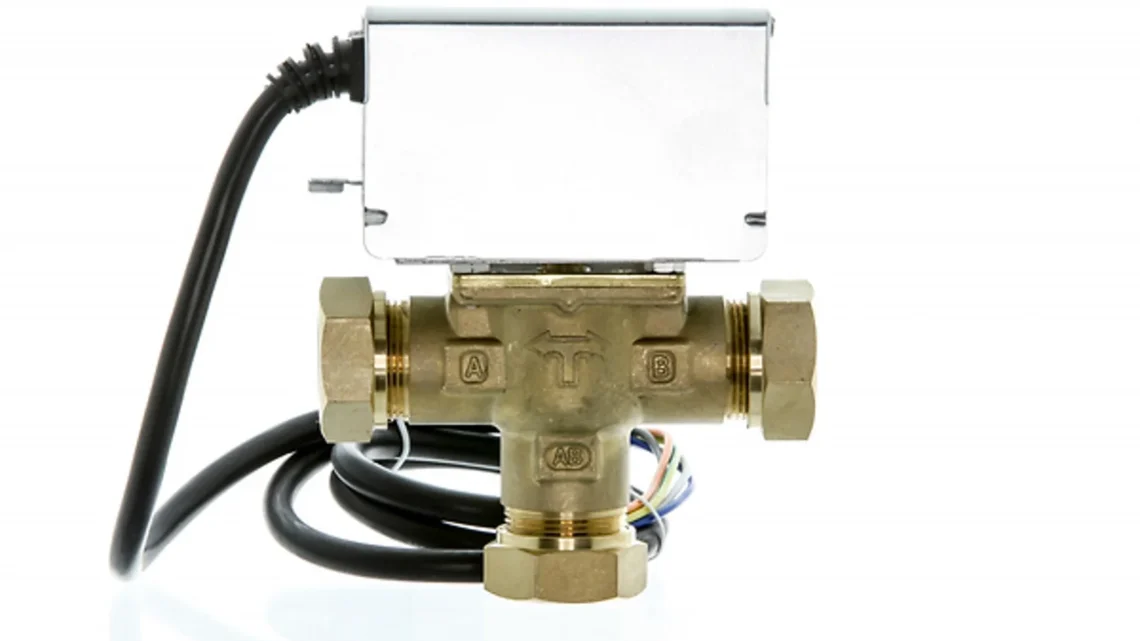
Tower VAL322MP 3‑Port Mid‑Position Valve: A practical choice for standard UK wet central heating
July 27, 2026The VAL322MP is a straightforward three‑port mid‑position valve designed for homes where one pump and one boiler supply both radiators and a hot‑water cylinder. If you run a conventional programmer with separate room and cylinder thermostats, this valve is built to sit in the middle of that arrangement: when either thermostat calls it directs flow to the correct circuit, and when both call it holds a mid‑position so both receive flow at once. Its compact 22 mm body and replaceable actuator make it a common candidate for retrofit and routine domestic work.
How it will behave in a real system
Understanding a mid‑position valve’s practical behaviour matters more than the headline features. The VAL322MP has three ports — common (AB), heating (A) and hot water (B). With a single pump feeding the boiler, the valve changes the path of the flow according to the thermostats: heating only, hot water only, or both together when both circuits require heat. The actuator includes a spring return so that, if power is lost, the valve moves to its safe default position rather than staying awkwardly half‑open.
Two small but meaningful points for day‑to‑day ownership are the valve’s low power draw (6 W) and the built‑in switched output. The low consumption keeps running costs negligible and, crucially for installers, the internal switching reduces the need for an extra relay in the programmer/thermostat wiring. That simplifies electrics in most conventional domestic setups.
Who should choose this valve — and who should look elsewhere
Good fit:
- Typical UK houses with copper 22 mm pipework and a fully pumped central heating system (no gravity hot‑water circuits).
- Installations using a conventional programmer plus separate room and cylinder thermostats where mid‑position behaviour is required.
- Situations where space is limited and a compact valve is preferable; the replaceable actuator also suits people who want straightforward, future servicing without draining the system.
Who should avoid it or consider alternatives:
- Systems with high‑head pumps or larger installations where the valve will face more than a 1.0 bar differential pressure at 22 mm. The VAL322MP’s maximum differential rating is 1.0 bar, so if your pump or layout produces higher heads you need a valve rated for that duty or a larger bore version.
- Gravity‑fed hot water systems: this valve is intended for fully pumped arrangements and not for systems that rely on gravity circulation for the cylinder.
- Installations that expect modern smart control, wireless integration or modulating control from a smart thermostat out of the box. The VAL322MP is designed to integrate with traditional thermostats and programmers rather than being a smart device itself.
Installation and positioning — practical considerations
The mechanical fit is conventional: 22 mm compression connections and an actuator that mounts to the valve body. It can be mounted vertically or horizontally within the manufacturer’s orientation limits, and the unit is supplied with compression fittings. A sensible precaution is to use the wrench flats on the valve body to tighten fittings — do not use the actuator as leverage.
The actuator comes pre‑wired with a one‑metre five‑core cable (plus earth). One metre will be fine for many boiler cupboards and compact installations, but in larger airing cupboards or where the control wiring emerges a distance away the cable length could limit mounting options or require re‑routing. Plan your wiring route before committing to a fixed position.
Electrical installation notes: the valve is designed for 220–240 V AC at 50 Hz and draws about 6 W. The manufacturer recommends supply protection via a 3 A fuse and the unit must be earthed. Because the actuator includes internal switching it usually removes the need for an external relay between thermostats and boiler/pump in standard wiring arrangements, but all electrical work should be carried out by a competent electrician and you must provide a means of disconnection with at least 3 mm contact separation on all poles.
Wiring at a glance (what the colours do)
This valve uses industry standard wiring colours for the functions you need to connect:
- White — room thermostat call (heating ON)
- Grey — cylinder thermostat satisfied (hot water OFF)
- Orange — cylinder thermostat call / signals boiler & pump
- Blue — neutral
- Green/yellow — earth
Those internal switching capabilities mean the valve can directly interface with the typical programmer/room/cylinder thermostat trio without extra relays in many setups. Still, check compatibility with your specific boiler controls: some modern boilers expect particular wiring arrangements or interlocks and installers should confirm the control logic before finalising the connection.
Performance, limits and compatibility explained
Two specifications determine the VAL322MP’s practical limits: the maximum differential pressure of 1.0 bar (at 22 mm) and the static pressure capability of 10.0 bar. The static rating covers the maximum system pressure it can tolerate when not flowing, and 10 bar is comfortably above typical residential values. The differential rating is the important one for flow behaviour — it tells you how much pressure difference the valve can safely handle across its ports while operating correctly.
In practice this means:
- If your system pump and pipework create a differential higher than 1.0 bar across the valve at the chosen flow rates, the actuator may struggle to move the internal port correctly or may cause increased wear and noise. That can also affect the ‘both circuits open’ balance the mid‑position should give.
- In systems with higher pump heads (for example replacement high‑flow pumps or extended radiators and long runs), you should either select a valve rated for a higher differential, fit a larger bore valve to reduce head loss, or fit a pump with an appropriate performance curve. Don’t assume a one‑size‑fits‑all approach.
Another compatibility point is the operating temperature range. The actuator’s operating temperature spans +5 °C to +88 °C and the maximum ambient is 52 °C. Those ranges are adequate for typical boiler cupboard environments; avoid placing the actuator where local ambient temperatures can exceed these figures (for example very hot plant rooms or near direct heat sources).
Installation tips installers and DIYers should note
- Use the actuator’s AUTO/MAN lever during filling and venting. Setting the lever to AUTO holds the valve in the open position for filling, bleeding or commissioning without running the motor. Set it to MAN when you need to drain or remove the actuator. This avoids forcing the motor or stressing the actuator drive.
- Don’t overtighten compression fittings with the actuator attached — use the body wrench flats. Forcing the actuator risks damaging the head or misaligning the gearbox.
- Keep the pre‑wired cable protected and secure to avoid strain at the cable gland. If you need a longer connection run, plan to terminate in a nearby junction box rather than attempt to extend the motor cable in the open.
- Confirm wiring colour conventions and terminal functions against the valve’s documentation and your boiler wiring diagram — differences in old systems or third‑party components can cause confusion.
Strengths that matter in day‑to‑day ownership
The VAL322MP’s strengths are practical rather than headline‑grabbing. It is compact, energy‑efficient (6 W), and uses a replaceable actuator. That replaceable head is an advantage for future maintenance: in most cases you can change the motorised head without draining the whole system, saving time and reducing disruption. The internal switched output often reduces component count on the wiring side and simplifies conventional thermostat integration.
It’s also a conservative choice: the spring return gives a safe fallback position on power failure and the compression fittings match typical copper pipework used across UK homes.
Trade‑offs and limitations to keep in mind
The design is intentionally simple, which brings trade‑offs. There’s no on‑board smart control, modulating valve action or wireless capability — it’s intended to be part of a traditional thermostat/programmer arrangement. The fixed one‑metre cable can limit mounting options and may require additional junctioning in some cupboards. The differential pressure limit is the single most important technical constraint — it rules out use in higher‑head systems without additional consideration.
Maintenance, servicing and longevity considerations
Routine maintenance is straightforward: check for leaks at compression joints after the system is filled and vented, ensure the actuator cable is secure, and periodically confirm the valve moves correctly when the thermostats call. Because the actuator is replaceable without draining the system, future servicing is easier than with fully sealed non‑serviceable designs. However, always isolate electrical supply and follow safe working practices before attempting any work on the valve.
Replacement heads for common valves are widely available from component distributors; keeping a spare actuator can reduce downtime if servicing is required, especially in rental properties or where rapid repair is preferred. There’s no internal filter to clean on the valve body itself, but it’s good practice to ensure system debris is kept in check with a magnetic filter or strainer upstream of the valve to avoid wear or sticking caused by particulates.
Value considerations without quoting price
Value for money depends on your priorities. If you need a compact, conventional mid‑position valve for a standard domestic installation and you value easy future servicing, the VAL322MP’s feature set matches that brief. Its modest power draw, replaceable actuator and standard fittings make it a practical workhorse for everyday installations.
If your installation requires higher pressure handling, longer‑term flexibility for smart control, or larger pipework, factor the cost of alternative valves or additional components (bigger bore, higher differential rating, relay modules or smart adapters) into your comparison. Also consider the potential savings in labour when a valve is serviceable without draining the system — that can make the replaceable actuator a meaningful cost saver over the life of a system.
Summary judgement
The VAL322MP is a sensible, no‑nonsense mid‑position motorised valve for the common UK household wet heating system. It’s not a luxury product with smart features, nor is it pitched at heavy commercial use. Its practical advantages — compact 22 mm body, low power consumption, internal switching and a replaceable actuator — address the typical concerns of installers and homeowners who want reliability, straightforward wiring integration and easier future maintenance.
Before you buy, check two things: that your system is fully pumped (no gravity hot water) and that the pump and pipework head do not exceed the valve’s 1.0 bar differential rating at the intended flow. If those conditions are met, the VAL322MP is a pragmatic choice that will fit neatly into most conventional thermostat and programmer control schemes and keep servicing simple over time.
Latest product offer
Ready to check VAL322MP 3 Port Mid-Position Valve?
Check the latest product page, price and offer details before buying.