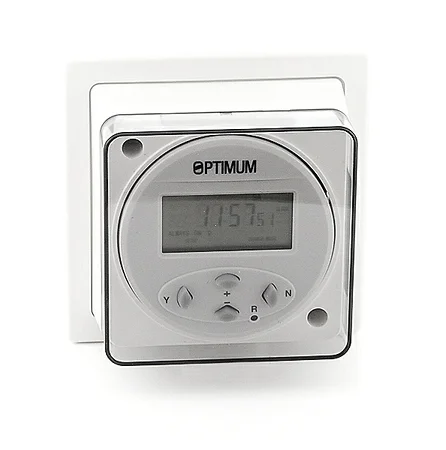

Description
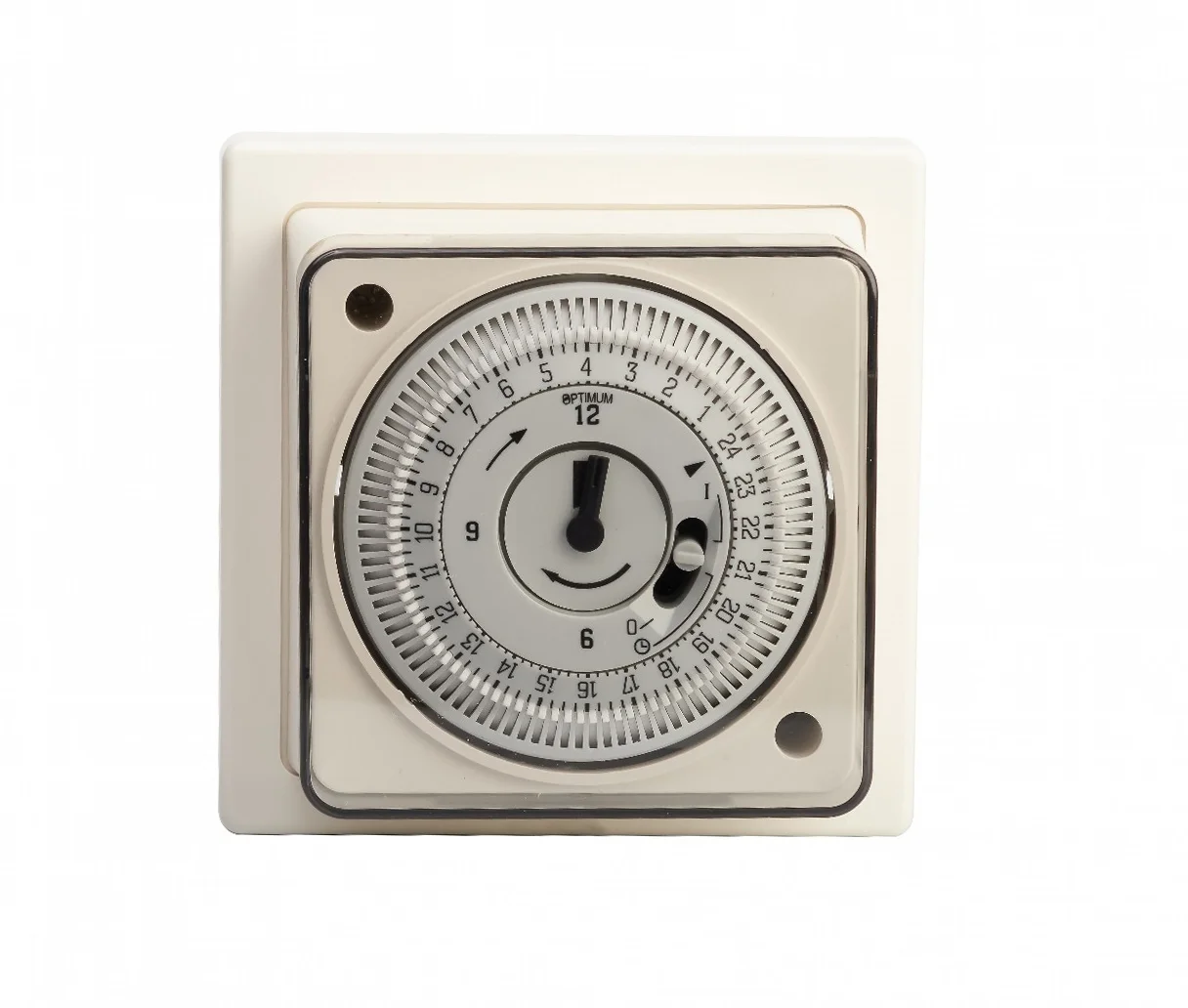
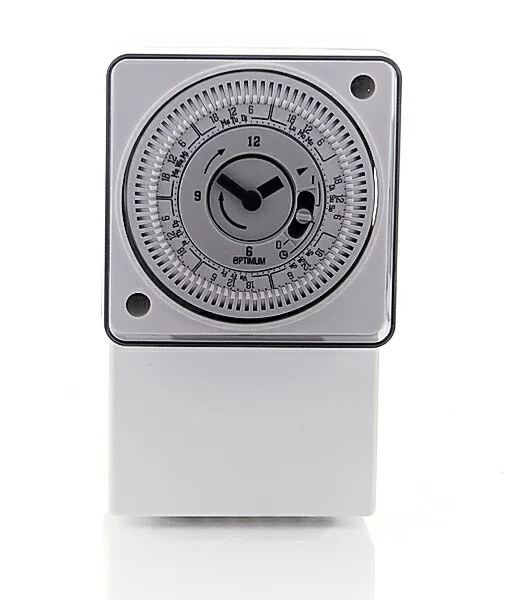
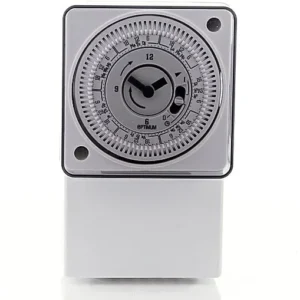
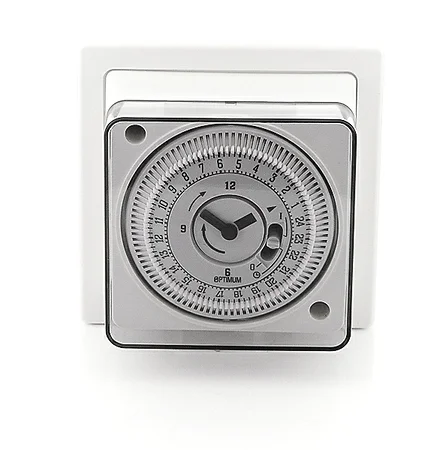
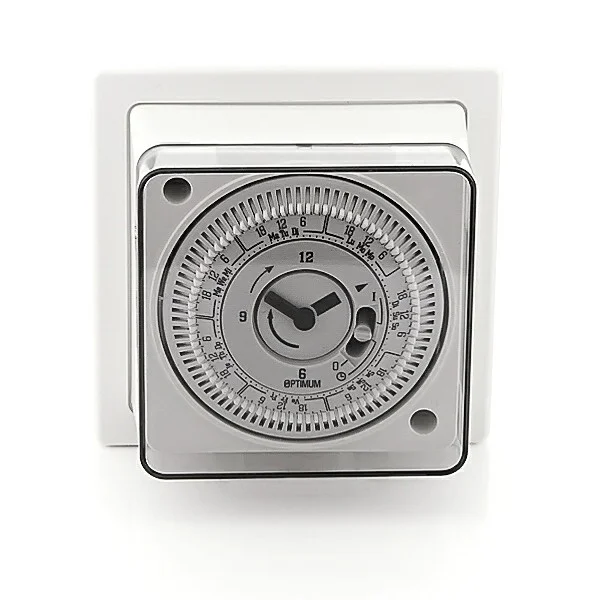
This is a compact, mechanical weekly time switch intended for general-purpose control where a simple on/off schedule is required. It uses a 7‑day dial with captive tappets set in two‑hour steps, so you create a weekly programme by pushing the tappets in or out around the dial. The unit mounts directly over a standard single pattress (socket) box and provides volt‑free SPDT switching suitable for resistive and inductive loads within its ratings.
How it works and when you’d use it
The OP‑SBSW is an electromechanical timeswitch driven from the mains (220–240 V AC, 50 Hz) so it runs continuously while powered and returns to the set programme after short power interruptions. Each tappet on the 7‑day dial represents a two‑hour segment: move a tappet to create an ON or OFF period around the week. There’s a simple manual override with three positions (timed, fixed ON and fixed OFF) for temporary control without altering the programme.
Because it provides volt‑free changeover contacts and respectable current ratings, it suits applications such as simple boiler or pump switching (where local wiring and safety rules allow), control of heaters on a fixed schedule, and other domestic or light‑commercial loads. Its pared‑back mechanical interface makes it a useful choice where straightforward, visible programming is preferred over digital or app‑based timers.
Controls, programme and behaviour
Programming is entirely tactile: set the dial to the current day/time and press the relevant two‑hour tappets to create your on/off pattern. The captive tappet design prevents loss of parts and keeps the pattern stable. Because each tappet equals two hours, the smallest controllable time block is two hours — this is an important practical limitation if you need short or irregular switching periods. The manual override lets you put the output into a permanent ON or OFF state without changing the weekly programme.
Installation, wiring and compatibility
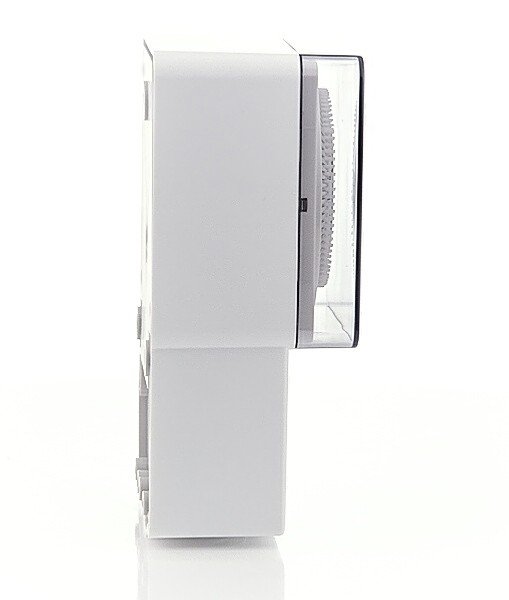
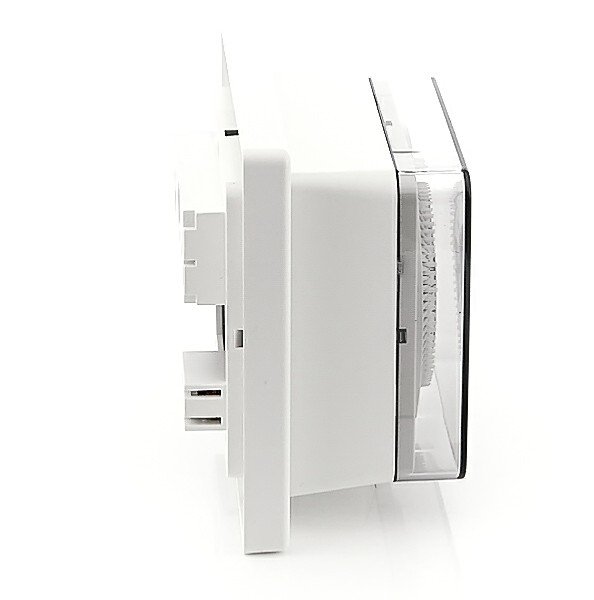
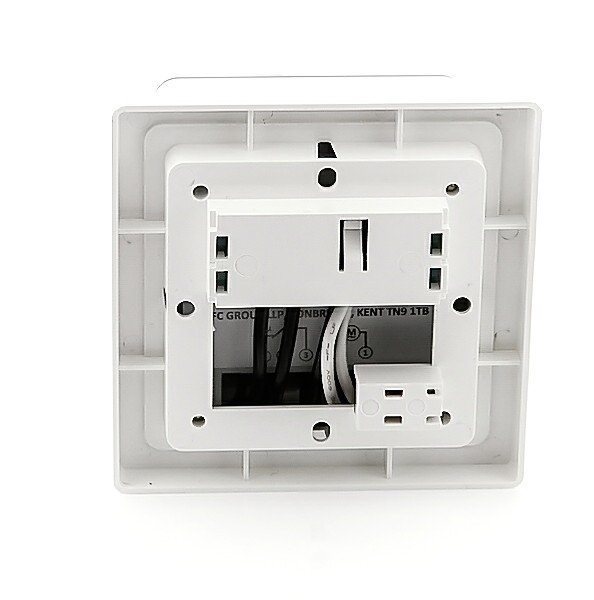
The OP‑SBSW is made to sit over a single pattress box (surface or flush); check your backbox depth and local wiring rules because this is intended for fixed wiring and not as a loose plug‑in accessory. It uses volt‑free SPDT contacts, so the timer can switch either a mains supply or a low‑voltage control circuit — but the installer must choose the correct wiring arrangement and, if switching mains loads directly, ensure the wiring conforms to current electrical regulations.
Note the load limits: the switch is rated 16 A for resistive loads and 8 A for inductive loads. For any discharge lighting (fluorescent, HID, SON, some LED drivers) or motors with higher inrush currents, the manufacturer and suppliers advise using a suitably sized contactor rather than switching the load directly through the timer. That preserves the timer contacts and ensures safe operation.
Practical advantages and limitations
- Advantages: simple tactile programming, captive tappets, straightforward pattress‑box mounting, volt‑free SPDT contact flexibility and reasonable amperage for many domestic circuits.
- Limitations: two‑hour minimum step restricts fine control; not intended for direct switching of discharge lighting without a contactor; mechanical dials lack the precision and feature set of digital or smart timers (no remote control, no multi‑event daily programming).
Key specifications
- Supply: 220–240 V AC, 50 Hz
- Programme: 7‑day dial, 2‑hour tappet intervals
- Switching: volt‑free SPDT (changeover) contacts
- Load ratings: 16 A resistive, 8 A inductive
- Manual override: Timed / Fixed ON / Fixed OFF
- Mounting: fits a standard single pattress box (surface or flush)
- Dimensions (manufacturer figure): approximately 60 × 92 × 92 mm
If you want a simple, robust weekly timer for repeatable on/off control and you don’t need minute‑level accuracy or remote access, this is a sensible and cost‑effective option. For applications that require short switching intervals, complex daily programming, remote control, or direct switching of discharge lighting and large motors, choose a digital unit or fit a contactor alongside the OP‑SBSW to protect the timer’s contacts.