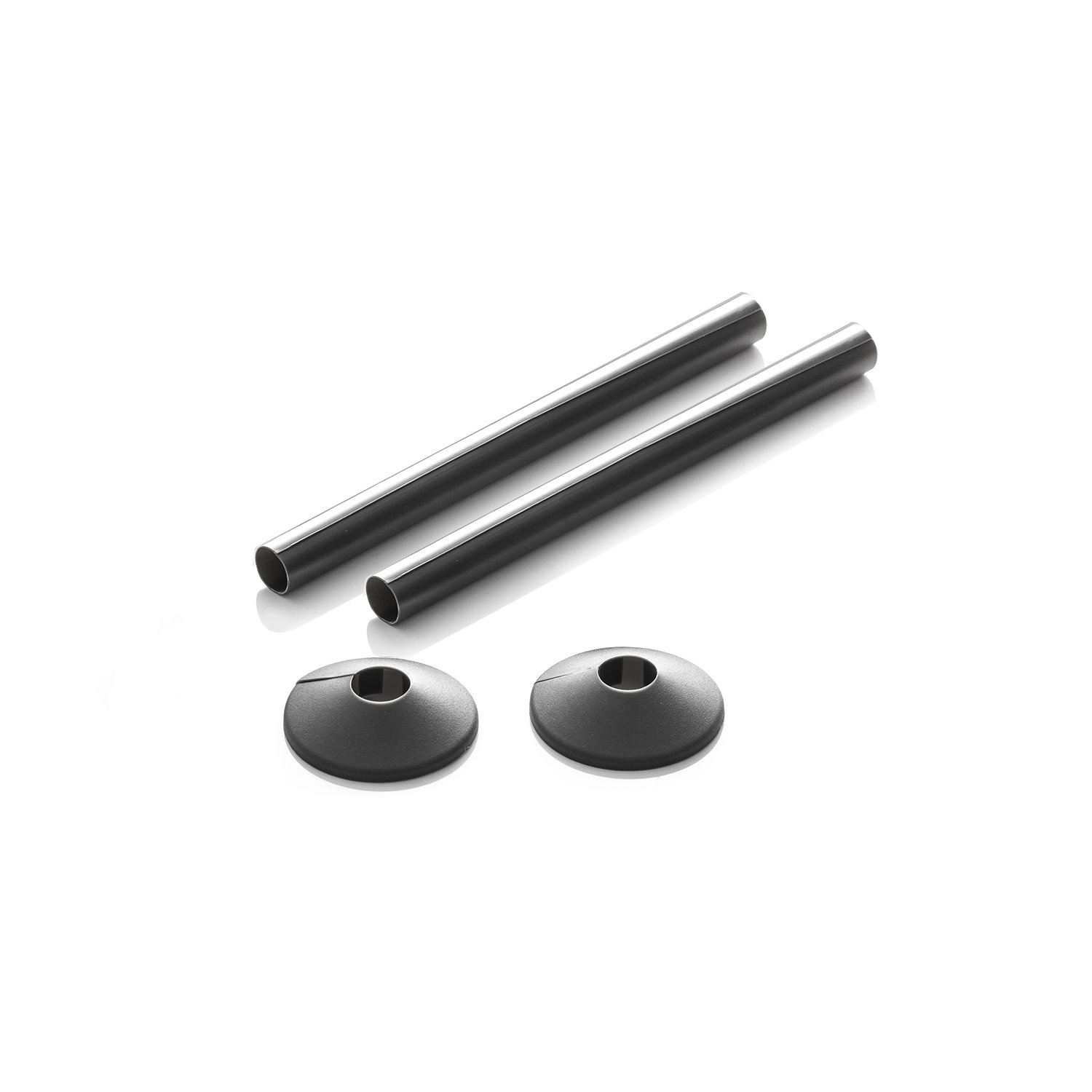
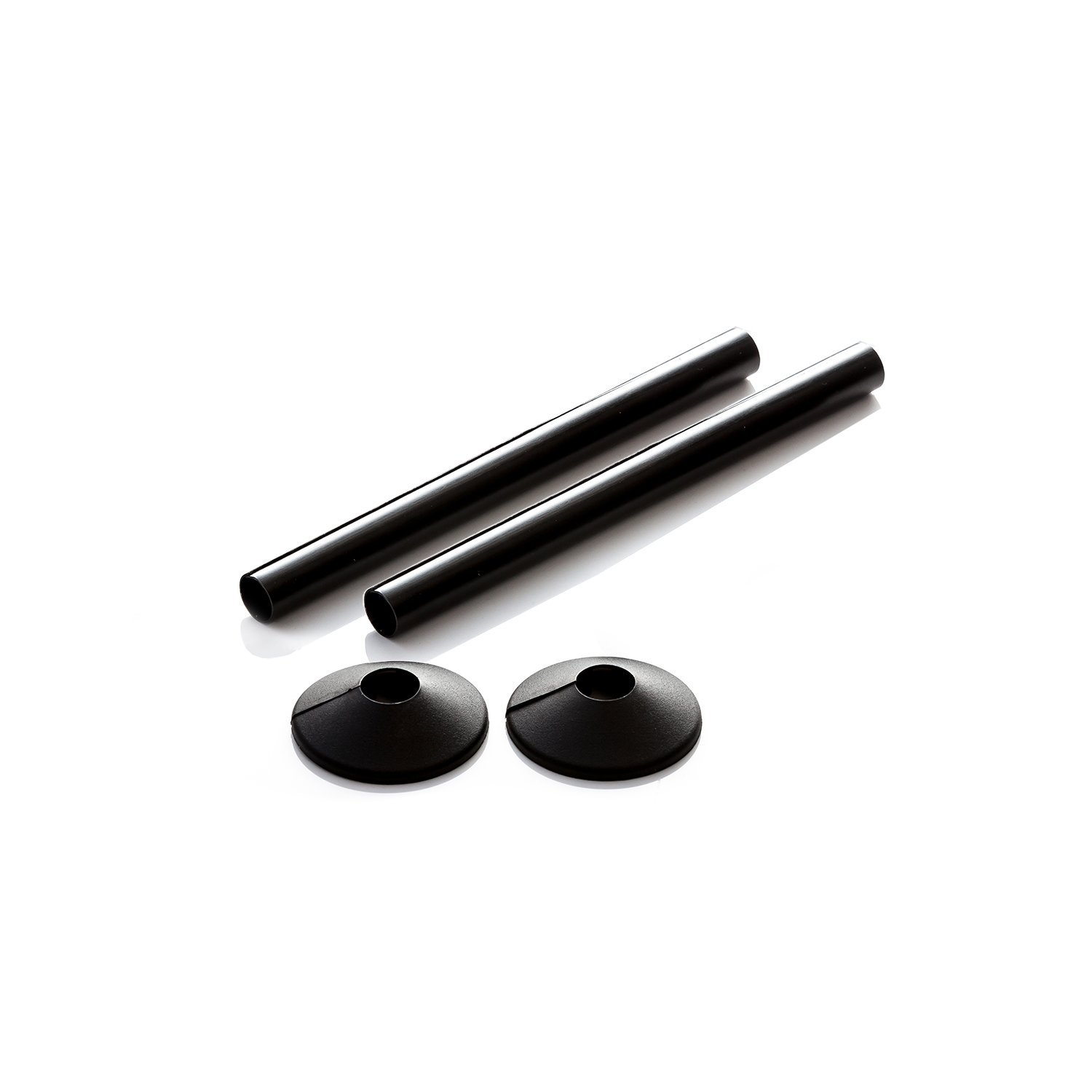
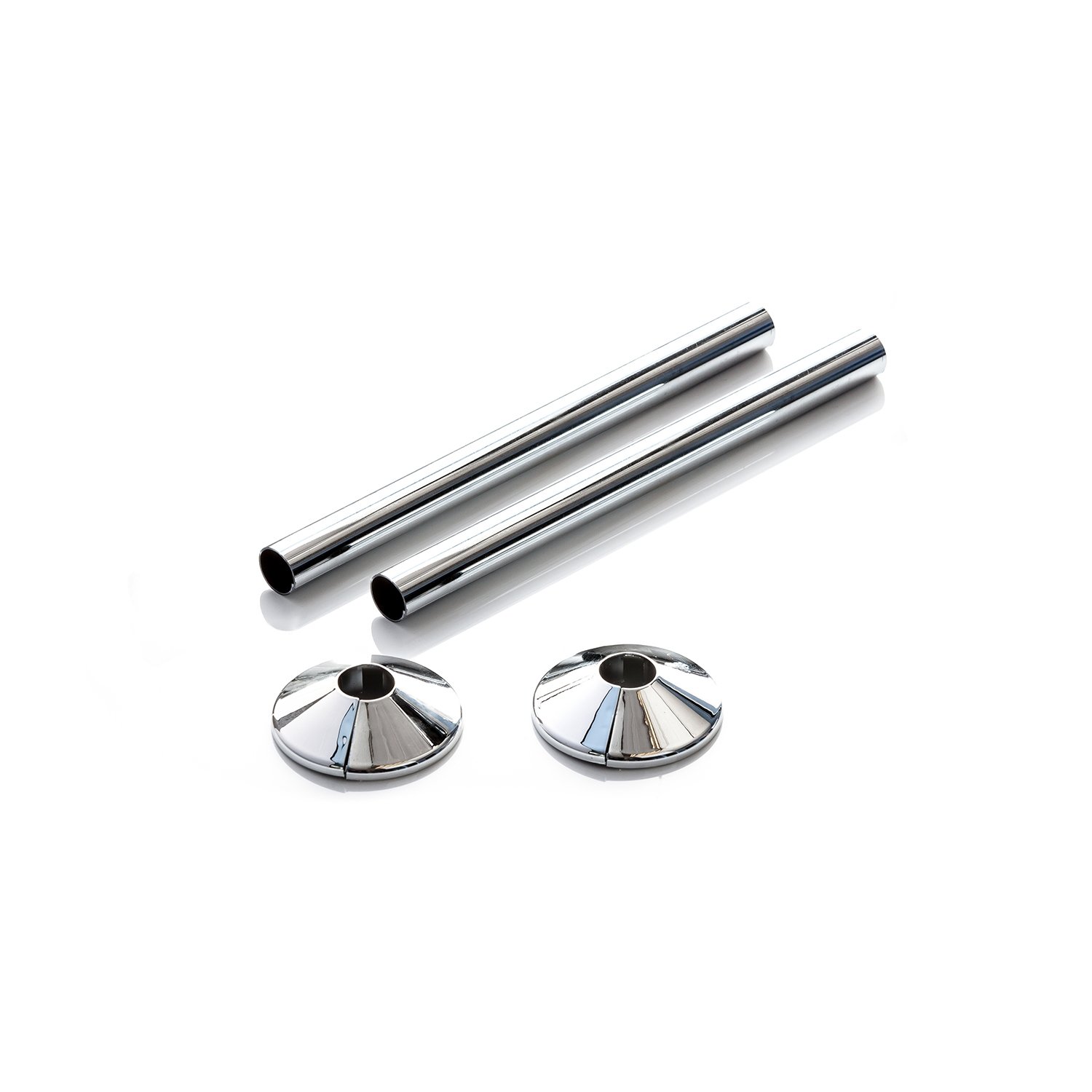

Description
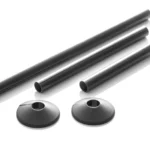
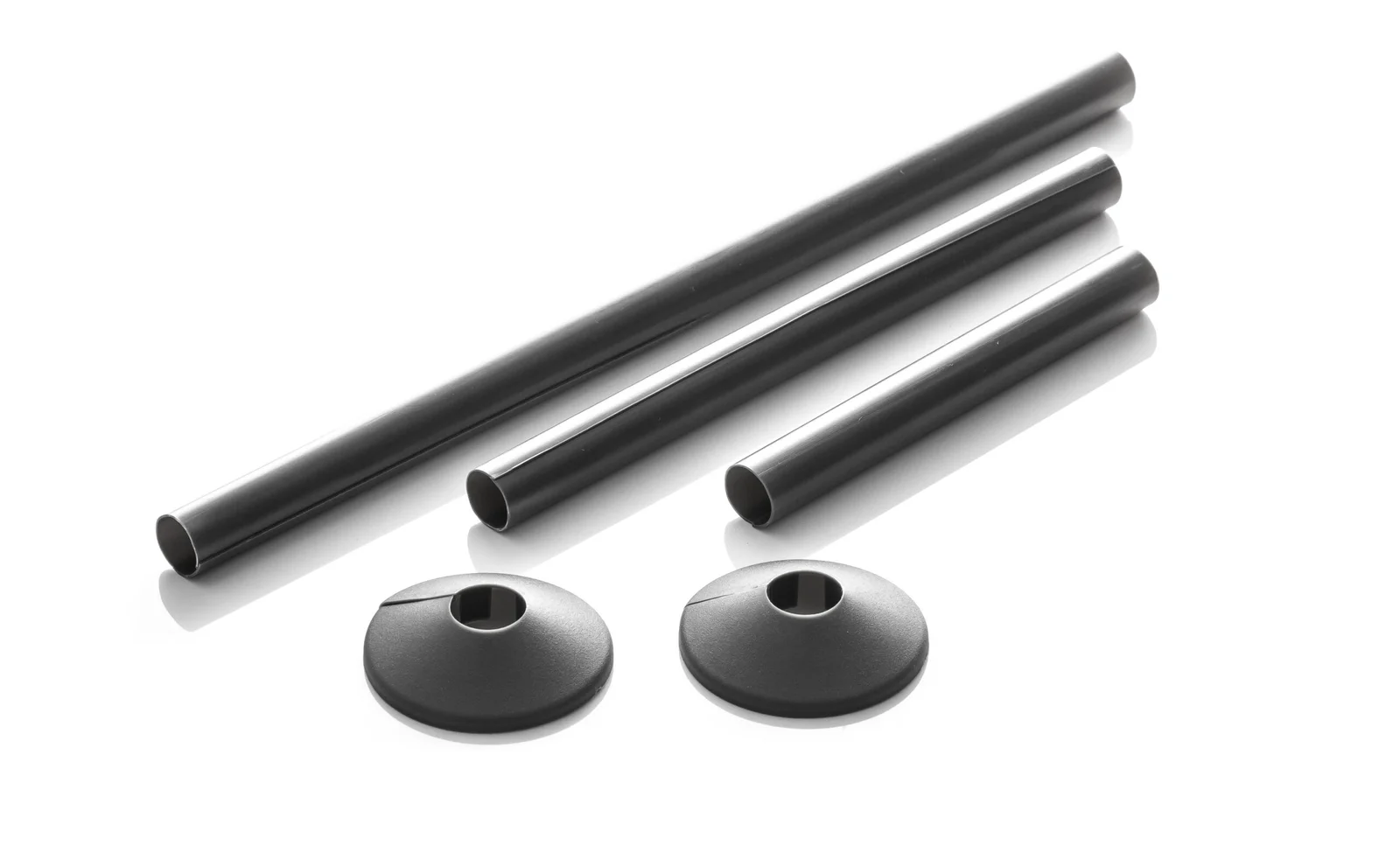
These are simple, clip‑on plastic shrouds and matching collars intended to tidy exposed radiator and heating pipework where 15mm supply pipe is used. They are hollow tubular covers that slip over the fixed feed and return pipes and are trimmed to length where necessary; matching round collars sit at the wall or floor penetration to give a neat, finished look.
What they do and where they suit best
Think of them as decorative trim for radiator legs and towel‑rail connections rather than a mechanical component. They conceal bare copper or plastic pipe runs where they meet radiators, towel rails or pass through skirting and floors. That makes them particularly useful for refurbishments and new‑builds where pipe runs are visible and the owner wants a coordinated finish with valves or radiators — for example matching a matt black towel rail or anthracite radiator valves.
Design, finishes and sizing
The covers come as short tubes in factory lengths and are intended to be cut down on site to match the actual pipe run. Manufacturer options include 130mm, 200mm and 300mm lengths; the 200mm and 300mm lengths are the sizes most commonly stocked. Finishes are polished chrome, smokey‑grey anthracite, textured matt black and bright white so you can pick a discreet or a contrasting look depending on the rest of the décor.
- Compatibility: designed for nominal 15mm pipework.
- Collar size: matching round collars are specified at 55mm diameter to neatly trim around the pipe where it enters a wall or floor.
- How they’re supplied: the line is normally sold in small packs; individual collars are also available separately in trade packs (typically packs of 10) for multi‑room installations.
Installation and practical notes
Installation is straightforward: the shroud halves (a single tube in these products) simply clip over the existing pipework so there is usually no need to isolate or take apart valves. Because they’re plastic, they’re easy to score and trim with a fine saw or sharp knife to achieve a clean end‑to‑end join or to fit around obstructions. That makes them popular with installers doing retrofit work — you don’t need to disturb the heating circuit to tidy the appearance.
Bear in mind they are primarily cosmetic trim. They will not provide mechanical protection against a deliberate impact, and because they are hollow plastic they should not be treated as pipe insulation. If pipe insulation or fire‑stopping is required at the penetration, these items do not replace those measures.
Advantages and realistic limitations
- Advantages: fast, low‑cost visual improvement; multiple finishes that match common valve and radiator colours; trim‑to‑fit lengths for flexibility.
- Limitations: they are decorative only (not structural or insulating); material and fire‑rating details are not published on the basic product page, so if compliance with a specific building requirement is needed you should check with the supplier or request a technical datasheet.
Practical buying tips
Measure the visible pipe length from valve to wall/floor and choose the nearest longer factory length so you have room to trim. If you want collars where the pipe passes through solid masonry you’ll need to buy collars either in the shroud pack (some packs include collars) or separately in multi‑packs — the manufacturer lists separate collar codes and trade packs of collars. Match the finish to your valves or radiators: matt black and anthracite read as modern and contemporary, while chrome is a better fit with polished hardware.
If you require confirmation of the plastics used, flammability rating or any certification for use in a particular building class, request the technical datasheet from the supplier before purchase: the online product page gives dimensions and finishes but does not publish a detailed compliance or material breakdown on its basic listing.