Anthracite Straight Radiator Valves (MRVMST-A) — Practical review for modern central-heating installations
July 27, 2026When you replace or install contemporary radiators or towel rails, the choice of valves affects both appearance and everyday function. The Anthracite Straight Radiator Valves (model MRVMST-A) are a matched pair of manual, straight compression valves intended for 15mm-to-1/2″ BSP radiator connections. This review explains their practical capabilities, installation considerations, compatibility limits and what to expect on maintenance and longer-term ownership so you can decide whether they fit your project.
What these valves are — and what they aren’t
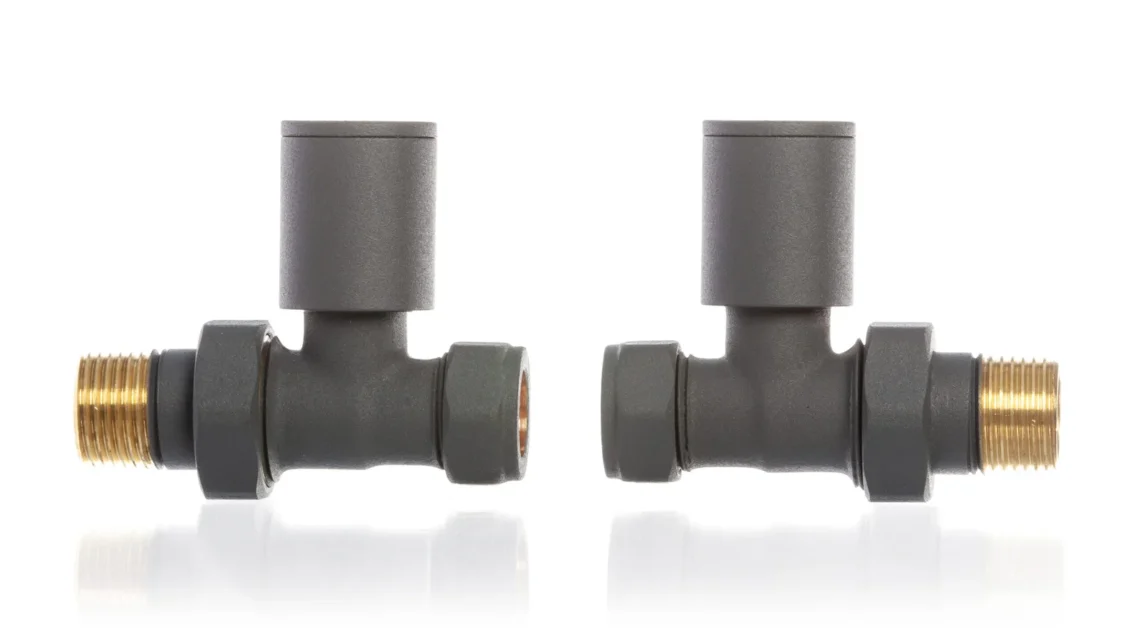
The MRVMST-A set consists of two straight manual radiator valves finished in anthracite. They provide mechanical flow control: turn the head to admit or isolate water to the radiator. They are not thermostatic radiator valves (TRVs) and contain no temperature sensing element, so they do not regulate room temperature automatically. In short, they are a simple control/lockshield pair with a contemporary, low-key appearance intended to match anthracite radiators and dark pipework.
Where these valves suit best
- Replacement projects where appearance matters — matching the anthracite finish on modern panel radiators or towel rails.
- New installations with straight pipe runs: where the supply rises vertically from the floor into the radiator or where the pipework aligns straight to the appliance.
- Situations requiring straightforward on/off isolation and basic balancing using a control and matching lockshield valve pair.
- Domestic sealed systems or many open-vented systems, within the stated operating limits (see specifications).
Who should avoid them
- Anyone who needs automatic room temperature control — TRVs provide that functionality and are the correct solution for per-room regulation.
- Installations with non-standard pipework: if you have 10mm or 22mm supply pipes, or a radiator with an unusual tailpiece, you will need adaptors or a different valve format (angled, corner, or specific-size valves).
- Commercial systems or high-pressure/high-temperature plant beyond the listed 10 bar / 120°C limits.
- Installers who prefer integrated thermostatic or lockshield designs where flow measurement or precise balancing is required as part of a commissioning workflow.
Compatibility and installation in practical terms
The MRVMST-A is built for the common UK radiator plumbing standard: a 15mm compression supply and a 1/2″ BSP radiator tailpiece. That makes it suitable for most modern panel radiators and many towel rails. Because these are straight valves, they physically suit installations where the pipework feeds the radiator from below with a vertical rise into the valve body or where the pipe meets the radiator in-line.
Important practical points for installers and competent DIYers:
- Compression fitting practice: these valves use a 15mm compression connection. Proper installation requires cutting the copper pipe squarely, deburring the cut, and ensuring the olive and nut are correctly seated and tightened to the usual trade torque. Poor compression joints are the common cause of leaks; follow standard plumbing procedure or use a professional fitter if unsure.
- Radiator tailpiece thread: the valves connect to 1/2″ BSP radiator tailpieces. Most modern radiators use this thread, but older or specialist radiators can differ; check the tailpiece before buying to avoid adaptors on site.
- Clearance and recess considerations: some radiators have recessed tailpieces or limited clearance between the valve body and the radiator panel. As straight valves, the MRVMST-A will project forward from the tailpiece; ensure the finished appearance and access for operation are acceptable.
- Adapters and alternatives: where pipe diameter differs (10mm or 22mm), or where an angled connection is required, you will need an appropriate adaptor or a valve designed for that orientation and size. Do not force a straight 15mm valve into a mismatched installation.
Finish, handling and appearance
The anthracite powder/paint coating gives a matte, modern look that pairs well with grey or black radiators and contemporary interiors. Visually, the valves are designed to blend with a minimal profile rather than draw attention.
A practical caution: painted finishes are more susceptible to visible scratches or chips if tools slip during assembly or if fittings are roughly handled. Take care when tightening compression nuts and when using spanners near the valve body. For the best long-term finish, install carefully and avoid overtightening or contact with serrated tools on visible surfaces.
Performance and operating limits
From the specification: a maximum flow temperature of 120°C and a maximum working pressure of 10 bar. Those limits align with standard domestic central-heating systems and many conventional open-vented setups. They tell you that, from a materials and construction point of view, these valves are intended for normal residential duty rather than heavy industrial use.
Because the valves are manual, performance in day-to-day use is straightforward: they will reliably open and shut the flow when operated and provide a means to isolate a radiator for maintenance. However, they do not offer the automatically variable flow control that a TRV provides, nor do they include fine measurement or pre-set balancing features that some specialist lockshields provide. For balancing a system, you can use the pair in the traditional way (one control valve and one isolating/lockshield valve) but expect to rely on the heating engineer’s judgement and any system-wide balancing valves if precise flow distribution is required.
Installation scenarios and realistic ownership
Scenario A — Replacing chrome valves on an anthracite radiator: This is the most straightforward use. The MRVMST-A will visually integrate with anthracite radiators and provide the necessary mechanical isolation. Expect a straightforward swap if the radiator tailpieces are 1/2″ BSP and the supply is 15mm copper. Take care on removal of old valves to avoid damaging the radiator tailpiece, and fit with a new olive if the existing one is worn.
Scenario B — New towel rail installation: Many towel rails are supplied with 1/2″ BSP tailpieces and are compatible. Because towel rails often sit close to the wall, check the projection of the straight valve to ensure the finished look is neat and that there’s room to operate the head.
Scenario C — An older radiator with non-standard tailpieces: You may need short adapters or a conversion tailpiece to seat the valve correctly. On some older radiators it’s common to use a short tailpiece or an adapter to convert to 1/2″ BSP — factor that into the project if you want a neat, stress-free seal.
Maintenance and longevity considerations
- Routine operation: manual valves should be exercised periodically (opened and closed) to avoid the spindle seizing in place through corrosion or lime scale, particularly in systems where water quality is poor.
- Finish care: avoid abrasive cleaning agents and be cautious with tools to prevent paint damage. Chips in the coating expose the substrate and can accelerate corrosion if left unattended.
- Leak checks: after installation, recheck compression joints once the system is pressurised and after the first heat cycle. Re-tighten if a drip is evident, but do not overtighten nuts beyond normal compression practice.
- Replacement parts: these valves are simple mechanical assemblies. If a spindle or internal washer fails, replacement valves are generally more economical than repair for domestic items, though a competent engineer may be able to repair some leaks without replacing the entire valve.
Support and longer-term ownership
These valves are specified under the Tower (TFC Group) reference MRVMST-A. For installation guidance and warranty or support queries, refer to the manufacturer’s documentation or the retailer’s after-sales support. Because the design is intentionally basic, ongoing ownership is low complexity: there are no electronics or moving sensors to fail, and the operational life is typically determined by the quality of the water, the system’s corrosion control, and how carefully the valves are handled during service.
If you have a system with chemical inhibitors or a water treatment plan, the valves will benefit from that, as inhibitors reduce corrosion and scale that can impede mechanical valve performance over time. Conversely, untreated, highly aggressive water could shorten functional life.
Strengths, compromises and practical trade-offs
Strengths:
- Clean, contemporary anthracite finish that matches modern radiators and dark pipework.
- Simple, reliable mechanical function without electronics — fewer failure modes in domestic settings.
- Designed for the common 15mm-to-1/2″ radiator standard, making it compatible with most modern radiators and towel rails.
Compromises and limitations:
- No thermostatic control: they cannot replace TRVs where room temperature control is required.
- Straight orientation restricts use to installations with suitable pipe routing; angled options are needed in other pipe layouts.
- Painted finish needs careful handling to avoid visible chips and scratches during installation and maintenance.
- No precision balancing features: while usable as a basic lockshield, professional balancing of a complex system may require more specialised valves.
Value considerations
Value for money depends on your priorities. If you need a matched pair of manual valves in anthracite to complete a modern-looking installation and you do not require TRV functionality, these valves offer a purposeful and low-complexity solution. Their specification aligns with domestic system requirements, so you are buying fit-for-purpose components rather than specialist hardware.
If you need room-by-room temperature control or precise hydraulic balancing, factor in the additional cost of TRVs or specialist lockshield bodies. Also consider the cost and effort of adaptors if your pipework isn’t 15mm or your radiator tailpiece differs from the common 1/2″ BSP thread.
Checklist before buying and fitting
- Confirm radiator tailpiece thread is 1/2″ BSP.
- Check your supply pipe size is 15mm, or source the correct adaptors if not.
- Verify that straight valves will physically fit in the available clearance and that the aesthetic projection is acceptable.
- Decide whether you need thermostatic control — if so, purchase TRVs instead or alongside as appropriate.
- Plan for careful installation to avoid damaging the anthracite finish; keep tools clear of painted surfaces.
Conclusion — who should buy these?
The MRVMST-A anthracite straight radiator valves are a sensible, purpose-built option when you want simple manual control paired with a modern finish. They are best for homeowners, decorators or installers fitting contemporary radiators or towel rails where the 15mm-to-1/2″ standard applies and where automatic temperature control is not required.
They are not the right choice if you need thermostatic room control, have non-standard pipework without suitable adaptors, or require specialist balancing features. Provided you check compatibility and handle the installation with care to protect the coating, these valves deliver the expected mechanical function and a neat visual match for dark-finish heating appliances.
Overall, think of the MRVMST-A as a styling-conscious, low-complexity manual valve pair for modern domestic radiator installations — reliable for isolation and basic flow control, but limited in control sophistication compared with TRVs and specialist balancing hardware.
Latest product offer
Ready to check Anthracite Straight Radiator Valves?
Check the latest product page, price and offer details before buying.