

Description
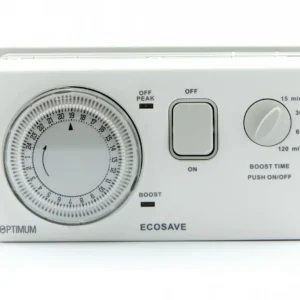
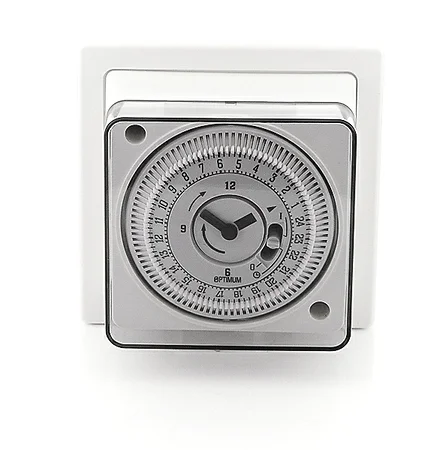
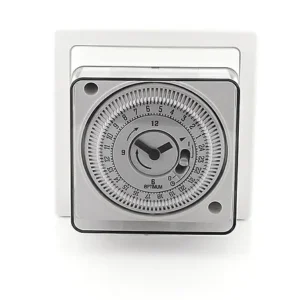
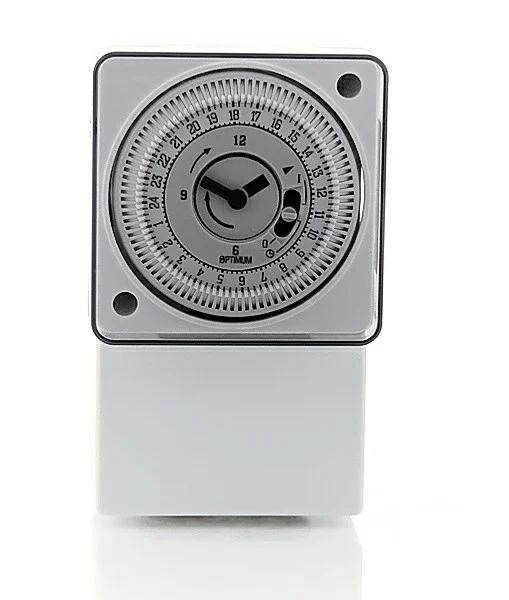
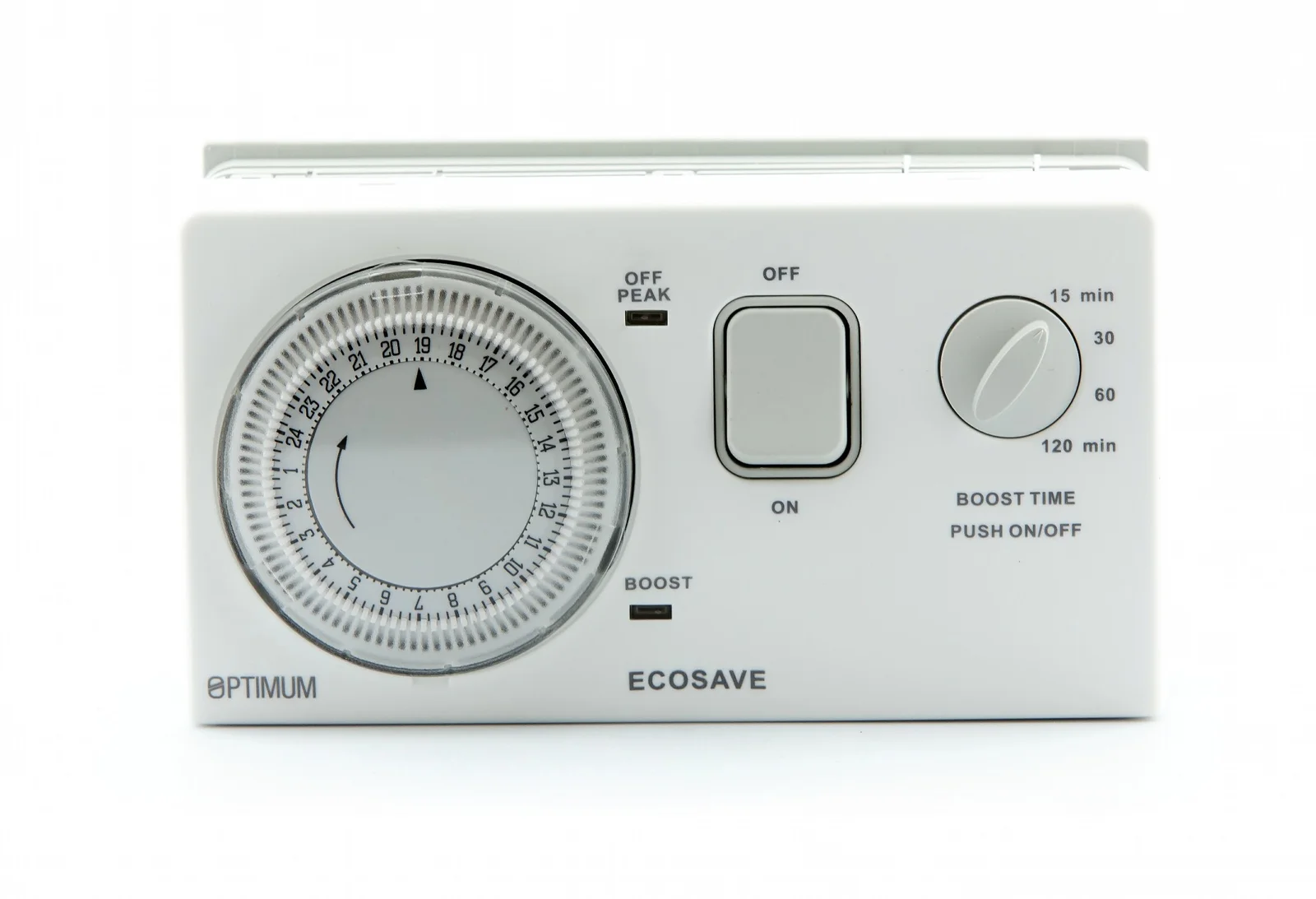
This is a simple, robust mechanical timeswitch for controlling immersion heaters on multi‑tariff supplies. It’s designed to switch standard 3kW immersion elements during off‑peak periods and to provide a short‑term daytime ‘boost’ when you need extra hot water. The unit uses a 24‑hour quartz clock with 15‑minute tappets, a manual on/off override and clear indicator lamps so you can see when the timed or boost output is live.
Key specifications
- Supply: 220–240V AC, 50Hz
- Contact / load rating: 16A resistive (2A inductive)
- Designed to control up to a 3kW immersion element
- Programmable in 15‑minute intervals (24‑hour dial)
- Boost durations: selectable 15, 30, 60 or 120 minutes
- Running reserve / battery back‑up: approx. 72 hours
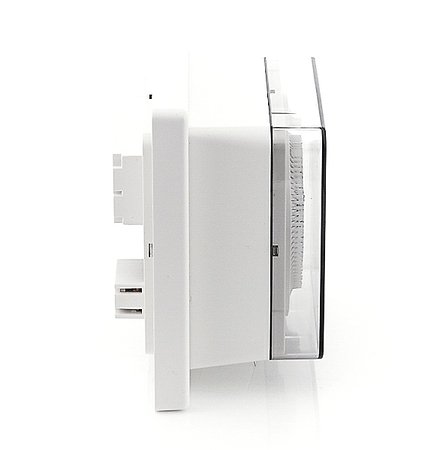
- Dimensions (mm): 86 H × 155 W × 55 D; protection: IP20
Because it’s mechanical and intentionally straightforward, the OP‑ECOSAVE is not targeted at smart‑home integration or complex scheduling — instead it’s for households that want dependable, low‑complexity control of cylinder heating around an Economy‑style tariff. You set the tappets to mark the off‑peak window(s) and the clock will energise the ‘timed on’ output during those periods; the boost button lets you manually call for extra heat at other times without changing the clock settings.
How it works in practice
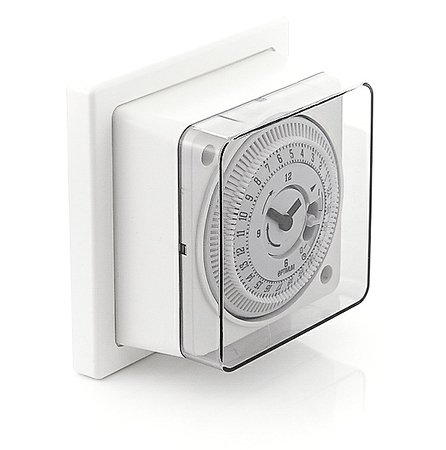
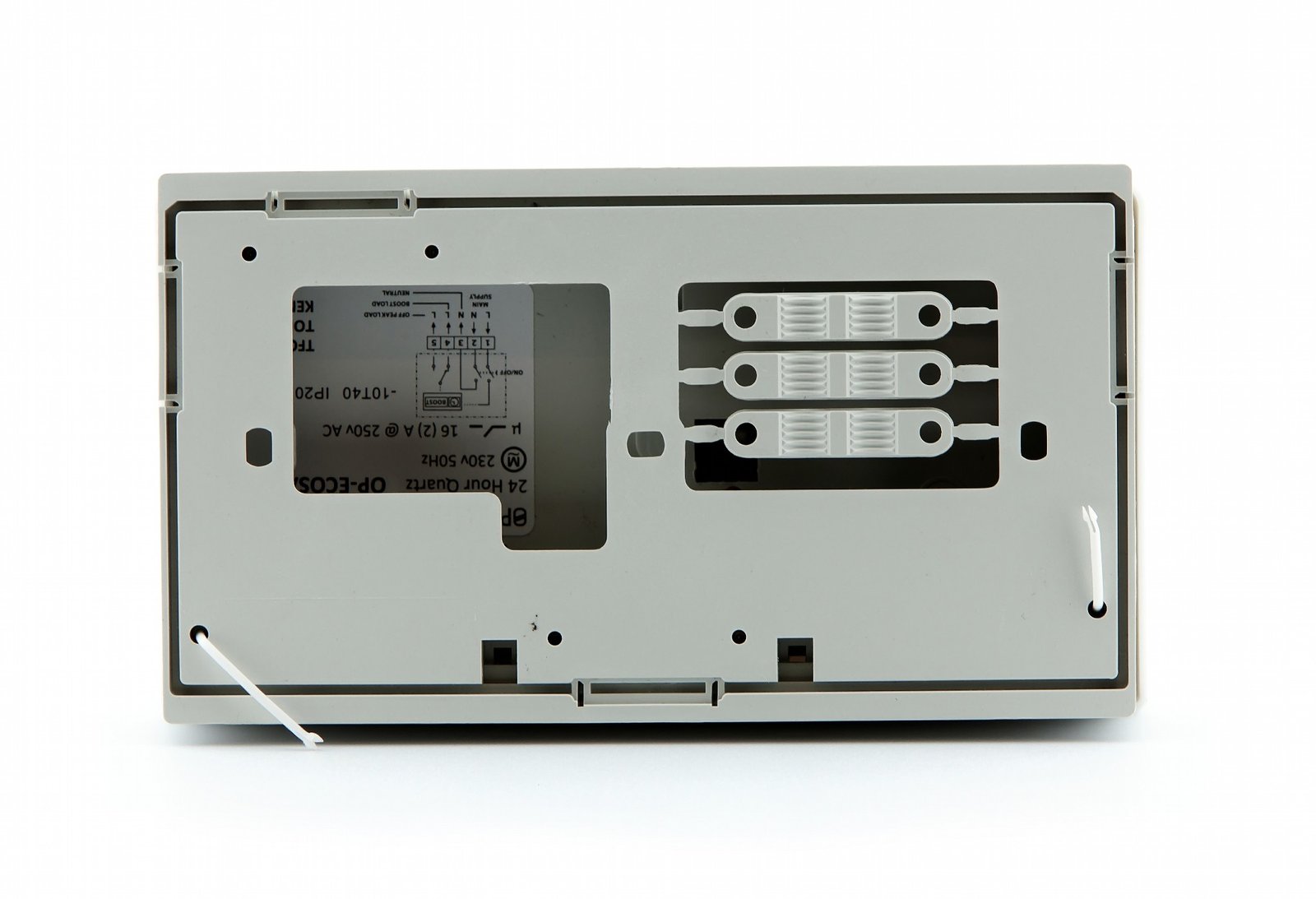
Fit the timer on a wall near the cylinder or in a separate switchplate; the unit has a separate wiring base to make installation easier. When the mains supply is present the quartz clock turns the dial and any tappets set to the outer position will energise the timed output. The boost button is a simple override: press once to start the chosen boost period and press again to cancel it early. Two indicator lamps show when the timed output or the boost output is active; with a single immersion element both lamps will illuminate when either output is selected.
Compatibility and installation notes
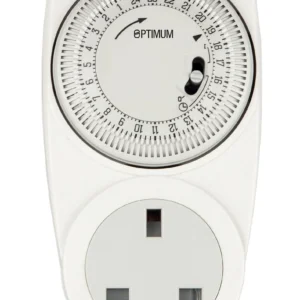
The OP‑ECOSAVE is intended for single, dual or twin immersion heater installations and is specified for typical 3kW immersion elements. Its contact rating is 16A resistive, so it is sized to work with standard domestic immersion loads — at 230V that rating broadly covers the common 3kW elements used in UK cylinders. Installation is fixed‑wired (the product is not a plug‑in socket timer) and the manufacturer’s instructions show terminal wiring and suggest using the supplied cable clamp and crimp ferrules where stranded flex is used.
There are several practical things to note before you buy: the unit is surface‑mount only, rated IP20, and is explicitly for dry rooms — so it must not be fitted in bathrooms, shower rooms or outdoors. The instructions also warn against installation close to equipment that generates inductive discharges (motors, transformers) and require compliance with current wiring regulations; as with any mains device, installation by a qualified electrician is recommended.
Advantages and limitations
- Advantages: very simple to use, clear indicators, adjustable boost for daytime hot water, easy‑to‑fit separate wiring base and long running reserve so settings are retained during short power interruptions.
- Limitations: mechanical 24‑hour timer only (no Wi‑Fi or tariff switching from the supplier), no built‑in thermostat — cylinder thermostats or a separate thermostat on the immersion(s) remain necessary, and the IP20 rating restricts where it can be mounted.
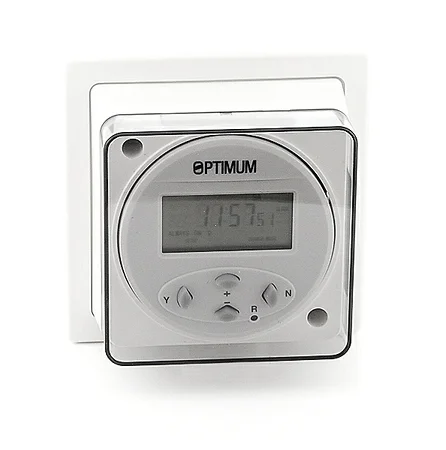
For households on Economy‑style tariffs who want a reliable, low‑cost way to ensure the immersion comes on during off‑peak hours and to add short daytime boosts, this timer does the job with minimal fuss. If you need remote control, multiple on/off periods across seven days, or integration with home automation, consider a digital or smart alternative; but if your aim is simple, visible, electrician‑installed control of the cylinder, the OP‑ECOSAVE is a practical choice.
Finally, remember that the timer only controls when power is available to the element(s). Water temperature is still governed by the cylinder thermostat and by the size and insulation of the tank — so check those items when planning any changes to heating schedules.