Description
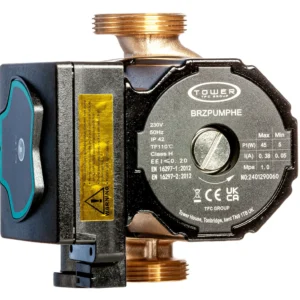
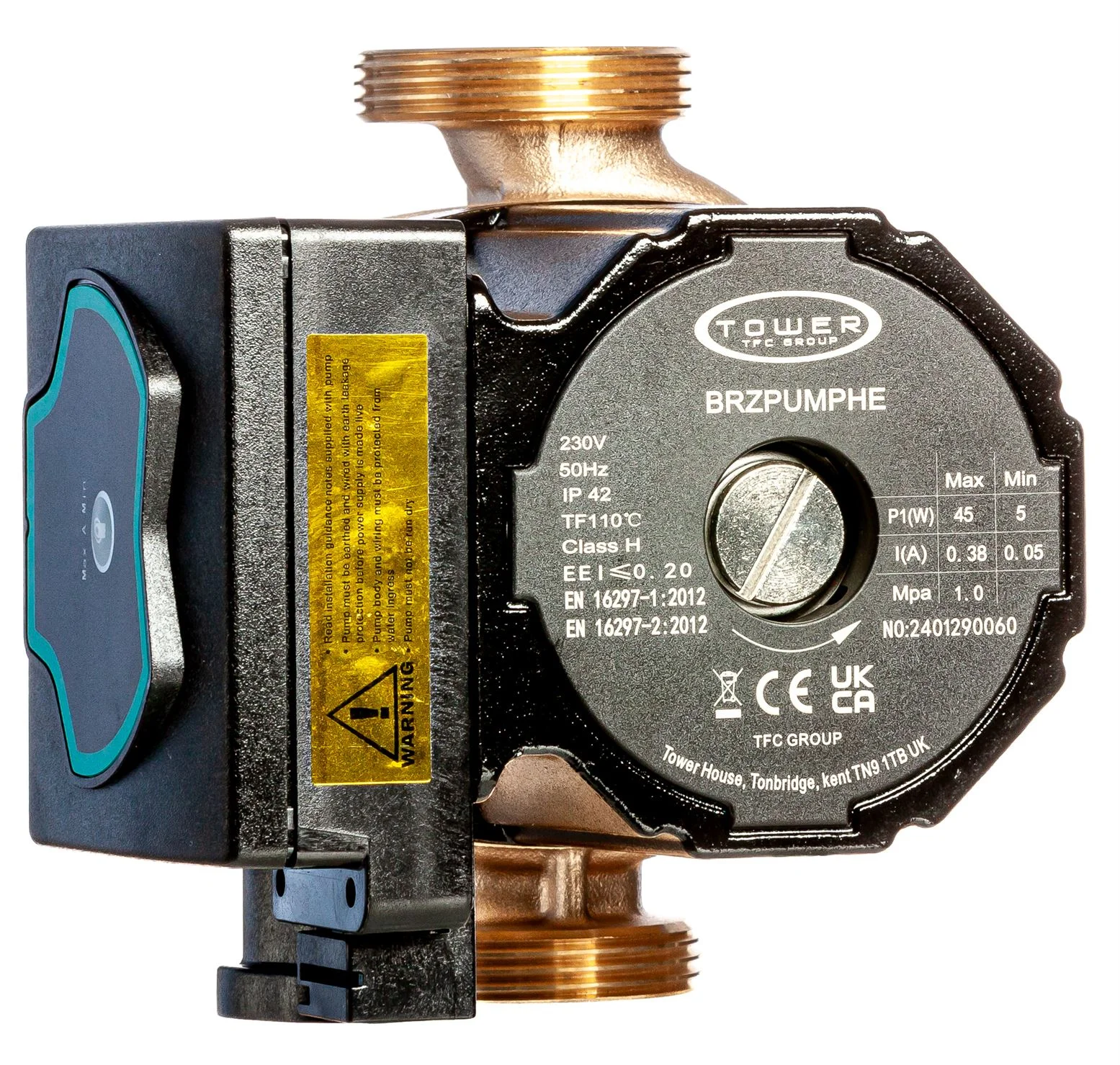
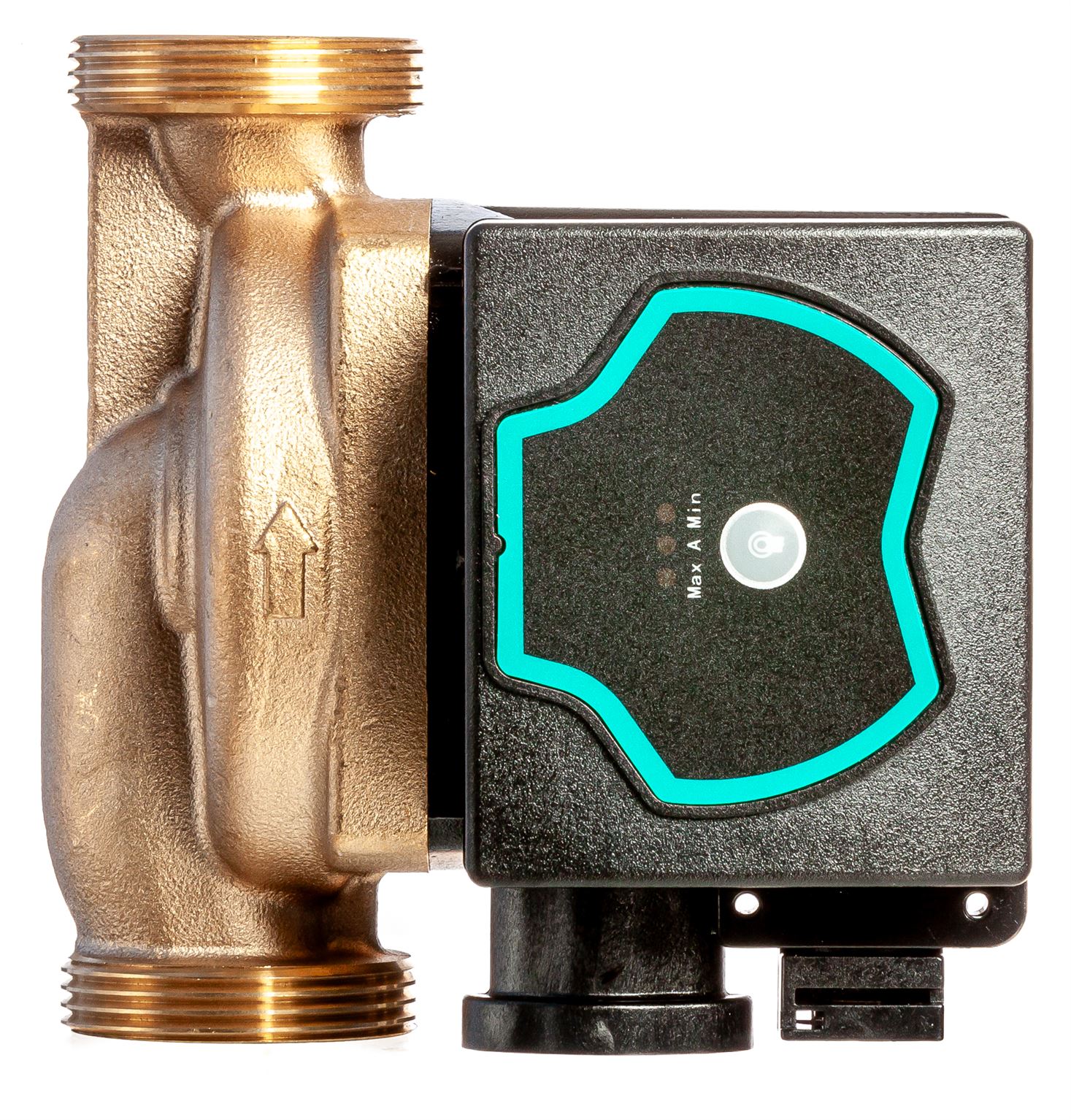
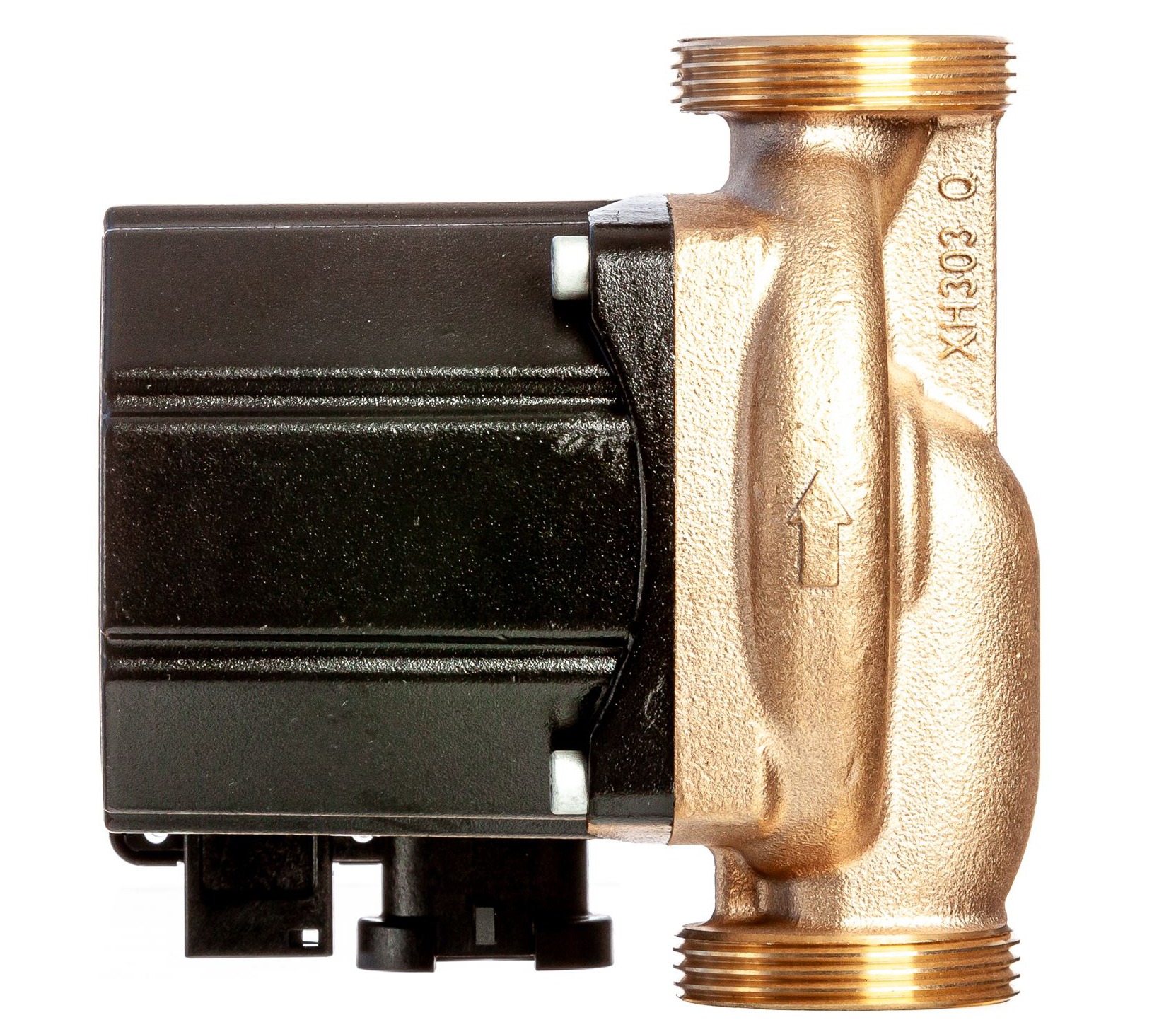
This is a compact, high‑efficiency recirculation pump built specifically for domestic hot‑water return loops where water is regularly replenished and therefore oxygenated. It pairs a traditional bronze pump body with a modern permanent‑magnet canned motor and an intelligent differential‑pressure controller, giving the corrosion resistance you need for potable systems together with low running costs and automatic speed control.
How it works and where it helps
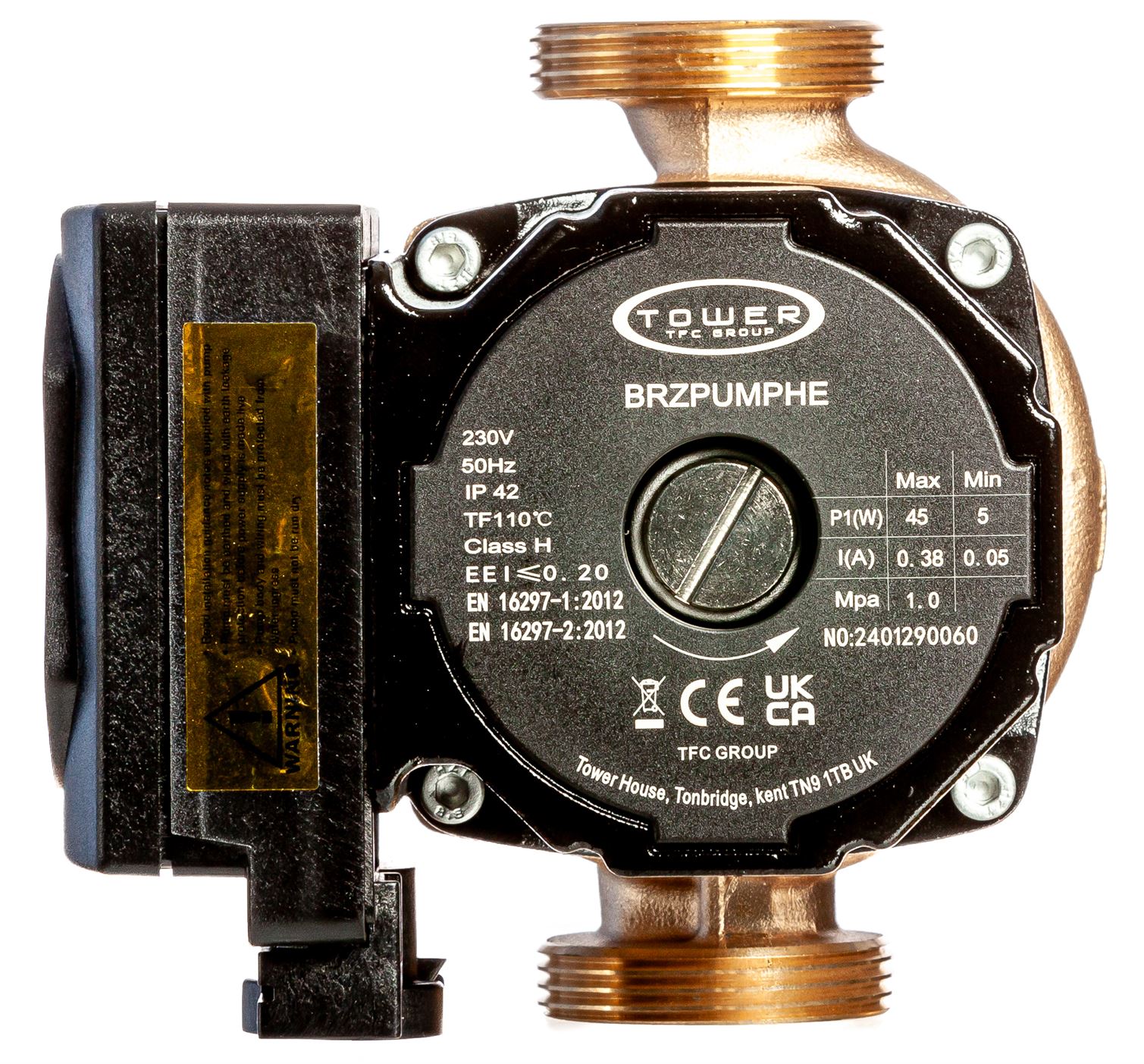
The unit is intended for secondary hot‑water circulation: it keeps hot water moving around a return loop so that a hot tap is available immediately at the furthest outlets. The bronze body resists corrosion in oxygenated systems (an advantage over cast‑iron wet‑rotor pumps), while the motor/control assembly automatically adjusts speed and power to match demand. That means the pump delivers only as much flow and head as the loop requires, typically drawing between about 5 and 45 watts in normal use, and meeting an Energy Efficiency Index (EEI) below 0.20 for good electrical efficiency.
Key specifications
- Pump body: bronze (for durability in potable/oxygenated systems)
- Electrical supply: 220–240 V AC, 50 Hz
- Power consumption: auto‑adapting, approximately 5–45 W
- Energy Efficiency Index (EEI): < 0.20
- Maximum head: 6 m; maximum flow: 3.0 m3/h (0.833 l/s)
- Connections: 1.5″ G1 (BSP) threaded flange; port‑to‑port length 130 mm
- Overall dimensions: 130 × 130 × 128 mm
- Maximum fluid temperature: up to 110 °C; max system pressure: 1.0 MPa
- Sound level: quiet operation, typically reported below 43 dB(A)
Installation and control — practical points
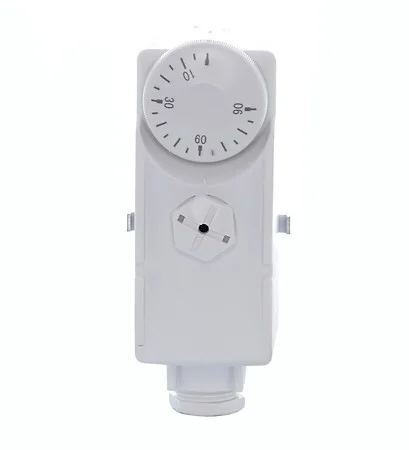
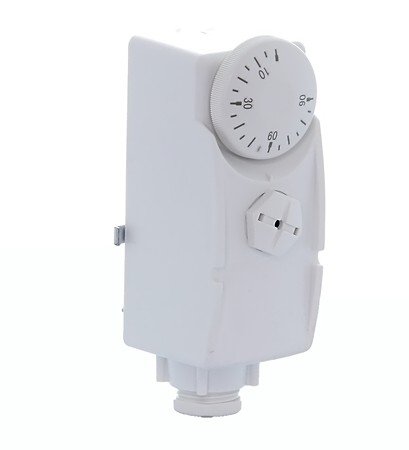
The BRZPUMPHE is deliberately compact so it can be retrofitted into existing secondary return loops without extensive pipe rework. It uses a G1 threaded flange — check whether your return loop has the same flange size or will need an adaptor. The smart control system is designed to accept timers, programmers, cycle timers and pipe thermostats; best efficiency is achieved by using a short‑run timer plus a pipe thermostat located on the return immediately after the furthest tap. Setting that thermostat roughly 5 °C below the hot‑water cylinder thermostat means the pump only runs when circulation is actually required, reducing wasted electricity and unnecessary tank cycling.
Because the motor auto‑adjusts based on differential pressure, it can maintain comfort (instant hot water at outlets) without running at full speed continuously. The low noise rating (under c. 43 dB(A)) makes it suitable for domestic locations where pump noise might otherwise be a nuisance.
Suitability, limits and compatibility
This pump is aimed at homeowners, plumbers and specifiers who need a durable recirculation solution for potable hot water systems with long pipe runs. The bronze housing is the key selling point for installations where a non‑ferrous material is required — for example, stainless or bronze bodies are preferable in secondary loops that open to the system and receive fresh, oxygenated water.
There are a few practical limits to bear in mind. The pump’s maximum head is 6 m and the flow curve tops out around 3.0 m3/h; it is sized for domestic recirculation loops rather than heavy commercial distribution. It requires a 220–240 V AC supply (50 Hz) and appropriate electrical connection should be planned prior to install. Also, care is needed if you intend to use a continuous run recirculation strategy on systems employing heat‑pump or hybrid water heaters: uncontrolled, continuous recirculation can increase cycling and reduce the efficiency of some heat‑pump tanks. Where a heat‑pump or hybrid cylinder is present, prefer on‑demand or thermostatically controlled strategies so the pump only runs when there is a genuine need for hot water at the tap.
Practical advantages and a few caveats
- Advantages: long‑life bronze body for potable systems, low electrical draw thanks to the permanent‑magnet motor, and automatic speed control for quieter, more efficient operation.
- Caveats: check flange/thread compatibility, confirm the supply voltage and wiring arrangements, and consider control strategy carefully with heat‑pump or hybrid cylinders to avoid excessive load on the heater.
If you are replacing an older, cast‑iron or plastic recirculation pump, the BRZPUMPHE offers a conservative upgrade path: it reduces corrosion risk in oxygenated loops and typically lowers running costs through variable‑speed control. For any install, follow the manufacturer’s installation manual for mounting orientation, electrical wiring and wiring colours, and have the work carried out or at least inspected by a competent installer.