Tower BRZPUMP Bronze Hot‑Water Recirculation Pump — Practical review for domestic systems
July 27, 2026Installing a small pump to keep hot water circulating around a return loop can transform daily comfort: distant taps and showers deliver warm water immediately, and you lose far less cold water to the drain. The Tower BRZPUMP is a bronze-bodied circulation unit made specifically for that role. It isn’t a high‑tech inverter or a space‑heating circulator in disguise — it’s a straightforward, rugged pump built for frequent or continuous duty in potable hot‑water circuits where corrosion resistance matters.
What this pump actually is
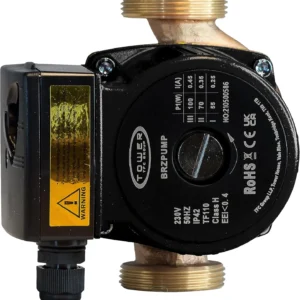
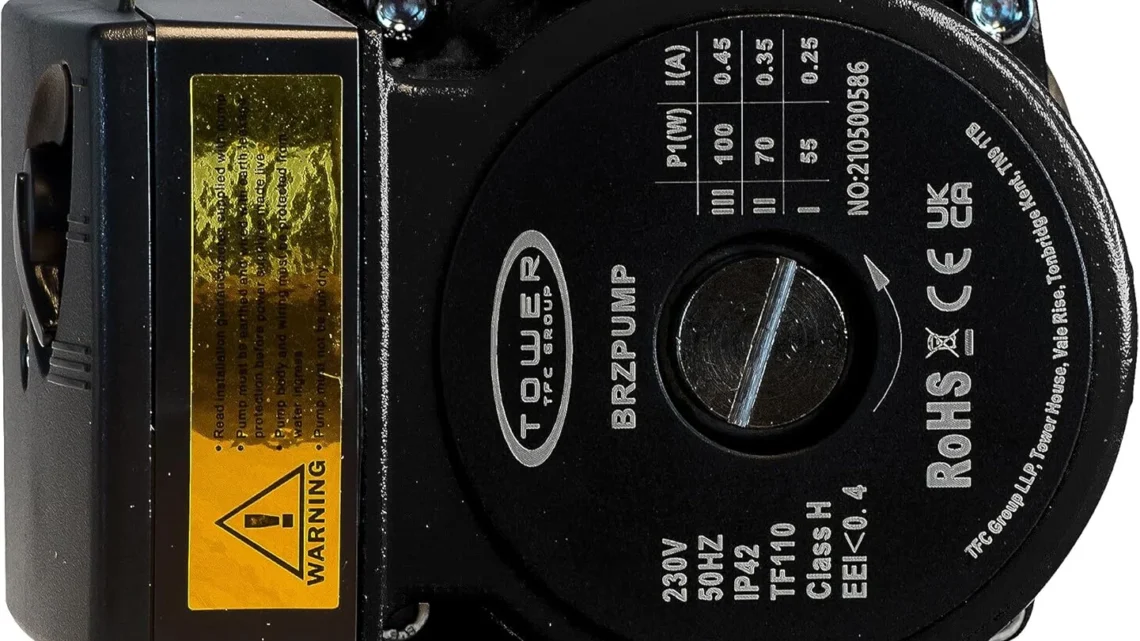
The BRZPUMP is a single‑stage centrifugal circulator with a bronze volute intended for secondary domestic hot‑water recirculation loops. It runs from a standard 230 V supply, offers three fixed speed settings and is available in two body lengths with a selection of threaded screw (G1) connection sizes commonly used on domestic pipework. Key practical figures to note are a maximum head of 6 metres, power consumption of 55 W / 70 W / 100 W across the three speeds, an Energy Efficiency Index listed as under 0.4, and a maximum permitted fluid temperature of 110 °C.
Which installations benefit most
The BRZPUMP suits houses or light commercial buildings where the hot‑water cylinder is a long way from certain outlets. If you currently wait for hot water at distant showers or sinks, or if you want to reduce the volume of cold water run to waste, a dedicated secondary recirculation pump is a practical retrofit that avoids costly rewiring of pipe runs.
Two installation use‑cases where bronze makes a difference:
- Systems that are regularly replenished with fresh (oxygenated) mains water — oxygen accelerates corrosion in iron-bodied pumps, so a bronze body is a sensible choice for durability.
- Where the pump will run frequently or continuously — the BRZPUMP is designed for repeated duty in potable circuits rather than occasional on/off space‑heating use.
Who should avoid it
There are also situations where the BRZPUMP is not the right selection.
- If you need precise flow control, automatic proportional pressure regulation or variable speed to match changing system losses, this model is not an inverter‑driven, electronically controlled pump. It offers three discrete speeds only, so it can’t modulate continuously to varying duty points.
- If your system demands a higher head than 6 metres to overcome static lift and friction losses, the BRZPUMP will not meet that requirement. You’ll need to size a pump with an appropriate curve that covers your duty point at the required flow.
- Where electricity consumption is a critical factor and you want the absolute lowest running costs, a modern electronically commutated (ECM) variable‑speed circulator is likely to be more efficient in practice than a fixed‑speed three‑position design.
Installation and practical compatibility
The manufacturer recommends fitting the pump in the return leg of the secondary loop, after the furthest outlet, with the return tapping into the top third of the hot‑water cylinder. That arrangement keeps the store stratified (so hot water remains at the top) and prevents the pump from pulling heat from the whole cylinder unnecessarily.
Key installation notes to plan for:
- Use a qualified plumber or heating engineer — although the concept is simple, correct placement, electrical connection and adherence to building regulations are important.
- Check the connection size before ordering. The BRZPUMP uses screw G1 threaded joints and is supplied with fitting options in common domestic sizes (1½”, 1″, ¾”). Confirm which size matches your pipework or whether you need adapters.
- Fit isolation valves either side of the pump so it can be removed for maintenance without draining the cylinder or loop.
- Because the pump is intended for continuous or frequent duty, ensure it is correctly supported and that unions or flexible connections are present to prevent pipe stress and to isolate vibration.
- Bear in mind the maximum system pressure rating (1.0 MPa) and the maximum fluid temperature (110 °C) — these are typical for domestic hot water but worth confirming for atypical systems.
Performance: what to expect in daily use
The BRZPUMP’s three speeds give you practical control: low, medium and high power draw at 55 W, 70 W and 100 W respectively. For many domestic loops the medium or low setting will keep the circuit warm enough without unnecessary noise or consumption; use the high setting where longer runs or higher flow are required. Because the pump’s maximum head is 6 m, it will suit most single‑storey and many two‑storey properties, but you should estimate friction losses in your specific pipe layout before assuming it will meet your flow requirement at the furthest outlet.
Two realistic ownership scenarios:
- Retrofitted family home: a three‑bed house with a loft cylinder serving upstairs bathrooms. The BRZPUMP, correctly installed in the return and set to a moderate speed, will keep upstairs taps delivering warm water quickly and will noticeably reduce the volume of water flushed to waste.
- Small guest house or office: frequent hot‑water use and regular recharging of the cylinder mean the water is oxygenated. A bronze‑body pump resists corrosion better than iron alternatives and should give longer service life under these conditions.
Strengths and trade‑offs
Strengths worth highlighting:
- Corrosion resistance: the bronze volute makes the pump more suitable for oxygenated potable hot‑water systems than typical cast‑iron heating pumps.
- Simple, robust design: fixed three‑speed operation is easy to use and troubleshoot.
- Availability of common threaded connection sizes and two body lengths to suit different pipework layouts.
Trade‑offs and limitations:
- Not variable speed: you cannot tune it continuously to a precise duty point. Where fine control matters, an electronically commutated or inverter‑driven pump is preferable.
- Modest maximum head: 6 m limits its use on higher‑rise or very convoluted systems. Always calculate head loss before purchase.
- Three discrete power steps mean energy use is stepped rather than optimised — in long‑run continuous applications a low‑consumption EC motor might use less energy overall.
Sizing and verification
Do not assume the pump will suit every installation with a long run. Sizing is straightforward in principle but important in practice:
- Estimate the required flow rate for your loop and the total head loss (static lift plus friction in pipework, fittings and any valves).
- Compare that required head at the chosen flow with the pump’s available head. The BRZPUMP’s stated maximum head is 6 m — if your required head approaches this limit you should seek detailed pump curves from the supplier to confirm the delivered flow at that head.
If you lack the tools to calculate pipe friction accurately, ask a competent heating engineer to size the pump; it’s better to confirm compatibility before buying than to discover the pump can’t maintain flow at the far outlet.
Maintenance and longer‑term ownership
Routine maintenance is uncomplicated but sensible. Recommended practices:
- Install isolation valves so the pump can be removed or replaced without draining the cylinder.
- Periodically check the pump for signs of leakage around threaded joints and ensure unions remain tight but not overstressed.
- Make sure the pump is not allowed to run dry; check that the loop stays primed and that air vents (where fitted) are functional.
- Listen for changes in noise or vibration — increases can signal bearing wear or debris. Bronze bodies help resist corrosion, but internal wear items (bearings, seals) remain subject to normal mechanical life limits.
Support considerations: the BRZPUMP is mechanically simple and parts such as unions or isolation valves are standard. If a motor fault develops, replacement units are generally the pragmatic route for domestic systems rather than complex motor repairs. Check supplier support and spare‑parts availability in your area before installation if you operate a larger building where downtime matters.
Energy use and practical running costs
The maximum electrical input is 100 W on the top speed, with lower draws on the medium and low settings. In many domestic situations the pump will run intermittently or at a low speed so average consumption will be modest. However, because the design uses fixed speed steps rather than a variable motor, it cannot reduce power consumption automatically to match small fluctuations in required flow.
If minimising running cost is a top priority, compare typical duty cycles: an EC variable‑speed circulator can often achieve lower annual energy use in variable loads. For many owners, though, the practical benefits of immediate hot water and the durability of a bronze body will outweigh the incremental electrical cost difference.
Value and buying considerations
Value is a balance of purchase cost, expected service life in oxygenated water and the practical benefits you gain (time saved, reduced cold‑water waste, user comfort). The BRZPUMP targets the specific niche of potable hot‑water recirculation where bronze construction is worth paying for. Before buying, check:
- That your installation falls within the pump’s head and flow capability (6 m maximum head) and that the required connection size is available.
- Whether you need continuous simple circulation or would benefit from fine, automatic flow control; the BRZPUMP fulfils the former, not the latter.
- Local availability of spares and service — a simple pump is easier to replace, but it’s still wise to confirm support options.
Final assessment
The Tower BRZPUMP is a sensible, focused product for a particular problem: keeping hot water instant at distant outlets in systems that use potable, oxygenated water. Its bronze body and three‑speed design make it durable and easy to use in frequent‑duty domestic circulation loops. It is not the best choice where finely modulated flow, very low energy use or high heads are required — for those needs look at electronically controlled, variable‑speed circulators or higher‑head models.
If your priority is a robust pump that resists corrosion in a potable hot‑water return, is easy for a plumber to fit using common threaded connections, and offers a simple speed choice to balance performance and noise, the BRZPUMP is a practical option. Just confirm connection size and head requirements for your system, fit isolation valves for straightforward maintenance, and expect reliable service provided the installation is correctly specified and maintained.
Latest product offer
Ready to check Tower Bronze Hot Water Recirculation Pump?
Check the latest product page, price and offer details before buying.